Medinet Habu inscriptions of Ramesses III
- Language
- Egyptian
- Composed
- c. 1177 BC (year 8)
- Oldest surviving copy
- The temple walls at Medinet Habu, Thebes
- Status
- Not scripture
Lists the Peleset among invaders from the sea.
Ancient Mysteries & Interpretations
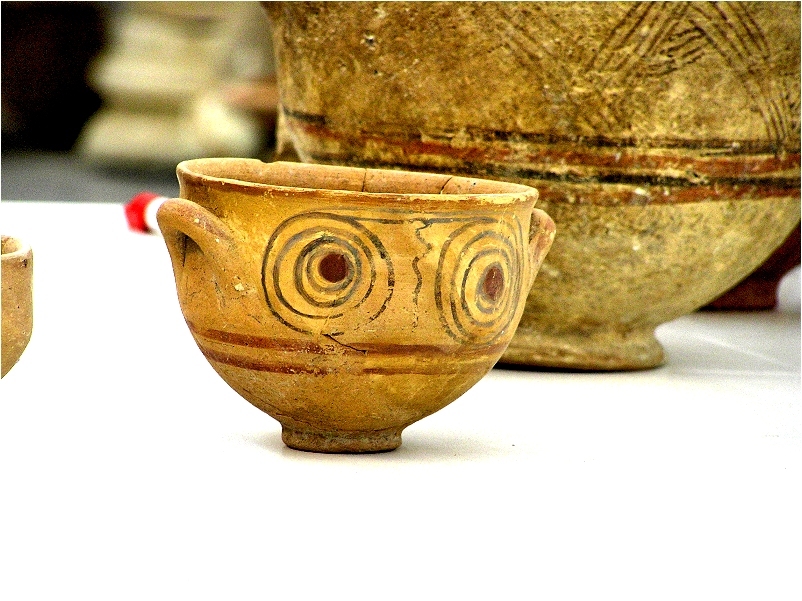
The Bible says the Philistines came from Caphtor. Egyptian reliefs show the Peleset among the Sea Peoples about 1177 BC. Philistine cities show Aegean-style pottery, hearths and food. A 2019 ancient-DNA study found a European-related ancestry component in early Iron Age burials at Ashkelon that soon faded. The evidence supports a real migration that mixed with local people.
Migration: strongly supported · Exact homeland: debated · DNA sample: small
"Have not I brought up Israel out of the land of Egypt? and the Philistines from Caphtor?" (Amos 9:7).
Lists the Peleset among invaders from the sea.
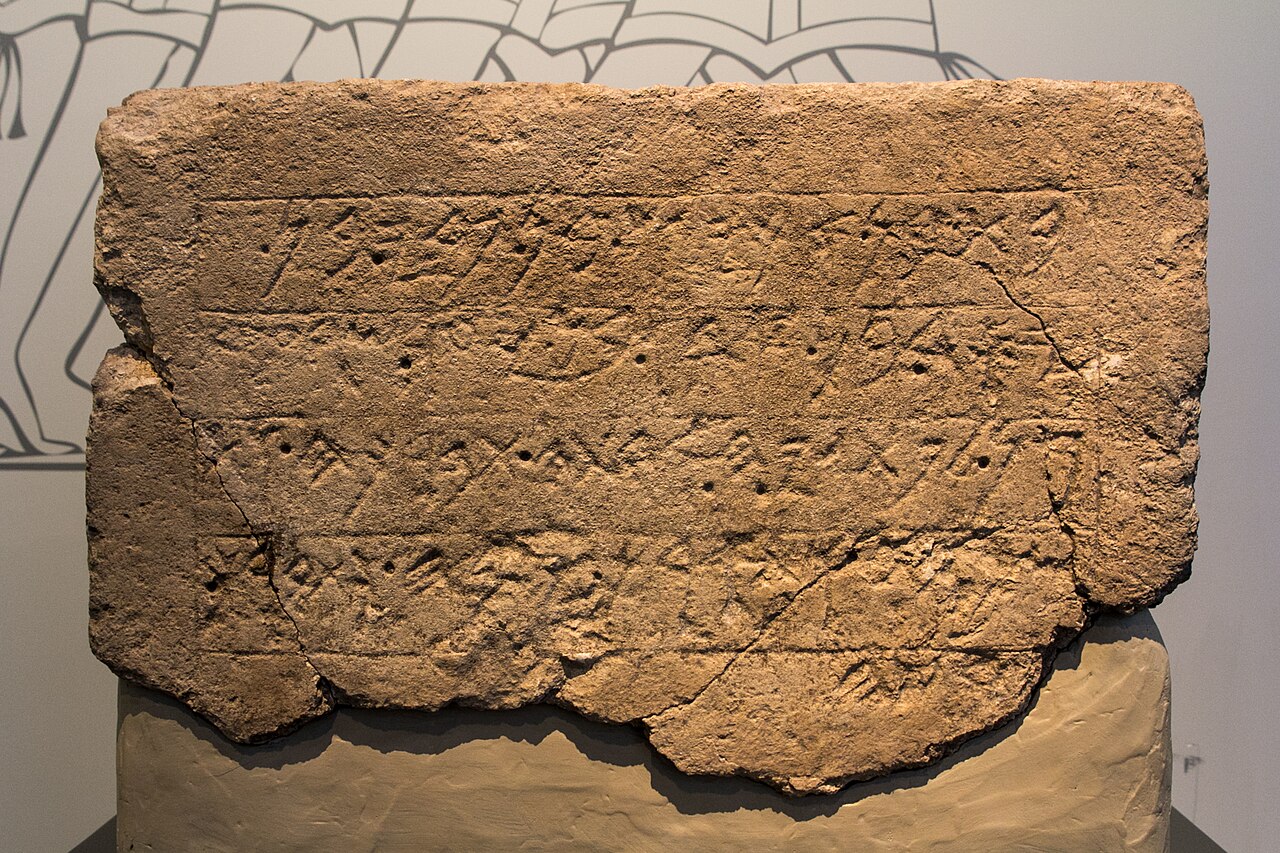
Achish son of Padi, ruler of Ekron; far later than Samson.
Ashkelon DNA (Feldman et al. 2019): ten individuals across the Bronze and Iron Ages; the early Iron Age individuals carried a European-related component, diluted within about two centuries. Limitations: a small sample from one site; the source region cannot be pinpointed (Crete, Greece, Sardinia and Iberia are all possible contributors).
Traditional reading
The biblical tradition, consistent with Aegean-style culture.
Scholarly reconstruction
Newcomers from the Aegean and Anatolia mixed with Canaanites.
Scholarly reconstruction
Mainly local people adopting new styles.
Assessment: Weakened by the DNA evidence.
A migration with Aegean connections contributed to Philistine origins in the early 12th century BC. The newcomers mixed with the local population and kept a distinct culture for centuries.
What the evidence shows