Traditional reading
A historical judge empowered by God
Samson was a real deliverer whose strength came from God's Spirit; his final act was answered prayer.
Ancient Mysteries & Interpretations
Samson is known only from Judges. His world is well attested: Timnah (Tel Batash), the Sorek valley, the Philistine cities and their temples. Excavated Philistine temples at Tell Qasile and Ekron had roofs resting on wooden pillars set on stone bases close together. That shows how the story's final scene was architecturally imaginable; it does not identify the building or prove the event.
Setting: well attested · Samson: not attested outside the Bible · Temple: not identified
"And Samson took hold of the two middle pillars upon which the house stood… And he bowed himself with all his might; and the house fell upon the lords, and upon all the people that were therein" (16:29–30).
Tel Batash (Timnah): a Philistine-influenced Iron I town in the Sorek valley (Kelm and Mazar, 1977–1989). Tell Qasile: a sequence of Philistine temples (12th–11th centuries BC) excavated by Amihai Mazar; the later temple's roof rested on two wooden pillars on stone bases near the center. Tel Miqne (Ekron): large Iron I buildings with pillar bases, and a 7th-century temple complex.
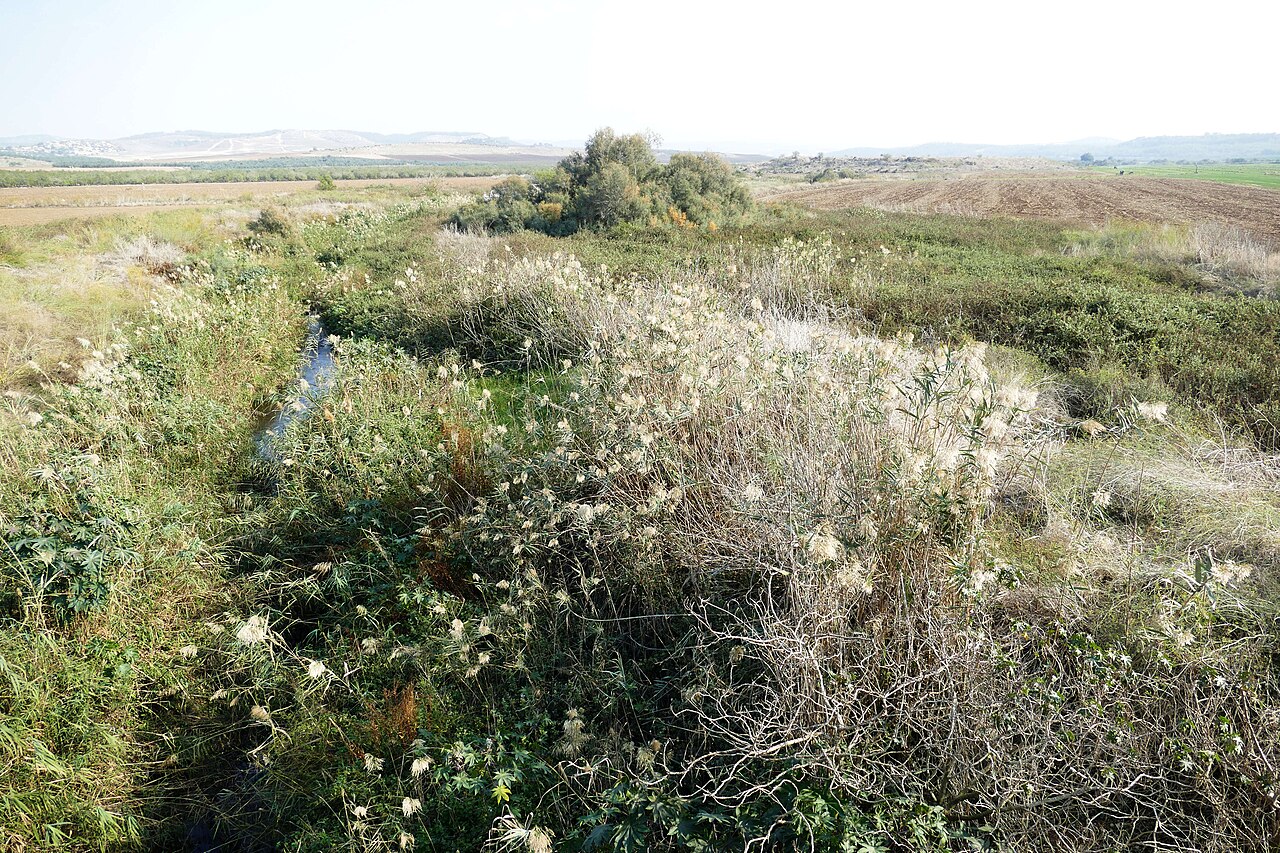
Gaza itself, where the story places the temple, lies under a modern city and has not been excavated at the relevant levels.
Traditional reading
Samson was a real deliverer whose strength came from God's Spirit; his final act was answered prayer.
Scholarly reconstruction
Stories of a Danite strongman were told on the Philistine frontier and shaped into the Samson cycle.
Source: Samson and Tel Batash, Vetus Testamentum (2025, advance article) ↗
Scholarly reconstruction
Samson's name (shemesh, "sun") and Heracles-like feats led some 19th-century scholars to see a sun myth.
Assessment: Now a minority view; the stories are firmly set in local geography.
The Samson stories are set in a real, well-attested Philistine frontier. Samson's existence and feats are matters of the text and faith; no artifact names him.
The Greek and Latin preserve a longer text of 16:13–14 (see the passage page).
What the evidence shows
Source: "Philistine cult and religion" (review), Religions 10:2 (2019) ↗