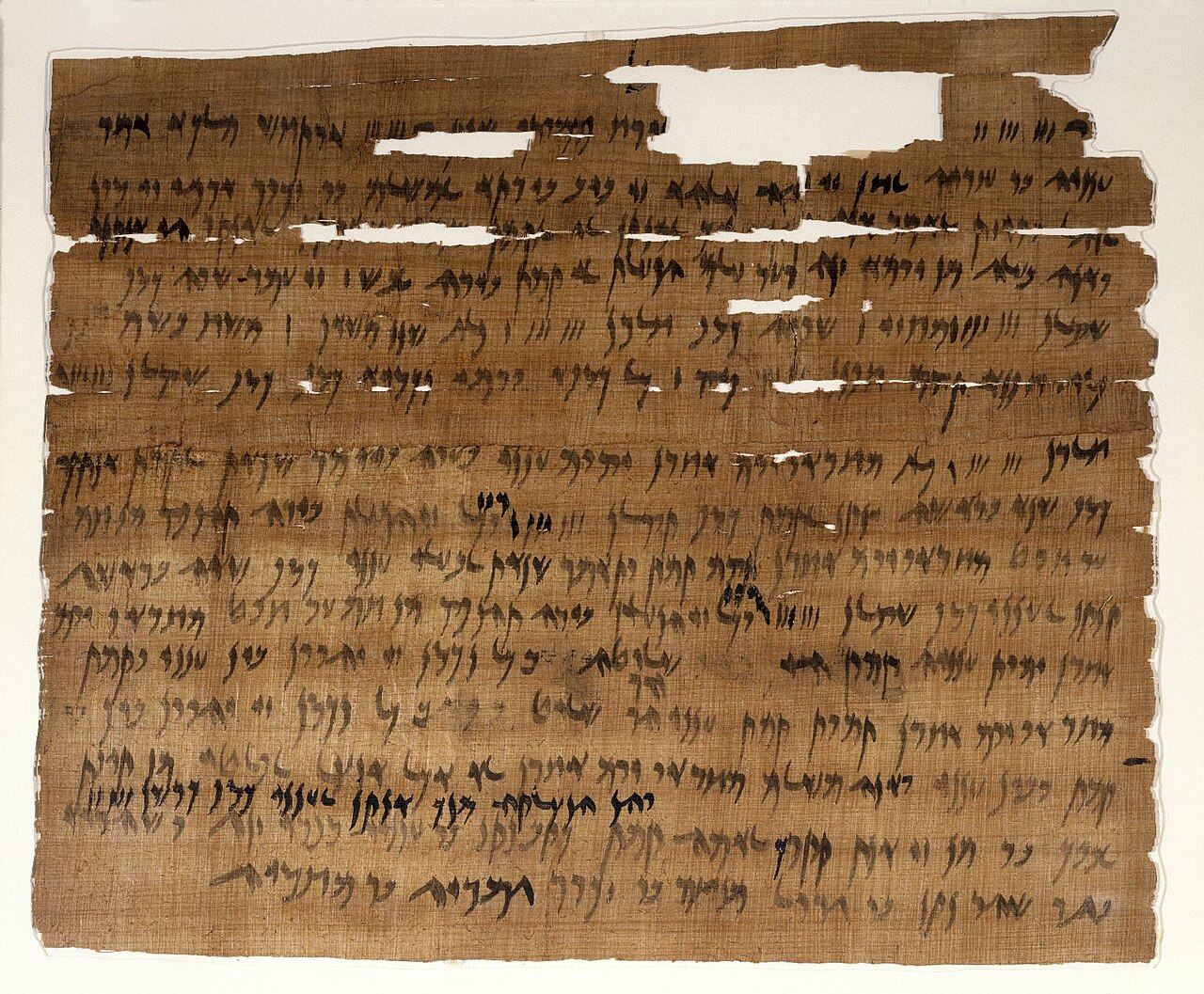
Elephantine petition
- Language
- Aramaic
- Composed
- 407 BC
- Oldest surviving copy
- Papyrus drafts (Berlin)
- Status
- Not scripture
"Delaiah and Shelemiah, sons of Sanballat, governor of Samaria."
Ancient Mysteries & Interpretations
All three names have possible outside matches. Sanballat: the Elephantine papyri (407 BC) name "Sanballat, governor of Samaria," with adult sons; Wadi Daliyeh papyri show a later family of governors. Tobiah: a Tobiad family later ruled an estate in Ammon ('Iraq al-Amir) and appears in the Zenon papyri (259 BC). Geshem: a silver bowl from Tell el-Maskhuta names "Qainu son of Geshem, king of Qedar." None of these documents describes the conflict with Nehemiah.
Sanballat: supported · Tobiah's family: plausible · Geshem: plausible · Their opposition: biblical only
Nehemiah 2:10, 19; 4:1–8; 6:1–19; 13:4–9, 28
"Sanballat the Horonite, and Tobiah the servant, the Ammonite, and Geshem the Arabian" (Nehemiah 2:19).
"Delaiah and Shelemiah, sons of Sanballat, governor of Samaria."
Dedicated by "Qainu son of Geshem, king of Qedar" to the goddess Han-'Ilat.
The 'Iraq al-Amir estate in Jordan bears the name "Tobiah" carved in Aramaic letters near cave entrances (date debated, 5th–2nd century BC). The Zenon papyri include letters of a Tobiah in Ammon to Ptolemaic officials.
Scholarly reconstruction
Sanballat I of Elephantine, Tobiah ancestor of the Tobiads, and Geshem father of Qainu are Nehemiah's opponents.
Scholarly reconstruction
The names recur in leading families over generations; matches show Nehemiah's world is real, not that each document names the same individual.
Nehemiah's opponents were leaders of neighboring provinces and peoples with interests in Jerusalem, some tied by marriage to its priests and nobles.
What the evidence shows
Source: A. E. Cowley, Aramaic Papyri of the Fifth Century B.C. (1923), nos. 30–32 (the temple petition; not collated by the site); Encyclopaedia Iranica, "Judeo-Persian Communities ii: Achaemenid Period" ↗