Intrigue, Prophets and the 52 Days
"I am doing a great work, so that I cannot come down"
Sanballat and Geshem send: "Come, let us meet together in some one of the villages in the plain of Ono." "But they thought to do me mischief. And I sent messengers unto them, saying, I am doing a great work, so that I cannot come down." Four times they send, four times he answers the same.
The fifth time Sanballat's servant comes "with an open letter in his hand": "It is reported among the heathen, and Gashmu saith it, that thou and the Jews think to rebel: for which cause thou buildest the wall, that thou mayest be their king… and thou hast also appointed prophets to preach of thee at Jerusalem, saying, There is a king in Judah." Nehemiah replies: "There are no such things done as thou sayest, but thou feignest them out of thine own heart."
Shemaiah son of Delaiah, "who was shut up," says: "Let us meet together in the house of God, within the temple, and let us shut the doors of the temple: for they will come to slay thee." Nehemiah: "Should such a man as I flee? and who is there, that, being as I am, would go into the temple to save his life? I will not go in." He perceives that Tobiah and Sanballat had hired him.
"My God, think thou upon Tobiah and Sanballat according to these their works, and on the prophetess Noadiah, and the rest of the prophets, that would have put me in fear."
"So the wall was finished in the twenty and fifth day of the month Elul, in fifty and two days." The enemies "were much cast down… for they perceived that this work was wrought of our God." Yet many nobles of Judah exchange letters with Tobiah, "for there were many in Judah sworn unto him," because he and his son married into Judah's families. They praise him to Nehemiah and report Nehemiah's words to him.
The plain of Ono
Ono (near modern Kiryat Ono, east of Tel Aviv) lay at the western edge of Judean settlement (Ezra 2:33; Nehemiah 11:35), far from Jerusalem and near Samarian territory. The region is known; no specific village is identified.
An open letter
A sealed letter was private; an open one was meant to be read by others along the way. The accusation of rebellion, with prophets proclaiming a king, would alarm the Persian court, which had stopped Jerusalem's walls before (Ezra 4:12–22).
Why not the temple?
Only priests could enter the hekhal (Numbers 18:7). Uzziah was struck when he entered to burn incense (2 Chronicles 26:16–21). If Nehemiah was a layman, entering would break the law; if he was a eunuch (as some Greek manuscripts suggest), Deuteronomy 23:1 could also apply. Either way, hiding there would discredit him.
Noadiah the prophetess
Noadiah is one of only a handful of named women prophets in the Hebrew Bible (Miriam, Deborah, Huldah, Isaiah's wife). The Hebrew (hanneviah) and the KJV make her a prophetess; the library's Greek (Giguet) makes Noadias "the prophet," masculine; the Vulgate's form does not mark gender. We know her only from Nehemiah's complaint; the text gives her no words of her own.
52 days
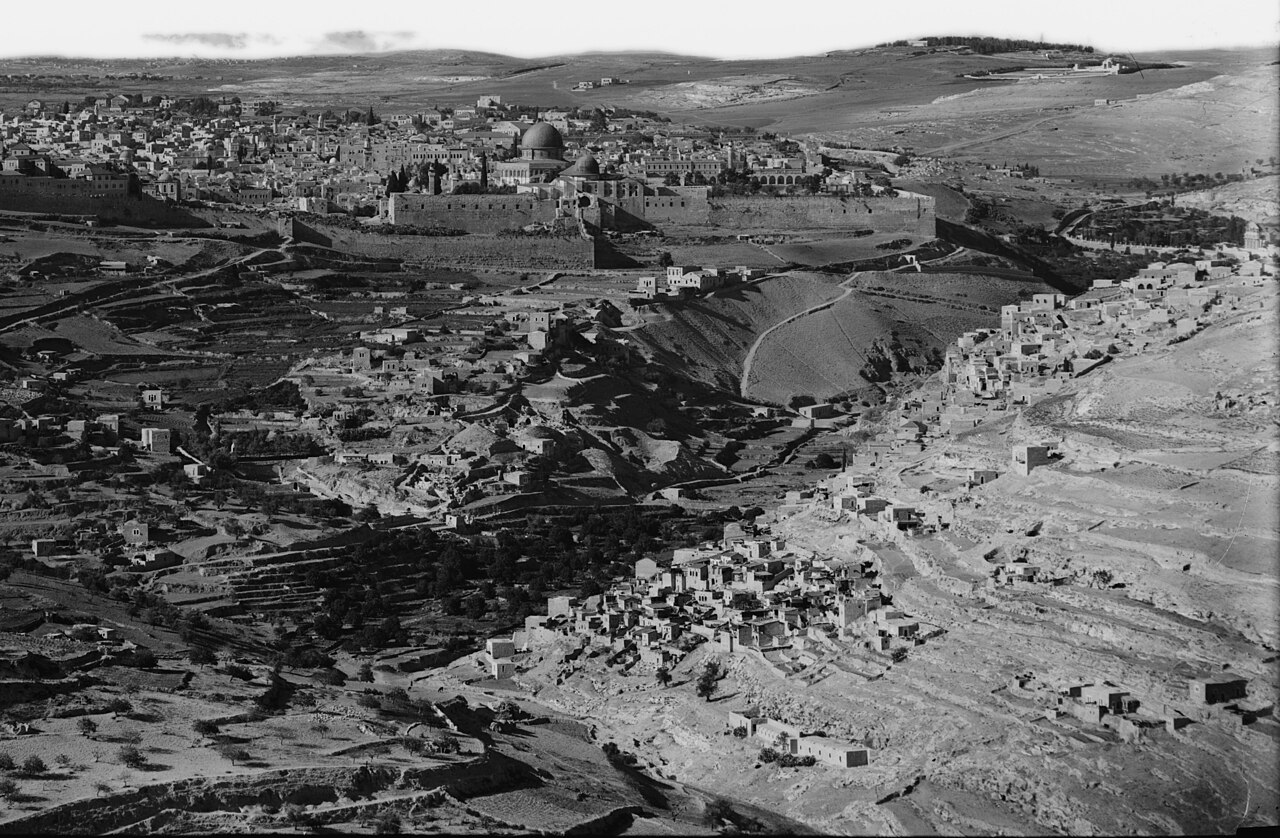
The wall is finished on 25 Elul (August–September), 52 days after work began, about early Ab. Josephus (Antiquities 11.179) says two years and four months. The 52 days fit repairs to an existing line, much of it on the old foundations. The figure is the text's; no excavation dates the work this precisely.
Tobiah's network
Tobiah is son-in-law of Shecaniah son of Arah, and his son Jehohanan married the daughter of Meshullam son of Berechiah, one of the wall builders (3:4, 30). Opposition was not neatly outside the community; it ran through family alliances inside it.
Prophets for and against
The accusation that Nehemiah had prophets proclaim "a king in Judah" echoes the hopes Haggai and Zechariah attached to Zerubbabel (Haggai 2:21–23; Zechariah 6:9–13). Some scholars think such royal hopes really did circulate. Nehemiah denies any royal ambition.
What the evidence shows
- The wall was finished in 52 days. The text's figure; Josephus gives over two years.
- Noadiah was a woman prophet. In the Hebrew; the library's Greek makes the name masculine.
- Laymen were forbidden to enter the temple building.
- "This work was wrought of our God."
Continue the journey
Journey of a PassageNehemiah 6:10–14: Noadiah: prophetess or prophet?Nehemiah asks God to remember "the prophetess Noadiah, and the rest of the prophets" who tried to frighten him.More from this lesson
Investigations
Optional deep dives: the ancient sources, the physical evidence, and every interpretation side by side, including unconventional ones, each labeled for what it is.
Sanballat, Tobiah and GeshemSanballat: supported · Tobiah's family: plausible · Geshem: plausible · Their opposition: biblical only
Do Nehemiah's three opponents appear outside the Bible?
All three names have possible outside matches. Sanballat: the Elephantine papyri (407 BC) name "Sanballat, governor of Samaria," with adult sons; Wadi Daliyeh papyri show a later family of governors. Tobiah: a Tobiad family later ruled an estate in Ammon ('Iraq al-Amir) and appears in the Zenon papyri (259 BC). Geshem: a silver bowl from Tell el-Maskhuta names "Qainu son of Geshem, king of Qedar." None of these documents describes the conflict with Nehemiah.
Open the full investigation →Why this matters to the rest of Scripture
- Uzziah enters the temple and is struck.
- Huldah the prophetess.
- The earlier accusation of a rebellious city.
- Zerubbabel as God's signet ring.