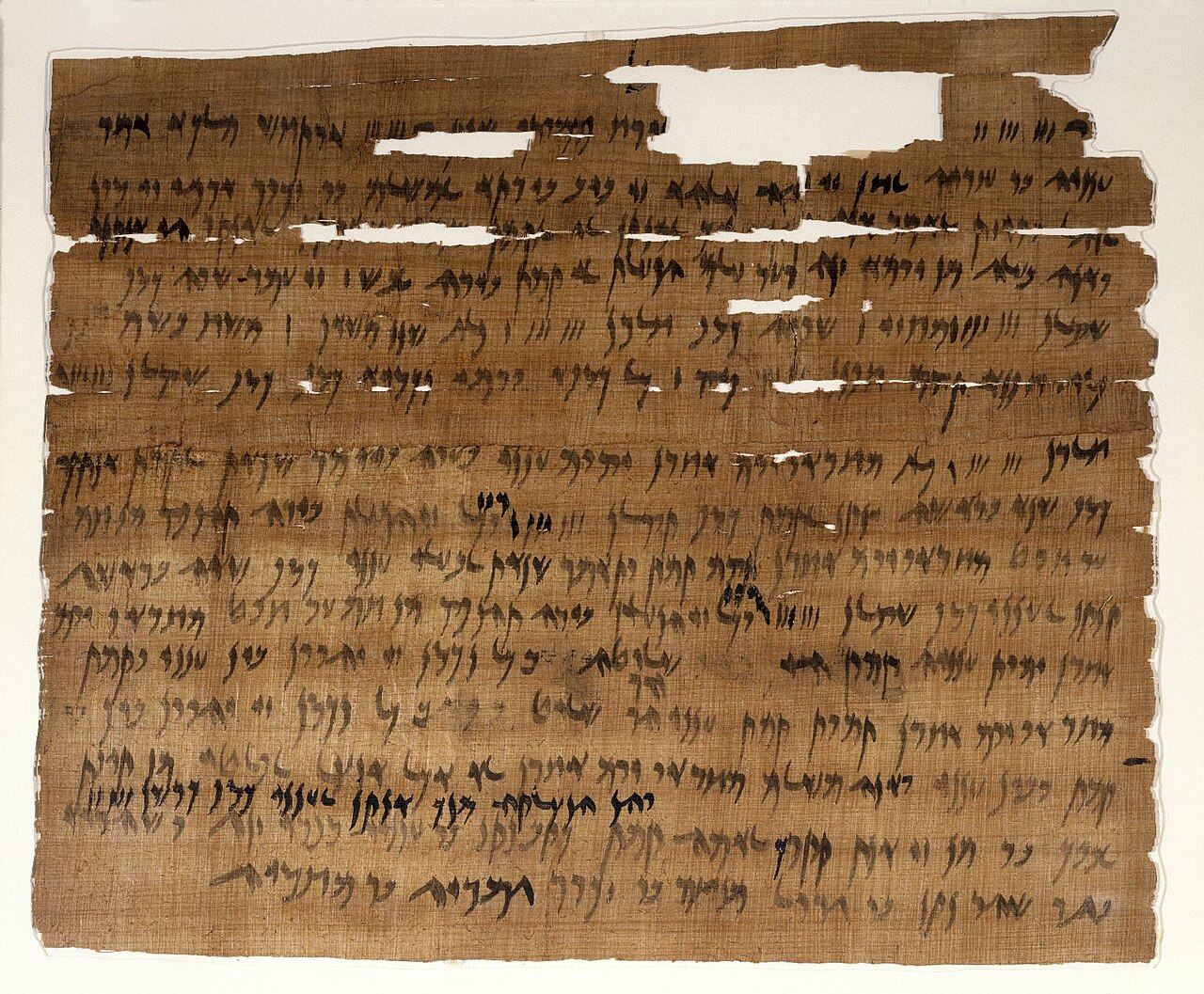
Investigation: Sanballat, Bagohi and the Elephantine Archive
Names from Nehemiah in a papyrus from Egypt
Elephantine, an island in the Nile at Aswan, was a Persian frontier garrison. Its Jewish soldiers and families left papyri in Aramaic: contracts, letters and accounts from about 495 to 399 BC.
In 410 BC, while the satrap Arsames was away, priests of the Egyptian god Khnum and the local commander Vidranga had the Jewish temple of YHW (Yahu) destroyed. In 407 BC Jedaniah and the priests wrote to Bagohi, governor of Judah, asking for a letter to have it rebuilt. They had written before to "Johanan the high priest and his colleagues the priests in Jerusalem" and received no reply.
"We have also set out the whole matter in a letter in our name to Delaiah and Shelemiah, sons of Sanballat, governor of Samaria." A memorandum records the answer of Bagohi and Delaiah: the altar-house may be rebuilt and meal offering and incense offered, apparently without animal sacrifice.
What the papyri show
A Sanballat was governor of Samaria, old enough by 407 BC to have adult sons acting for him. A Johanan was high priest in Jerusalem (compare Nehemiah 12:22–23). A Persian governor of Judah named Bagohi served in 407. Jews in Egypt looked to both Jerusalem and Samaria for support.
What they do not show
They do not name Nehemiah, Tobiah or Geshem; they do not describe events of 445 BC; they do not say Sanballat opposed Jerusalem. Identifying their Sanballat with Nehemiah's rests on the name, the office (Nehemiah never calls him governor, but he commands "the army of Samaria," 4:2) and the dates, which fit if Sanballat was young in 445 and old in 407. Most scholars accept the identification.
Bagohi is not Nehemiah
Bagohi (Bagoas, Bagavahya) is a Persian name. He governed Judah after Nehemiah. Josephus (Antiquities 11.297–301) tells of a general Bagoses who imposed a tax on temple sacrifices after the high priest Johanan killed his brother Jesus in the temple; this may be the same man.
A temple outside Jerusalem
Elephantine's temple of YHW, with sacrifices, existed in the 5th century BC without apparent objection until 410, despite Deuteronomy's one-place law. The Passover letter (419 BC) passed on instructions about Unleavened Bread from the Persian court. The papyri show Jewish practice more varied than Ezra–Nehemiah's Jerusalem-centered vision.
Later Sanballats
Samaria papyri from Wadi Daliyeh (4th century BC) mention a Sanballat as father of a governor, suggesting a family that held office for generations. Josephus' Sanballat of Alexander's time (332 BC) may be a later member, or a confusion.
Editions
Standard editions: Cowley, Aramaic Papyri (1923), nos. 30–32; Porten and Yardeni, TAD A4.7–A4.9. The site has not collated these editions or the original papyri (Berlin, P. 13495 and others); quotations here follow published English summaries. Exact wording and the 410/407 dating conversions are on the certification checklist.
What the evidence shows
- A Sanballat was governor of Samaria by 407 BC.Source: A. E. Cowley, Aramaic Papyri of the Fifth Century B.C. (1923), nos. 30–32 (the temple petition; not collated by the site); B. Porten and A. Yardeni, Textbook of Aramaic Documents from Ancient Egypt, vol. 1 (1986): A4.7–A4.9 (not collated by the site); Encyclopaedia Iranica, "Judeo-Persian Communities ii: Achaemenid Period" ↗
- The Elephantine Sanballat is Nehemiah's Sanballat.
- The Elephantine papyri mention Nehemiah.
- Bagohi and Nehemiah are the same person.
- Jews at Elephantine worshiped YHW in their own temple.
Continue the journey
Journey of a PassageNehemiah 12:10–11, 22: Jaddua and "Darius the Persian"The high-priest list runs Jeshua, Joiakim, Eliashib, Joiada, Jonathan (Johanan), Jaddua, and 12:22 records priests "to the reign of Darius the Persian." The list reaches decades, possibly a century, after Nehemiah.More from this lesson
Investigations
Optional deep dives: the ancient sources, the physical evidence, and every interpretation side by side, including unconventional ones, each labeled for what it is.
Who Were the "People of the Land"?Samaria as a province: documented · Gerizim sanctuary from Persian period: disputed · Equation with later Samaritans: simplification
Who were Ezra's "adversaries of Judah and Benjamin," and were they the Samaritans?
Ezra describes neighbors who claimed to have worshiped Israel's God since Esarhaddon resettled them, and "the people of the land" who obstructed the work. Outside sources show Samaria as a Persian province with Yahwistic names among its leaders, Sanballat as its governor, and a sanctuary on Mount Gerizim from perhaps the 5th century BC. The later Samaritan community grew out of this world, but over a long time.
Open the full investigation →The Temple at Elephantine and the Letter to BagohiPapyri: authentic originals · Temple: documented · Connection to Ezra: context only
What do the Elephantine papyri show about Jewish worship in Ezra's century?
A Jewish garrison on Elephantine island in southern Egypt kept a temple of YHW in the 5th century BC. When it was destroyed in 410 BC, the community petitioned Bagohi, governor of Judah, and the sons of Sanballat of Samaria (407 BC), mentioning an earlier unanswered letter to Johanan the high priest in Jerusalem. A memorandum permits rebuilding with meal offerings and incense. The papyri are contemporary evidence of Jewish diversity and Persian administration; they do not mention Ezra or Nehemiah.
Open the full investigation →Sanballat, Tobiah and GeshemSanballat: supported · Tobiah's family: plausible · Geshem: plausible · Their opposition: biblical only
Do Nehemiah's three opponents appear outside the Bible?
All three names have possible outside matches. Sanballat: the Elephantine papyri (407 BC) name "Sanballat, governor of Samaria," with adult sons; Wadi Daliyeh papyri show a later family of governors. Tobiah: a Tobiad family later ruled an estate in Ammon ('Iraq al-Amir) and appears in the Zenon papyri (259 BC). Geshem: a silver bowl from Tell el-Maskhuta names "Qainu son of Geshem, king of Qedar." None of these documents describes the conflict with Nehemiah.
Open the full investigation →Echoes Across Civilizations
Optional: how other ancient peoples told similar stories. Open one to compare, then come back to the lesson.
Letters of the Persian empireJewish (Egypt) · Persian
How do the Aramaic letters in Ezra compare with real letters of the Persian empire?
- Jewish (Egypt): Elephantine petition and memorandum Possible historical contact
- Persian: Letters of the satrap Arshama Possible historical contact
- Persian: Aramaic copy of the Behistun inscription Possible historical contact
Why this matters to the rest of Scripture
- Sanballat the Horonite.
- Johanan in the priestly records.
- The place the LORD will choose.
- "An altar to the LORD in the midst of the land of Egypt."