Opposition, Letters and a Leap in Time →"The adversaries of Judah and Benjamin" offer to help build, saying they have worshiped Israel's God since Esarhaddon brought them. Zerubbabel and Jeshua refuse. The people of the land then weaken the builders through Cyrus' reign to Darius'. The chapter then leaps forward: accusations under Xerxes, and under Artaxerxes an Aramaic letter about the city's walls and the king's order to stop. Verse 24 returns to the temple and Darius' second year.
Haggai, Zechariah and an Imperial Inquiry →The prophets Haggai and Zechariah stir Zerubbabel and Jeshua to build again. Tattenai, governor of Across-the-River, comes asking who authorized the work and takes the builders' names, but does not stop them. His letter to Darius reports their answer: they are rebuilding the house built by a great king of Israel, destroyed by Nebuchadnezzar, and authorized by Cyrus, who gave the vessels to Sheshbazzar. He asks the king to search the archives.
The Memorandum, the Finished Temple and the Passover →Darius has the archives searched, and a scroll is found at Ecbatana: Cyrus' memorandum ordering the house rebuilt, sixty cubits high and wide, paid for by the crown, with the vessels returned. Darius orders his officials not to interfere, to fund the work and the sacrifices from the region's tribute, and to pray for the king. The temple is finished in his sixth year (515 BC). It is dedicated with joy, and the returned exiles, with all who had separated themselves from the uncleanness of the nations, keep the Passover.
Ezra the Priest and Scribe →"After these things" (some fifty-seven years later on the usual dating), Ezra, a priest descended from Aaron and "a ready scribe in the law of Moses," comes from Babylon in the seventh year of Artaxerxes. The king's Aramaic letter lets any Israelite go with him, sends silver and gold, exempts temple staff from tax, and gives Ezra authority to appoint judges and to teach the law of his God, with penalties for those who will not obey. Ezra breaks into thanks in the first person.
Investigation: The Persian Empire, Yehud and the Second Temple →Ezra's story is set inside the largest empire the world had yet seen. This investigation gathers the outside evidence: the Cyrus Cylinder, the chronology of the Persian kings, the province of Yehud and its stamped jars and coins, the Jewish community at Elephantine with its own temple, the Aramaic of the imperial chancery, and the question of Persian religious influence. Each item is shown with what it establishes and what it does not.
How Ezra Came to Us →Ezra and Nehemiah were one book in Hebrew tradition, written partly in Hebrew and partly in Aramaic, combining memoirs, lists and official letters. One Qumran manuscript, 4Q117, preserves pieces of the Aramaic chapters. In Greek there are two different books: Esdras B, a translation of Ezra–Nehemiah, and Esdras A (1 Esdras), a separate retelling with a story not found in Ezra. Their names in Latin and English are famously confusing.
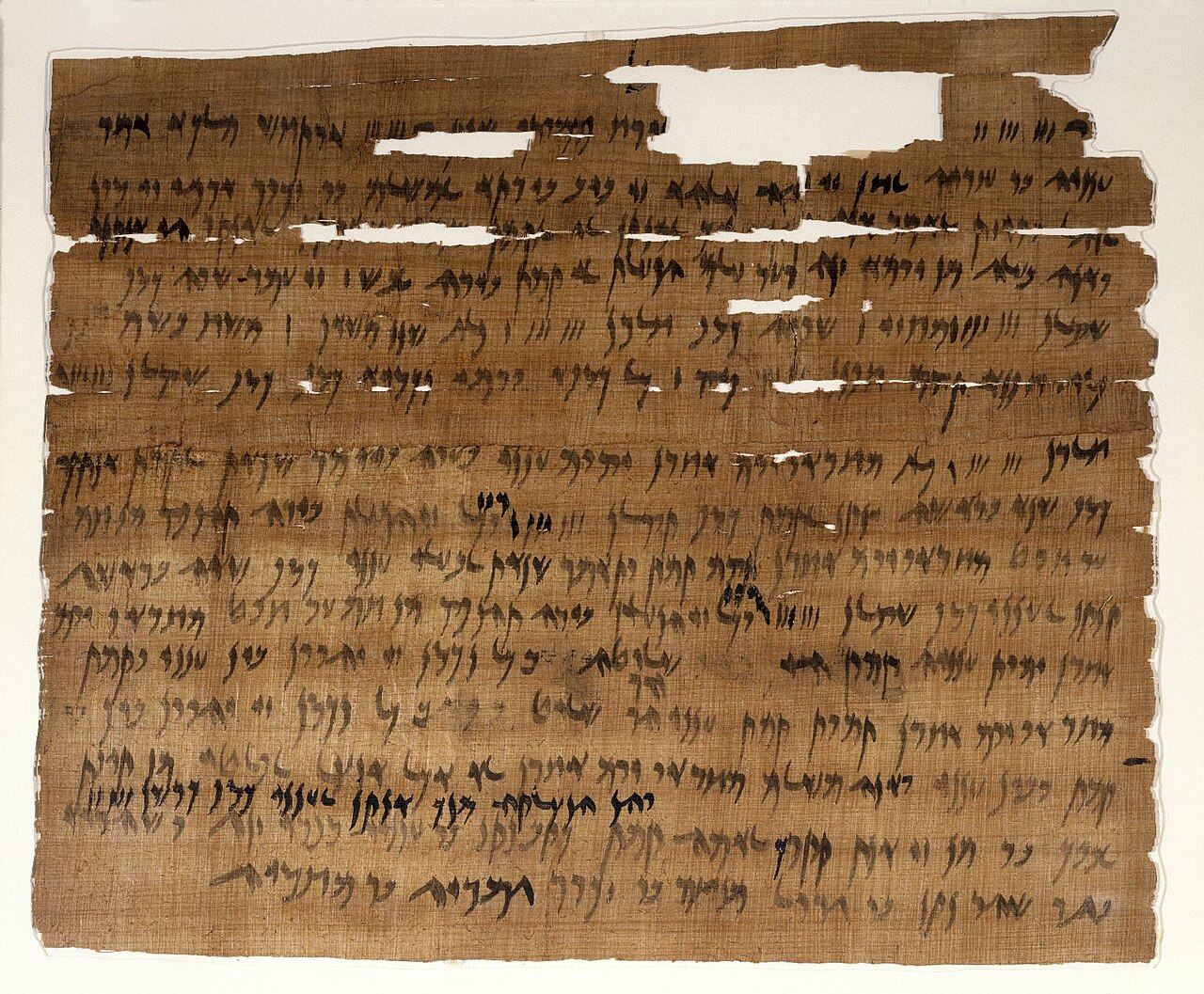
Investigation: Sanballat, Bagohi and the Elephantine Archive →In 407 BC the Jewish garrison at Elephantine wrote to Bagohi, governor of Judah, asking help to rebuild their temple, destroyed in 410. They mention Johanan the high priest in Jerusalem and Delaiah and Shelemiah, sons of Sanballat, governor of Samaria. These are contemporary documents naming people from Nehemiah's world, a generation later. They do not mention Nehemiah, and Bagohi is not Nehemiah.
Haman, the Lot and the Death Decree →The king promotes Haman son of Hammedatha the Agagite above all the princes. Everyone at the king's gate bows to him except Mordecai, who has told them he is a Jew. Haman decides to destroy all Mordecai's people. In Nisan of the twelfth year the lot (pur) is cast before him and falls on Adar. He offers the king 10,000 talents of silver; the king gives him his signet ring. On 13 Nisan letters go out in every language: on 13 Adar, kill all the Jews, young and old, women and children, and plunder their goods. "The king and Haman sat down to drink; but the city Shushan was perplexed."