How Ezra Came to Us
One book with Nehemiah, two languages, one Qumran scroll, and two Greek books called Esdras
In the Hebrew Bible, Ezra and Nehemiah form one book, counted as one in the Talmud (Bava Batra 14b–15a) and treated as one by the Masoretes, whose notes at the end of Nehemiah count the verses of both together. Christian writers divided it into two books by the 3rd century AD (Origen noted that the Hebrews counted them as one), Jerome's Vulgate kept the division, and it entered printed Hebrew Bibles in the 15th–16th centuries.
Sources inside the book
- Ezra's first-person memoir: 7:27–9:15 ("I"), with third-person narrative about him in 7:1–11 and chapter 10.
- Lists: returnees (2), Ezra's companions (8:1–14), the men with foreign wives (10:18–44).
- Official documents in Aramaic: 4:8–22; 5:7–17; 6:3–12; 7:12–26.
- Narrative: 1; 3; 4:1–7, 23–24; 5:1–5; 6:13–22.
Whether the historical Ezra wrote the memoir, and who joined these sources with Nehemiah's memoir, is unknown. Jewish tradition (Bava Batra 15a) says Ezra wrote his book and the genealogies of Chronicles; many modern scholars think a later editor combined the materials. The shared verses with 2 Chronicles 36 link the books but do not prove one author.
Hebrew and Aramaic
| Verses | Language | Contents |
|---|---|---|
| 1:1–4:7 | Hebrew | The decree, the list, the altar, early opposition |
| 4:8–6:18 | Aramaic | Letters to and from Artaxerxes and Darius, and narrative |
| 6:19–7:11 | Hebrew | Passover; Ezra introduced |
| 7:12–26 | Aramaic | Artaxerxes' decree |
| 7:27–10:44 | Hebrew | Ezra's memoir and the marriages |
Aramaic was the language of Persian administration. The language switch is a feature of the oldest known form of the text; translations usually hide it. Linguistic analysis can suggest when the Hebrew and Aramaic were written, but the date of a book's language is not the same as the date of the events it reports.
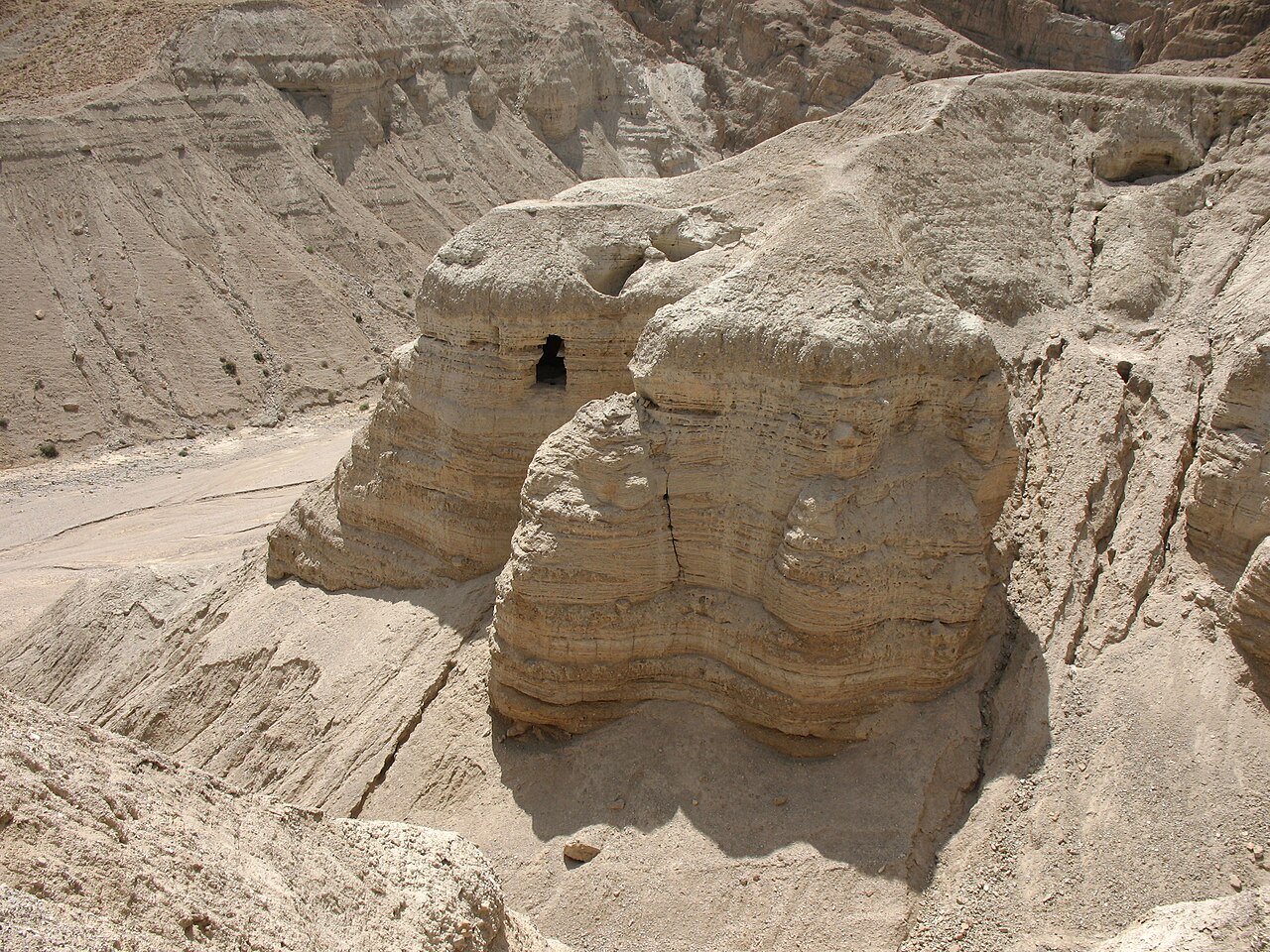
4Q117 (4QEzra)
Three small fragments from Qumran Cave 4, published by Eugene Ulrich in DJD XVI (2000), reportedly preserve parts of Ezra 4:2–6, 4:9–11 and 5:17–6:5, in a hand of the 1st century BC. It is the only identified Qumran copy of Ezra; no copy of Nehemiah has been identified (a fragment once proposed for Nehemiah is disputed). 4Q118 is sometimes listed nearby but belongs, if anywhere, with Chronicles. The site has not yet collated 4Q117's letters against the DJD plates; differences from the Masoretic Text are reported to be minor.
The Masoretic Text
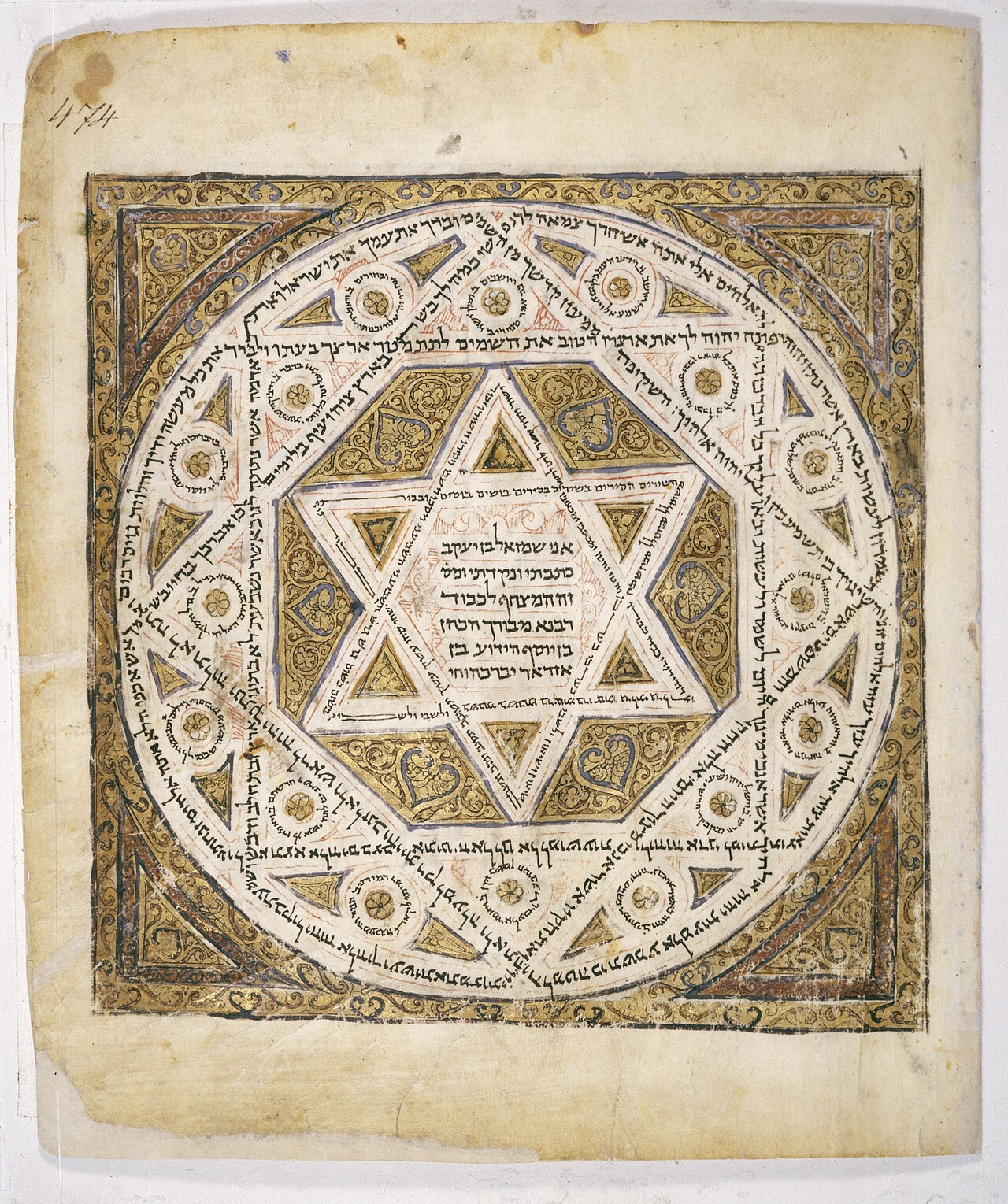
The complete Hebrew–Aramaic text survives in the Masoretic codices. The Aleppo Codex (c. 930) placed Ezra–Nehemiah at the end of the Writings, but its final pages were lost after 1947 and Ezra–Nehemiah is reported not to survive in it (to be confirmed against the facsimile); the Leningrad Codex (1008) is the basis of the library's Hebrew (the Westminster Leningrad Codex). Modern critical editions are BHS and, for Ezra–Nehemiah, the Biblia Hebraica Quinta fascicle edited by D. Marcus (2006).
Two Greek books called Esdras
| Greek name | English names | What it is | Contents |
|---|---|---|---|
| Esdras B (Esdras β) | "2 Esdras" in some Septuagint editions; = Ezra–Nehemiah | A close Greek translation of Hebrew–Aramaic Ezra–Nehemiah | Ezra 1–10 and Nehemiah 1–13 in the Hebrew order |
| Esdras A (Esdras α) | 1 Esdras (English Apocrypha); 3 Esdras (Vulgate appendix) | A separate Greek book, freer in style | 2 Chronicles 35–36; Ezra 1–10 rearranged; the story of the three bodyguards (1 Esdras 3:1–5:6); Nehemiah 7:73–8:12; no other Nehemiah |
1 Esdras: a different edition
1 Esdras begins with Josiah's Passover (2 Chronicles 35), places the Artaxerxes correspondence (Ezra 4:7–24) before the return under Zerubbabel, adds the contest of Darius' three bodyguards over what is strongest (wine, the king, women, and above all truth: "Great is Truth, and mighty above all things," 4:41), in which Zerubbabel wins and asks Darius to fulfill the vow to rebuild Jerusalem, and ends with Ezra reading the law (Nehemiah 8), with no mention of Nehemiah in that scene. Its numbers and names often differ. Scholars debate whether 1 Esdras is a fragment of an older edition of Ezra (some, including D. Böhler, argue for priority in parts) or a later reworking (the majority). It is not a lost chapter of Hebrew Ezra, and the bodyguards story has no Hebrew original.
Josephus (Antiquities 11) follows 1 Esdras, including the bodyguards story, for this period. Orthodox churches generally treat 1 Esdras (Esdras A) as part of the Old Testament; the Catholic canon does not (it is in the Vulgate appendix); Protestant Bibles place it in the Apocrypha, if at all; it is not part of the Jewish Bible.
The library's Greek and Latin
The library's Greek for both Ezra and 1 Esdras is Giguet's 19th-century French translation of a Septuagint text, not the Greek itself. Where it differs (for example 4:7 "a peaceable letter," 8:17 "the silver of the region," 9:1 "Moserites," 10:15 "there were with me only"), the site labels the reading as known only through translation. The Greek of Esdras B and Esdras A should be checked in Hanhart's Göttingen editions (Esdras A 1974; Esdras B 1993) before certification. The Clementine Vulgate is the library's Latin; the KJV with Apocrypha gives the English of 1 Esdras. The Syriac Peshitta of Ezra is not in the library's on-site editions and has not been compared; where Syriac readings are mentioned, they are reported from scholarship.
What the evidence shows
- Ezra and Nehemiah were one book in Hebrew tradition.
- Ezra is written partly in Aramaic.
- 4Q117 preserves fragments of Ezra 4–6.Source: Qumran Digital Reader, 4Q117 (4QEzra), transcription ↗; E. Ulrich, "4QEzra," in Qumran Cave 4.XI: Psalms to Chronicles, DJD XVI (2000) (edition not yet consulted by the site)
- The whole book of Ezra survives at Qumran.
- 1 Esdras is a different Greek book from Esdras B.Source: NETS, 1 Esdras (tr. R. G. Wooden, based on R. Hanhart's Göttingen edition), introduction and translation ↗; SBL Handbook of Style, 2nd ed. (2014), Esdras nomenclature ↗
- 1 Esdras preserves an earlier edition of Ezra.Source: D. Böhler, on the relationship between 1 Esdras and Ezra–Nehemiah (Tübingen repository PDF) ↗; L. S. Fried, "Text-Critical Issues in Ezra–Nehemiah and 1 Esdras," Oxford Handbook ↗
- Ezra wrote the book that bears his name. Jewish tradition (Bava Batra 15a); most modern scholars think of a later editor using his memoir.
- The letters in Ezra are original Persian documents in our possession.
Then and Later
Ezra, then and later
- 5th c. BCSources Lists, letters, Ezra's memoir.
- 4th c. BC (commonly)Ezra–Nehemiah Combined into one book.
- 2nd c. BCGreek 1 Esdras; later Esdras B.The Septuagint →
- 1st c. BC4Q117 Copied at Qumran.The Dead Sea Scrolls →
- 1st c. ADJosephus Follows 1 Esdras.
- c. AD 400Vulgate Jerome divides Ezra and Nehemiah.Jerome and the Masoretes →
- AD 1008Leningrad Codex Complete Hebrew–Aramaic text.
Continue the journey
Journey of a PassageEzra 1–10 and 1 Esdras 1–9: Ezra and 1 Esdras: two editions of one story1 Esdras (Greek Esdras A) is not a translation of Ezra but a separate retelling.More from this lesson
Investigations
Optional deep dives: the ancient sources, the physical evidence, and every interpretation side by side, including unconventional ones, each labeled for what it is.
4Q117: Ezra among the Dead Sea ScrollsManuscript: authentic · Coverage: fragments of chs. 4–6 (reported) · Letters: not yet collated by the site
What does the one Qumran manuscript of Ezra preserve?
4Q117 (4QEzra) is the only identified copy of Ezra from Qumran: three small fragments of the Aramaic section, reportedly 4:2–6, 4:9–11 and 5:17–6:5, copied in the 1st century BC and published by Eugene Ulrich in DJD XVI (2000). It is the oldest surviving copy of Ezra. It does not preserve the whole book, and it says nothing about who wrote it.
Open the full investigation →Echoes Across Civilizations
Optional: how other ancient peoples told similar stories. Open one to compare, then come back to the lesson.
Letters of the Persian empireJewish (Egypt) · Persian
How do the Aramaic letters in Ezra compare with real letters of the Persian empire?
- Jewish (Egypt): Elephantine petition and memorandum Possible historical contact
- Persian: Letters of the satrap Arshama Possible historical contact
- Persian: Aramaic copy of the Behistun inscription Possible historical contact
Why this matters to the rest of Scripture
- The shared verses.
- Ezra reads the law.
- The three bodyguards.
- The other long Aramaic section of the Hebrew Bible.
Sources to explore
- Qumran Digital Reader, 4Q117 (4QEzra), transcription ↗
- NETS, 1 Esdras (tr. R. G. Wooden, based on R. Hanhart's Göttingen edition), introduction and translation ↗
- L. S. Fried, "Text-Critical Issues in Ezra–Nehemiah and 1 Esdras," Oxford Handbook ↗
- D. Böhler, on the relationship between 1 Esdras and Ezra–Nehemiah (Tübingen repository PDF) ↗
- SBL Handbook of Style, 2nd ed. (2014), Esdras nomenclature ↗
- Open-access study of Ezra–Nehemiah as a literary unit (Old Testament Essays / SciELO SA, 2021) ↗
- J. C. Reeves, "ʿEzrā, Book of," Encyclopaedia Iranica ↗
Overviews are a starting point. Each links onward to the primary sources and specialist studies behind it.