The Caravan from Ahava
"I was ashamed to require of the king a band of soldiers"
"These are now the chief of their fathers, and this is the genealogy of them that went up with me from Babylon, in the reign of Artaxerxes the king. Of the sons of Phinehas; Gershom: of the sons of Ithamar; Daniel: of the sons of David; Hattush." Twelve lay families follow, from Parosh to Bigvai.
"And I gathered them together to the river that runneth to Ahava; and there abode we in tents three days: and I viewed the people, and the priests, and found there none of the sons of Levi." Ezra sends leaders "unto Iddo the chief at the place Casiphia" to bring "ministers for the house of our God." Sherebiah comes with eighteen kinsmen, Hashabiah and Jeshaiah with twenty, and 220 Nethinim, "all of them were expressed by name."
"Then I proclaimed a fast there, at the river of Ahava, that we might afflict ourselves before our God, to seek of him a right way for us, and for our little ones, and for all our substance. For I was ashamed to require of the king a band of soldiers and horsemen to help us against the enemy in the way: because we had spoken unto the king, saying, The hand of our God is upon all them for good that seek him." "So we fasted and besought our God for this: and he was intreated of us."
Ezra weighs out to twelve chief priests 650 talents of silver, silver vessels of a hundred talents, a hundred talents of gold, twenty gold bowls worth a thousand darics, and two vessels of fine bright bronze "precious as gold." "Ye are holy unto the LORD; the vessels are holy also… Watch ye, and keep them."
They leave the river Ahava on the twelfth day of the first month, "and the hand of our God was upon us, and he delivered us from the hand of the enemy, and of such as lay in wait by the way." In Jerusalem, after three days, everything is weighed again in the temple and "all the weight was written at that time." The returned exiles offer twelve bulls for all Israel, 96 rams, 77 lambs and twelve goats, and deliver the king's commissions to the satraps and governors.
The roster
| Family | Leader | Men |
|---|---|---|
| Phinehas (priests) | Gershom | — |
| Ithamar (priests) | Daniel | — |
| David | Hattush (of the sons of Shechaniah?) | — |
| Parosh | Zechariah | 150 |
| Pahath-moab | Elihoenai son of Zerahiah | 200 |
| (Zattu?) Shechaniah | son of Jahaziel | 300 |
| Adin | Ebed son of Jonathan | 50 |
| Elam | Jeshaiah son of Athaliah | 70 |
| Shephatiah | Zebadiah son of Michael | 80 |
| Joab | Obadiah son of Jehiel | 218 |
| (Bani?) Shelomith | son of Josiphiah | 160 |
| Bebai | Zechariah son of Bebai | 28 |
| Azgad | Johanan son of Hakkatan | 110 |
| Adonikam | Eliphelet, Jeiel, Shemaiah | 60 |
| Bigvai | Uthai and Zabbud | 70 |
| Total lay men (site's sum) | 1,496 | |
| Levites | Sherebiah; Hashabiah and Jeshaiah of Merari | 18 + 20 |
| Nethinim | 220 |
In 8:3, 5 and 10 the Hebrew seems to have lost family names: 1 Esdras 8:32, 36 reads "of the sons of Zathoes, Sechenias" and "of the sons of Banias, Salimoth," giving Zattu and Bani as in Ezra 2. Hattush "of the sons of David" appears in 1 Chronicles 3:22 among Zerubbabel's descendants. Most of these families had relatives in the earlier return (Ezra 2), so the caravan joined kin already in Judah.
Ahava and Casiphia
Ahava is a river or canal, and also a place name, in Babylonia; Casiphia is "the place" (hammaqom) where Iddo led a community of Levites and temple servants. Neither is located. Because hammaqom can mean a sanctuary, some scholars suggest Casiphia had a Jewish cult center or school. The name may come from kesef, "silver": the library's Greek (Giguet) translates "with the silver of the region" instead of a place name. The atlas therefore shows no pin for either.
No escort
Nehemiah, a few years later, travels with army officers and horsemen (Nehemiah 2:9); 1 Esdras 5:2 says Darius sent a thousand horsemen with the earlier returnees. Ezra refuses an escort because of what he had told the king about God's protection. The text says the hand of God delivered them from enemies "by the way"; it does not describe an attack.
Four months on the road
Ezra 7:9 dates the start to the first day of the first month (the decision to go up); 8:31 dates the departure from Ahava to the twelfth; 7:9 and 8:32 date the arrival to the first of the fifth month. A caravan with families, animals and treasure covering roughly 1,400–1,600 km along the Euphrates and through Syria in about three and a half months is realistic. The route is not given; the atlas shows a schematic corridor.
The treasure
650 talents of silver is about 22 tonnes, and 100 talents of gold about 3.4 tonnes, enormous sums for a small province. Some suspect inflated or miscopied numbers; others note that these were gifts of the king, his counselors, Babylonian Jews and the temple's own funds. Darics, Persian gold coins introduced by Darius I, fit the period. The weighing and recording at both ends (8:25–27, 33–34) is the kind of accountability Persian administrative documents show.
The Case for the Biblical Account
Scripture's account
A caravan of about 1,500 men with families, Levites and temple servants travels from Babylonia to Jerusalem with temple treasure, under Ezra (Ezra 8).
What evidence would we expect?
Jewish communities in Babylonia, including cultic personnel; Persian road and administrative systems; record-keeping of valuables.
The discoveries
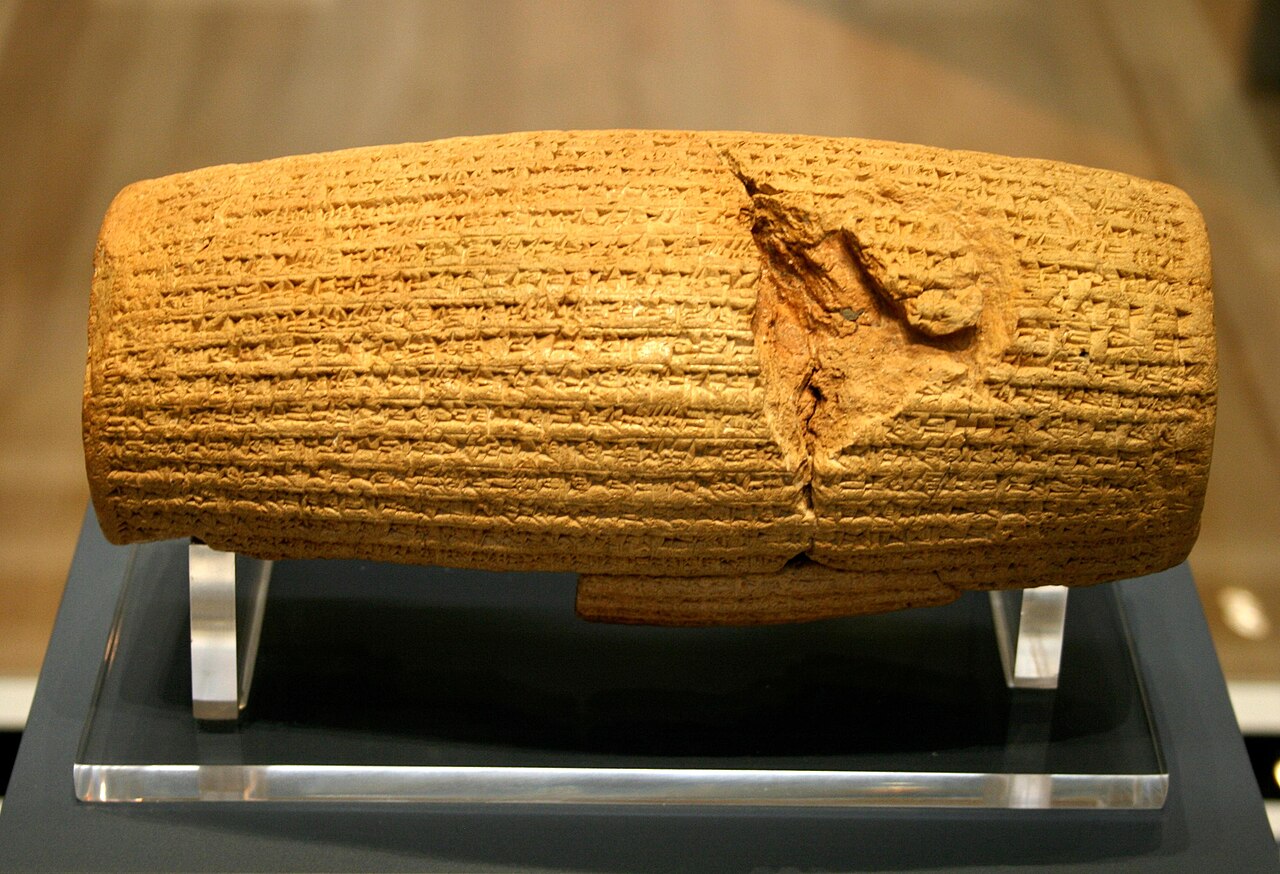
Al-Yahudu and Murashu archives (Nippur, 5th c. BC) record Judeans in Babylonia, including Yahwistic names. Persepolis tablets document travel rations on royal roads. Darics are well attested.
Testing the discoveries
They show the world of the caravan; no record names Ezra's group, Iddo, or Casiphia.
The strongest reconstruction
A Babylonian Jewish group, organized by families, migrated to Judah under a priestly leader with royal sanction.
What remains possible
The location of Ahava and Casiphia; the exact sums.
What the evidence shows
- Ezra 8:3–14 counts 1,496 lay men. Site's sum from the KJV text.
- Judeans lived in Babylonia in the 5th century BC. Murashu archive; Al-Yahudu tablets.
- Ahava and Casiphia have been located.
- The sums of silver and gold are exact as given.
- "The hand of our God was upon us."
Continue the journey
Journey of a PassageEzra 8:15–20: Ahava and "the place Casiphia"Ezra gathers at the river Ahava and sends to Iddo "at the place Casiphia" for Levites.More from this lesson
On the map
Location securely identified Probable identification Proposed or debated location Biblical route (roads schematic) Scholarly proposal
- Ezra's caravan (schematic). Conceptual only. The caravan gathered at the river Ahava (unlocated) near Babylon, left on the 12th day of the first month and reached Jerusalem on the first day of the fifth month. Casiphia is also unlocated. The line is schematic; no stops are recorded.
Why this matters to the rest of Scripture
- The same families in the earlier return.
- Hattush, of David's line.
- Levites as carriers of the holy vessels.
- Nehemiah's escort.
- "The LORD shall preserve thy going out and thy coming in."
- Fasting.