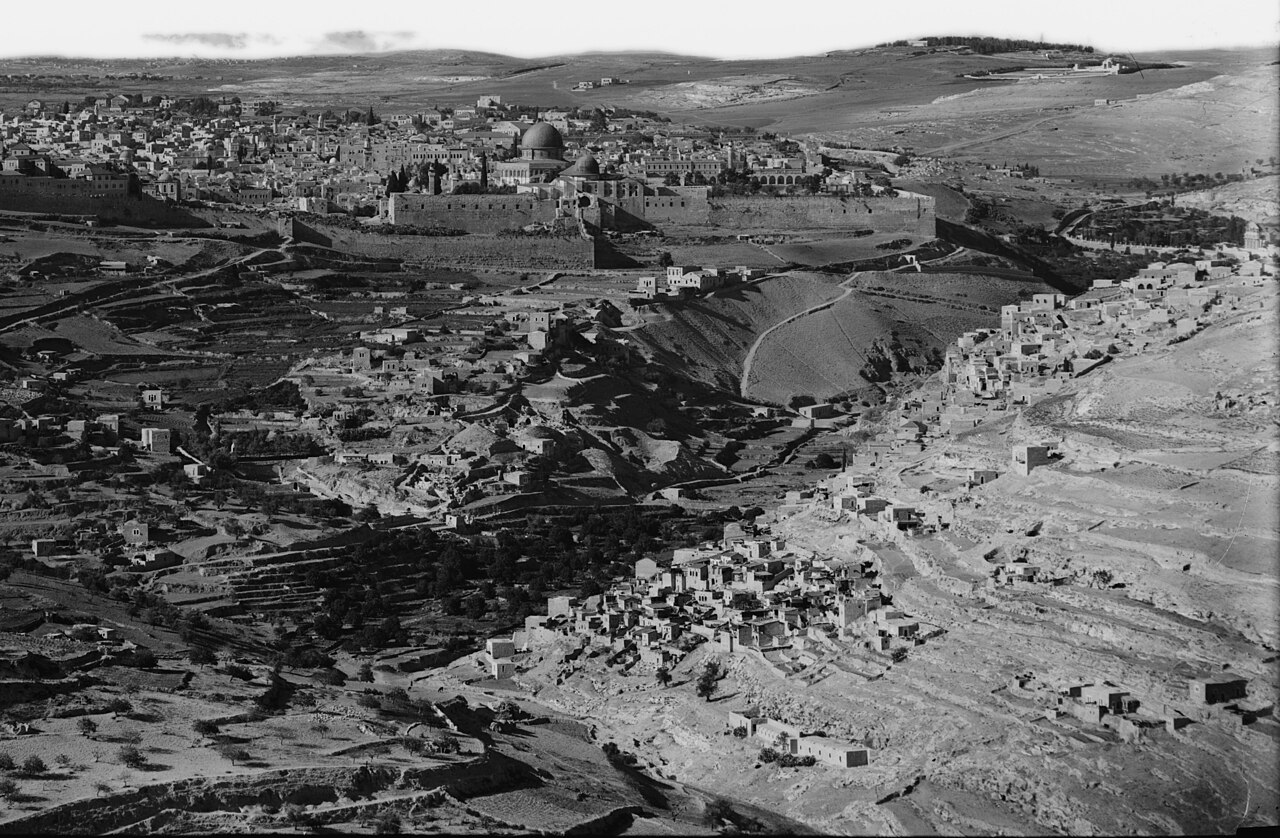
Investigation: Did Archaeologists Find Nehemiah's Wall?
A tower, a fill and a dating debate
Nehemiah 3 names gates, towers and pools on a circuit that took 52 days to repair. If it happened as described, archaeologists might expect a 5th-century BC wall line on the City of David ridge, perhaps reusing Iron Age foundations, with Persian-period pottery sealed against or beneath it.
What has been found? On the eastern slope of the City of David, above the "Stepped Stone Structure," stands the so-called Northern Tower. Earlier excavators (Macalister and Duncan in the 1920s; Kenyon in the 1960s; Shiloh in the 1970s–80s) dated it variously, Kenyon to the Persian or Hellenistic period.
In 2007 Eilat Mazar excavated beneath the tower and reported 5th-century BC pottery and bullae in the fill, concluding the tower and adjacent wall were built in Nehemiah's time. She published the claim in Biblical Archaeology Review (2009).
Israel Finkelstein (2008, 2009) answered that pottery in a fill gives only the earliest possible date (a terminus post quem); the tower could be centuries later, as Kenyon's Hellenistic finds against it suggest. He also argued that Persian-period Jerusalem was a small settlement of a few hundred people, confined to the central ridge, and that Nehemiah 3's long wall list may reflect the Hasmonean city of the 2nd century BC.
Margreet Steiner (2021) reviewed the evidence and found Persian-period remains scarce and the wall's date unproven. A 2025 study of construction on the western slope of the southeastern hill re-examined fills and late Hellenistic building phases, adding to the doubts about Mazar's dating. The debate is open.
The Case for the Biblical Account
Scripture's account
Jerusalem's walls and gates, broken since 586 BC, are repaired in 52 days under Nehemiah (c. 445 BC), section by section (Nehemiah 3; 6:15).
What evidence would we expect?
A wall line on the City of David ridge with Persian-period construction, probably on older foundations; Persian-period settlement inside it.
What has been found
The Northern Tower and adjacent wall on the eastern slope; Persian-period pottery and seal impressions in fill beneath (Mazar 2007); Yehud stamps elsewhere in the City of David; sparse Persian-period architecture overall.
Testing the evidence
Fill gives a lower limit, not a construction date. Kenyon found Hellenistic pottery against the tower. The extent of Persian-period settlement is debated; low estimates fit a short wall, not Nehemiah 3's full list.
The strongest reconstruction
Nehemiah likely restored a defensive line around the City of David and temple area, largely on Iron Age foundations. Which surviving stones, if any, belong to it is unknown.
What remains possible
That the Northern Tower is Persian; that Nehemiah 3 describes a larger city including the western hill; or that the list was expanded later. Further excavation, especially sealed floors against walls, could decide.
Why dating walls is hard
Walls are dated by what lies under, against and inside them. Pottery in fill beneath can be older than the wall by centuries; only floors or deposits sealed against the wall's face date its use. In Jerusalem, constant rebuilding on the same lines mixed the layers.
Not Nehemiah's
The site will not label any photograph "Nehemiah's wall." The Herodian stones of the Western Wall are 1st century BC; the Siloam tunnel is 8th century BC; the stepped Pool of Siloam is 1st century BC to 1st century AD.
The population question
Finkelstein's estimate of a few hundred inhabitants relies on a small settled area (2–3 hectares) and a density coefficient. Others (Lipschits, Ussishkin, Geva) estimate 1,000–3,000 or argue that later disturbance destroyed Persian remains. Nehemiah 11 implies thousands. Absence of evidence in heavily rebuilt areas is weak evidence of absence.
What the evidence shows
- Eilat Mazar dated the Northern Tower to Nehemiah's time from pottery in the fill beneath.Source: E. Mazar, "The Wall That Nehemiah Built," Biblical Archaeology Review 35.2 (2009) (not consulted in full)
- Fill beneath a wall provides only an earliest possible date.
- The Northern Tower is part of Nehemiah's wall.Source: I. Finkelstein, "Jerusalem in the Persian (and Early Hellenistic) Period and the Wall of Nehemiah," JSOT 32.4 (2008): 501–520 (abstract consulted) ↗; M. L. Steiner, "The Walls that Nehemiah Built: The Town of Jerusalem in the Persian Period," Bible and Interpretation (2021) ↗; "Manasseh's Wall and Construction Operations on the Western Slope of the Southeastern Hill of Jerusalem" (2025; publisher listing, full bibliographic details to verify) ↗
- Persian-period Jerusalem was small. How small is debated.
Continue the journey
Journey of a PassageNehemiah 3:15: The pool of Shelah, or the shearing poolShallun builds "the wall of the pool of Shelah by the king's garden." The Vulgate and KJV make it the pool of Siloah/Siloam; the library's Greek (Giguet) reads it as "the pool where fleeces are washed at the king's shearing."More from this lesson
Investigations
Optional deep dives: the ancient sources, the physical evidence, and every interpretation side by side, including unconventional ones, each labeled for what it is.
The Yehud Stamp ImpressionsProvince of Yehud: documented · Link to specific events or persons in Ezra: none
What do the jar handles stamped "Yehud" tell us about the Persian province?
Jar handles stamped in Aramaic script with YHD or YHWD ("Yehud"), sometimes with a name or the title "governor," were used by the Persian and early Hellenistic administration of Judah. Most come from Ramat Rahel and Jerusalem; a 2020 tabulation counts several hundred from Ramat Rahel. Together with 4th-century YHD coins, they show a province called Yehud. They do not name Ezra, Zerubbabel or Nehemiah.
Open the full investigation →Nehemiah's Wall: Found or Not?Wall line: textual · Northern Tower date: disputed · Persian-period settlement: small, debated
Has any excavated wall in Jerusalem been securely dated to Nehemiah's rebuilding?
Eilat Mazar (2007) dated the Northern Tower on the City of David's eastern slope to the 5th century BC from Persian-period pottery and bullae in the fill below. Kenyon had found Hellenistic material against it; Finkelstein (2008, 2009) argued that fill gives only an earliest date and that Persian-period Jerusalem was small. Steiner (2021) and a 2025 study of construction on the southeastern hill add doubts. No structure is securely Nehemiah's.
Open the full investigation →Echoes Across Civilizations
Optional: how other ancient peoples told similar stories. Open one to compare, then come back to the lesson.
Walls that made a cityMesopotamian · Assyrian / Babylonian · Greek
Why did ancient peoples treat rebuilding a city wall as restoring the city itself?
- Mesopotamian: The walls of Uruk in Gilgamesh Resemblance only
- Assyrian / Babylonian: Royal wall-building inscriptions Resemblance only
- Greek: Themistocles' wall (479–478 BC) Resemblance only
Why this matters to the rest of Scripture
- The builders and gates.
- Finished in 52 days.
- "The city was large and great: but the people were few."