"Then Eliashib the high priest rose up with his brethren the priests, and they builded the sheep gate; they sanctified it, and set up the doors of it." Next to them build the men of Jericho; next, Zaccur son of Imri.
The sons of Hassenaah build the Fish Gate. Meremoth, Meshullam and Zadok repair. "And next unto them the Tekoites repaired; but their nobles put not their necks to the work of their Lord."
Goldsmiths and perfumers build; district rulers of Jerusalem, Beth-haccherem, Mizpah, Beth-zur and Keilah build. "And next unto him repaired Shallum the son of Halohesh, the ruler of the half part of Jerusalem, he and his daughters."
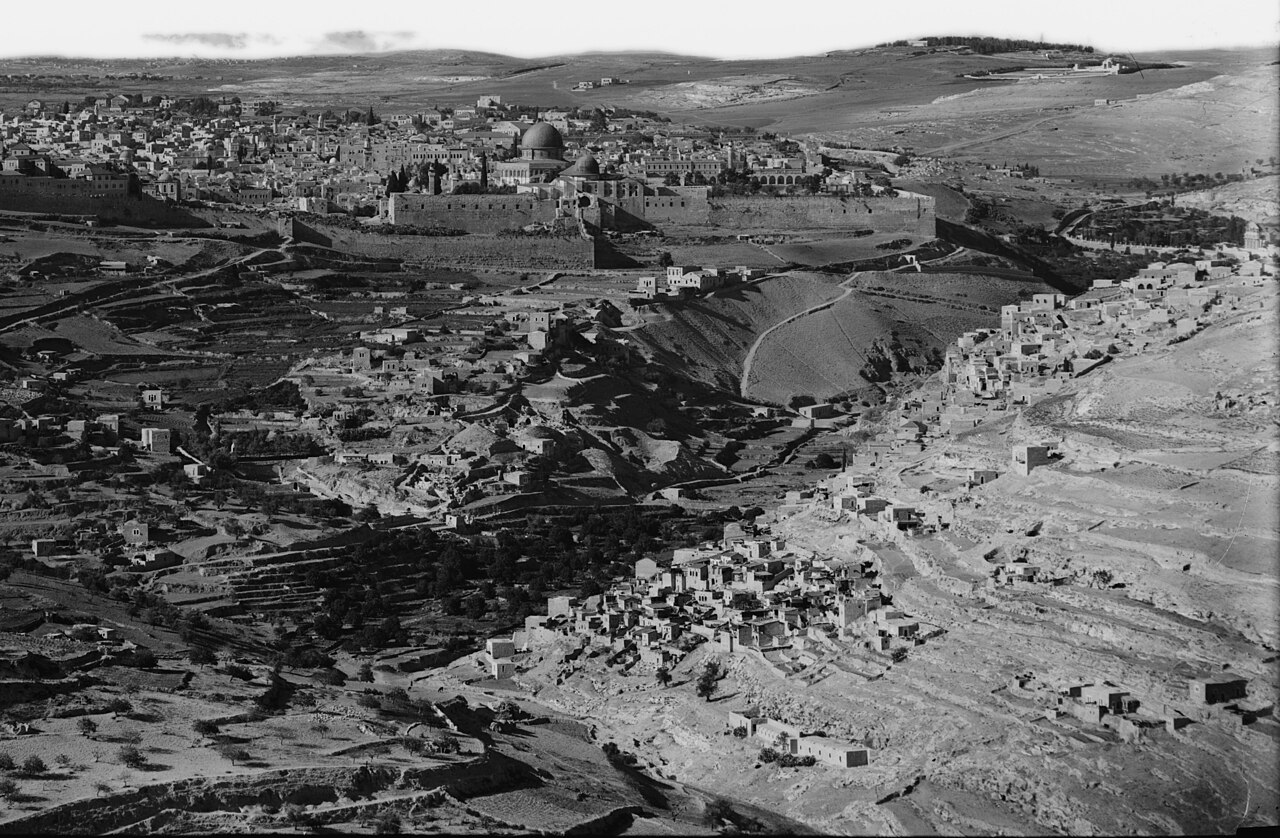
Some repair opposite their own houses. Hanun and the people of Zanoah repair the Valley Gate and a thousand cubits of wall. Shallun repairs the Fountain Gate and "the wall of the pool of Siloah by the king's garden, and unto the stairs that go down from the city of David." Others build past the sepulchres of David, the armoury, the tower that lies out and the Water Gate.
The Tekoites repair a second section. Priests repair above the Horse Gate, "every one over against his house." Finally "between the going up of the corner unto the sheep gate repaired the goldsmiths and the merchants." The circuit closes where it began.
| Section (Neh 3) | Builders named | Landmark | Location confidence |
|---|---|---|---|
| 3:1–2 | Eliashib the high priest and the priests; men of Jericho; Zaccur son of Imri | Sheep Gate; towers of Hammeah (the Hundred) and Hananel | North of the temple area (general); exact line unknown |
| 3:3–5 | Sons of Hassenaah; Meremoth son of Uriah; Meshullam son of Berechiah; Zadok son of Baana; the Tekoites (their nobles refused) | Fish Gate | North side (general) |
| 3:6–12 | Joiada and Meshullam; Melatiah of Gibeon; Jadon of Meronoth; men of Gibeon and Mizpah; Uzziel the goldsmith; Hananiah the perfumer; Rephaiah, ruler of half Jerusalem; Jedaiah; Hattush; Malchijah and Hasshub; Shallum, ruler of half Jerusalem, "he and his daughters" | Old Gate (Jeshanah); Broad Wall; Tower of the Furnaces | Western hill or north-west (debated) |
| 3:13–14 | Hanun and the inhabitants of Zanoah; Malchijah son of Rechab, ruler of Beth-haccherem | Valley Gate; a thousand cubits of wall; Dung Gate | Southwest of the City of David ridge (proposed) |
| 3:15–25 | Shallun, ruler of Mizpah district; Nehemiah son of Azbuk, ruler of half Beth-zur; Levites under Rehum; Hashabiah and Bavvai of Keilah; Ezer; Baruch; Meremoth; priests of the plain; Benjamin and Hasshub; Azariah; Binnui; Palal | Fountain Gate; pool of Shelah (Siloah) by the king's garden; stairs from the City of David; sepulchres of David; the artificial pool; house of the mighty; the armoury; the angle; the tower that lies out | Southern and eastern City of David (best-anchored part of the list) |
| 3:26–32 | The Nethinim on Ophel; the Tekoites again; priests above the Horse Gate; Zadok son of Immer; Shemaiah; Hananiah and Hanun; Meshullam son of Berechiah; Malchiah the goldsmith; goldsmiths and merchants | Water Gate; Ophel; Horse Gate; East Gate; Miphkad (Muster/Inspection) Gate; ascent of the corner; back to the Sheep Gate | East side toward the Kidron and the temple (general) |
Shallum's daughters
"He and his daughters" (3:12) is the only mention of women among the builders. Some suggest "daughters" means dependent villages, as "daughters" of a city often does (e.g. Numbers 21:25), but the phrase "he and his daughters" most naturally means his daughters. The library's Greek, Latin and English all read daughters. Either way, the text records them.
Nobles who would not stoop
The Tekoite nobles "put not their necks" to the work (3:5), a yoke image. The ordinary Tekoites built two sections (3:5, 27). The text does not say why the nobles refused; some suggest ties with Geshem or the southern region. It records a class division without explaining it.
"Repaired" or "built"
Two verbs alternate: banah, "build" (for gates), and hehezik, "strengthen, repair" (for most sections). The list suggests much of the old wall line was repaired, not rebuilt from the foundation, which fits a 52-day project (6:15).
Nehemiah son of Azbuk
"Nehemiah the son of Azbuk, the ruler of the half part of Beth-zur" (3:16) is a different man from the governor, who never names himself in the list. Names repeat often (two Meshullams, two Malchijahs, two Hananiahs).
The pool of Shelah
3:15 names "the pool of Shelah" (KJV "Siloah"), near the king's garden and the stairs of the City of David. The Iron Age Siloam tunnel (Hezekiah's) brought water to this area; the large stepped pool excavated since 2004 dates to the Second Temple (Herodian) period. Neither is "Nehemiah's pool." The library's Greek (Giguet) reads the name as "the pool where fleeces are washed at the king's shearing," taking shelah as a word for fleece or shearing.
A text, not a survey
The list moves counter-clockwise from the Sheep Gate in the north, down the west side, around the south, up the east and back. Scholars disagree whether it included the western hill (the later Upper City) or only the City of David and temple area. Gate names (Fish, Valley, Water, Horse) recur in other periods (2 Chronicles 33:14; Jeremiah 31:38–40), so finding a gate of that name in a later period does not prove its location in 445 BC.
Where did the builders come from?
Builders came from Jericho, Tekoa, Gibeon, Mizpah, Zanoah, Beth-haccherem, Beth-zur, Keilah and the "plain." Their towns sketch Persian Yehud's extent: from Jericho to Beth-zur, from Mizpah to Keilah, an area roughly 40 by 40 km. Beth-haccherem is often identified with Ramat Rahel, the Persian administrative site of the Yehud stamps.
What the evidence shows
- Nehemiah 3 names women among the builders. "He and his daughters"; a minority reading takes "daughters" as villages.
- The gates of Nehemiah 3 can be placed on a modern map. Only the southern and eastern landmarks are reasonably anchored.
- Beth-haccherem is Ramat Rahel.
- The Pool of Siloam excavated since 2004 is Nehemiah's pool of Shelah. That stepped pool is Second Temple period.
Continue the journey
Journey of a PassageNehemiah 3:5, 12: Shallum's daughters and the Tekoite noblesShallum, ruler of half the district of Jerusalem, repairs "he and his daughters"; the nobles of Tekoa refuse to "put their necks" to the work.More from this lesson
Investigations
Optional deep dives: the ancient sources, the physical evidence, and every interpretation side by side, including unconventional ones, each labeled for what it is.
The Yehud Stamp ImpressionsProvince of Yehud: documented · Link to specific events or persons in Ezra: none
What do the jar handles stamped "Yehud" tell us about the Persian province?
Jar handles stamped in Aramaic script with YHD or YHWD ("Yehud"), sometimes with a name or the title "governor," were used by the Persian and early Hellenistic administration of Judah. Most come from Ramat Rahel and Jerusalem; a 2020 tabulation counts several hundred from Ramat Rahel. Together with 4th-century YHD coins, they show a province called Yehud. They do not name Ezra, Zerubbabel or Nehemiah.
Open the full investigation →Nehemiah's Wall: Found or Not?Wall line: textual · Northern Tower date: disputed · Persian-period settlement: small, debated
Has any excavated wall in Jerusalem been securely dated to Nehemiah's rebuilding?
Eilat Mazar (2007) dated the Northern Tower on the City of David's eastern slope to the 5th century BC from Persian-period pottery and bullae in the fill below. Kenyon had found Hellenistic material against it; Finkelstein (2008, 2009) argued that fill gives only an earliest date and that Persian-period Jerusalem was small. Steiner (2021) and a 2025 study of construction on the southeastern hill add doubts. No structure is securely Nehemiah's.
Open the full investigation →Echoes Across Civilizations
Optional: how other ancient peoples told similar stories. Open one to compare, then come back to the lesson.
Walls that made a cityMesopotamian · Assyrian / Babylonian · Greek
Why did ancient peoples treat rebuilding a city wall as restoring the city itself?
- Mesopotamian: The walls of Uruk in Gilgamesh Resemblance only
- Assyrian / Babylonian: Royal wall-building inscriptions Resemblance only
- Greek: Themistocles' wall (479–478 BC) Resemblance only
Why this matters to the rest of Scripture
- The dedication processions walk the same gates.
- Manasseh's outer wall to the Fish Gate.
- John 5:2; 9:7The sheep gate and the pool of Siloam in Jesus' day.