2 Kings 20:20
The conduit and the Siloam inscription
Kings says Hezekiah "made a pool, and a conduit, and brought water into the city." The Siloam inscription, cut inside a tunnel in Jerusalem, describes a tunnel's completion but names no king.
Stable text: no manuscript differences in meaning
The family tree
Each row is a language or text tradition. Witnesses in the same row may share ancestry, revise one another, or have an uncertain relationship; the line under each box says which. A solid arrow appears only where direct copying or a documented revised edition is established. Order by date never implies copying. Scroll sideways on a phone.
✓ contains this verse · ▢ pages lost · – no copy survives
- Same line, through lost copies
- Translation
Every witness, in order
Late 8th–early 7th century BC (by script)
Siloam inscription (Istanbul Archaeological Museums)
How the site knows this: Reported in scholarship; not checked by the site.
the quarrymen struck each toward his fellow, axe against axe, and the water flowed from the spring to the pool, 1,200 cubits
Paleo-Hebrew; found 1880. Names no king.
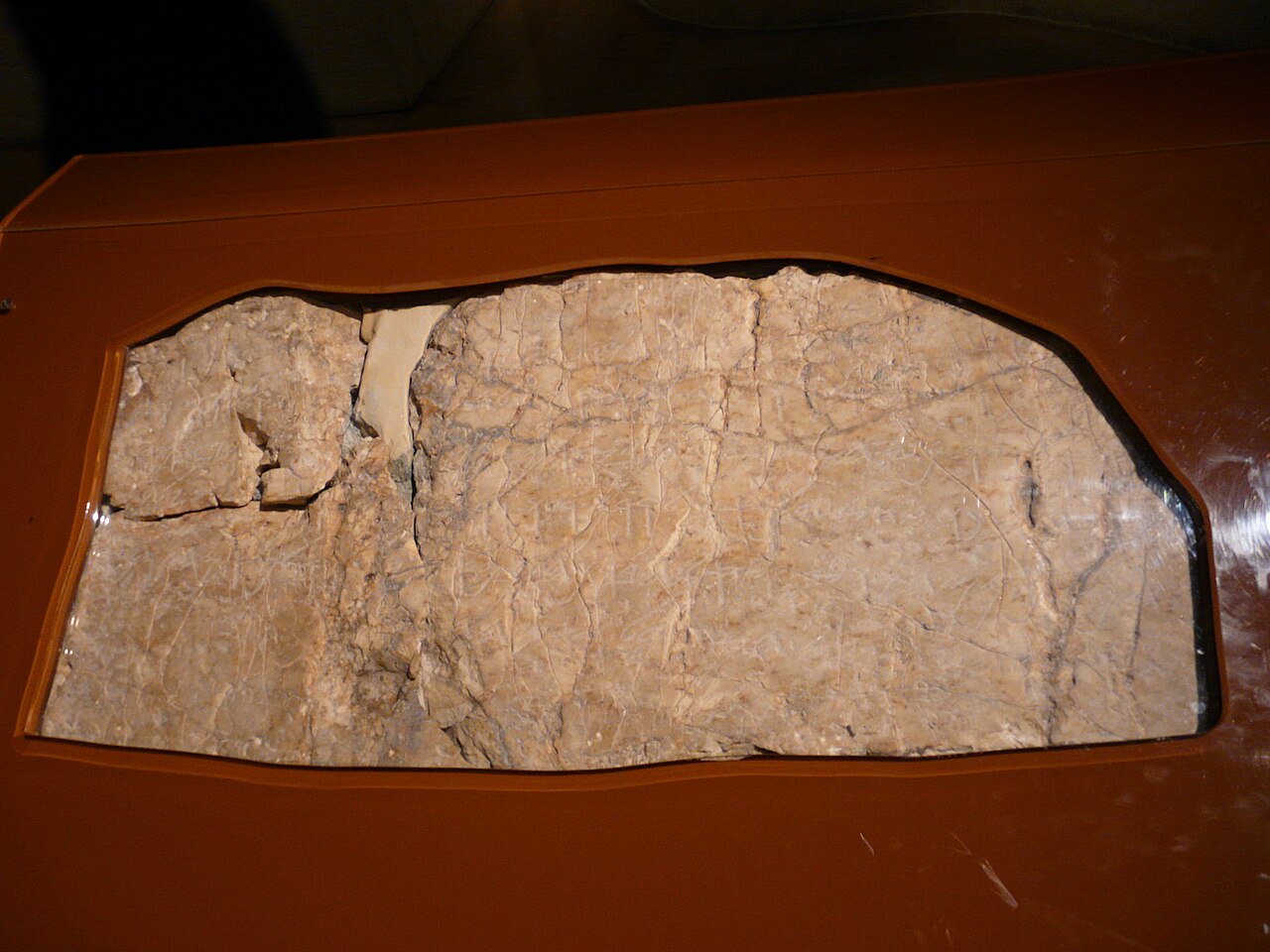
Authentic ancient artifactImage credit Source: University of Michigan, Siloam inscription (image database) ↗; Ancient Hebrew Inscriptions (Cambridge Elements) ↗
Unknown (debated)
Original Kings
No original survives.
Chronicles composed c. 4th century BC
2 Chronicles 32:30 (parallel account, Masoretic Text)
How the site knows this: Read in the site's library text: Westminster Leningrad Codex, a digital transcription of the Leningrad Codex, quoted here in English.
Hezekiah also stopped the upper watercourse of Gihon, and brought it straight down to the west side of the city of David.
KJV of the Masoretic Text.
Translated c. 2nd century BC; kaige revision 1st c. BC–1st c. AD
Septuagint, 4 Kingdoms (library text: Giguet's French)
How the site knows this: Known here only through a translation.
à la fontaine, l'aqueduc et l'eau qu'il a amenée dans la ville
One Greek text (Vaticanus type, kaige revision) via Giguet's French; not checked against a critical Greek edition.
AD 1008
Masoretic Text (Leningrad Codex)
How the site knows this: Read in the site's library text: Westminster Leningrad Codex, a digital transcription of the Leningrad Codex.
אֶת־הַבְּרֵכָה וְאֶת־הַתְּעָלָה וַיָּבֵא אֶת־הַמַּיִם הָעִירָה
the pool and the conduit, and he brought the water into the city
1611
King James Bible
How the site knows this: Read in the site's library text: King James Version (1769 text).
he made a pool, and a conduit, and brought water into the city
What changed, and why
The connection between the tunnel and Hezekiah rests on the texts, the inscription's script and the tunnel's route from Gihon to the west side of the City of David. It is a strong identification, not a signed one.
What the evidence shows
- The inscription names Hezekiah.
- The tunnel is Hezekiah's conduit.
Sources
Related lessons
- Hezekiah's Illness and the Siloam Tunnel →Hezekiah falls mortally ill; Isaiah tells him to set his house in order. He turns to the wall, weeps and prays; God adds fifteen years. A lump of figs is laid on his boil, and as a sign the shadow goes back ten steps on the stairway of Ahaz. Envoys come from Merodach-baladan of Babylon; Hezekiah shows them all his treasures, and Isaiah foretells that everything will be carried to Babylon. Hezekiah's water conduit is noted.
- Evidence Case: Lachish, Siloam and the Destruction of Jerusalem →Few periods of biblical history are as well documented in the ground as Judah's last century and a half: the siege of Lachish in 701 BC, Hezekiah's water tunnel and wall, the royal lmlk jars, the seals of officials, and the burnt city of 586 BC. Each find needs its own date and context.