Exodus 34:29
Moses' face: shining or horned?
The Hebrew says the skin of Moses' face qaran, a verb related to qeren, "horn," which can also mean a ray of light. The Greek read "glorified"; Aquila and the Latin Vulgate read "horned"; and Western art gave Moses horns for a thousand years.
Same letters, different readings: the consonants agree, but ancient readers vocalized or interpreted them differently
The family tree
Each row is a language or text tradition. Witnesses in the same row may share ancestry, revise one another, or have an uncertain relationship; the line under each box says which. A solid arrow appears only where direct copying or a documented revised edition is established. Order by date never implies copying. Scroll sideways on a phone.
✓ contains it · ✕ does not · ❝ quotes part of it · ⓘ reports on manuscripts · ▢ pages lost · – no copy survives
- Same line, through lost copies
- Translation
- Related (shared ancestry)
One word, two images
- Hebrew
- קָרַן (qaran), a verb from the same root as qeren, "horn" or "ray."
- Light
- Septuagint, Targums, Jewish interpretation, Paul, the KJV and most modern translations: his face shone.
- Horns
- Aquila, the Vulgate, Wycliffe, Douay-Rheims, and centuries of Western art.
Every witness, in order
Unknown (debated)
Original Exodus
No original survives. Hebrew was written without vowels, so the form of the word depended on how readers pronounced it.
Translated c. 250 BC
Septuagint
How the site knows this: Reported in scholarship; not checked by the site. The Greek wording is from published editions; its sense was compared with Giguet's French in the library.
οὐκ ᾔδει ὅτι δεδόξασται ἡ ὄψις τοῦ χρώματος τοῦ προσώπου αὐτοῦ
He did not know that the appearance of the skin of his face had been glorified.
Interprets the verb as radiance or glory. Giguet's French Septuagint in our library: "son visage était devenu glorieux." Paul follows this reading in 2 Corinthians 3:7.
c. AD 130
Aquila's Greek translation
How the site knows this: Reported in scholarship; not checked by the site.
horned (keratōdēs)
A very literal Jewish Greek translation, known from fragments and from Origen's Hexapla. It rendered the word by its root, "horn."
c. AD 400
Jerome's Vulgate
How the site knows this: Read in the site's library text: Clementine Vulgate (1592 edition).
et ignorabat quod cornuta esset facies sua ex consortio sermonis Domini
and he knew not that his face was horned from his conversation with the Lord
Jerome followed Aquila. In his commentary on Amos he explains the horns as a sign of glory.
AD 1008
Masoretic Text (Leningrad Codex)
How the site knows this: Read in the site's library text: Westminster Leningrad Codex, a digital transcription of the Leningrad Codex.
וּמֹשֶׁה לֹא־יָדַע כִּי קָרַן עוֹר פָּנָיו
And Moses did not know that the skin of his face qaran (shone, sent out rays).
The vowels make qaran a verb, "it shone" or "it radiated." The noun qeren means horn, and also ray of light (Habakkuk 3:4). The Samaritan Pentateuch has the same consonants.
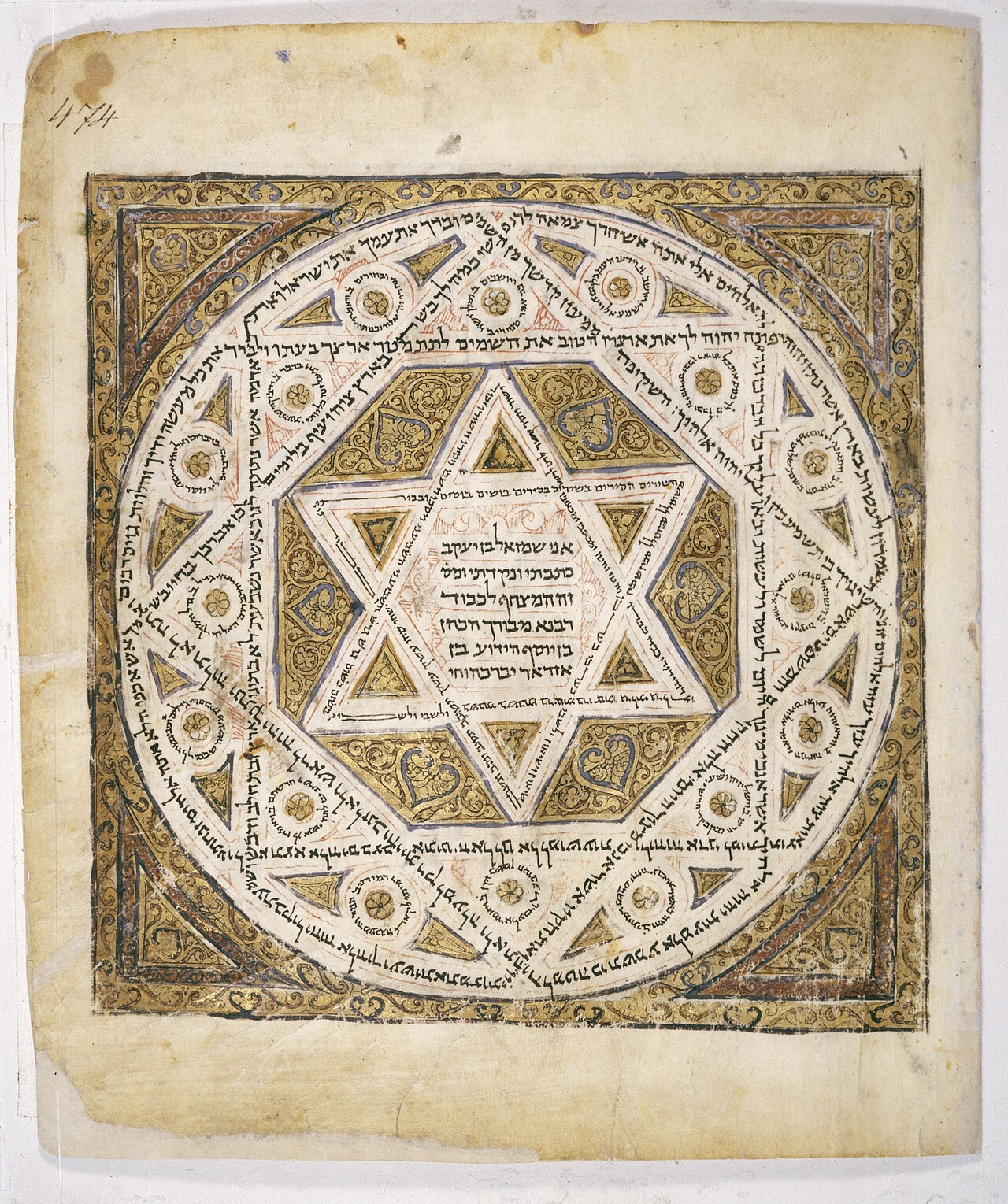
Historical manuscriptImage credit Pictured: a decorated page from the codex, not Exodus 34.
1380s
Wycliffe Bible
How the site knows this: Read in the site's library text: Wycliffe Bible (c. 1395).
he wiste not that his face was horned of the felouschipe of Goddis word
Translated from the Vulgate.
1513–1515
Michelangelo's Moses
How the site knows this: Reported in scholarship; not checked by the site.
Carved for the tomb of Pope Julius II (San Pietro in Vincoli, Rome), with two small horns, following the Vulgate and a long tradition of horned Moses in medieval art.

Later artwork, not historical evidenceImage credit 1611
King James Bible
How the site knows this: Read in the site's library text: King James Version (1769 text).
Moses wist not that the skin of his face shone while he talked with him.
Follows the Hebrew, like Tyndale and the Geneva Bible before it.
1609–1610 (Challoner revision 1750)
Douay-Rheims Bible
How the site knows this: Read in the site's library text: Douay-Rheims (Challoner revision).
he knew not that his face was horned from the conversation of the Lord
The Catholic English translation from the Vulgate kept "horned." Modern Catholic translations, such as the CPDV in our library, read "radiant."
What changed, and why
There is no difference in the letters. The difference is in how translators understood a rare verb. "Shone" is the reading supported by the Hebrew vowels, by the context (the people are afraid of his face, and he covers it with a veil), and by Paul. Jerome's "horned" was a literal rendering that he understood as a symbol of glory, but medieval readers took it literally.
What the evidence shows
- The Vulgate reads cornuta (horned); the Septuagint reads "glorified."
- The Hebrew consonants are the same in every witness.
- The Hebrew means that Moses' face shone. The majority view; a few scholars argue for a deliberate horn image.
Sources
- E. Tov, Textual Criticism of the Hebrew Bible, 3rd ed. (Fortress, 2012)
- R. Mellinkoff, The Horned Moses in Medieval Art and Thought (1970)
- W. H. C. Propp, "The Skin of Moses' Face: Transfigured or Disfigured?" CBQ 49 (1987)
Related lessons
- Show Me Your Glory →Moses asks to see God's glory. God passes by, proclaims His name and character, renews the covenant, and writes new tablets. Moses comes down with his face shining, which a Latin translation turned into horns that lasted in art for a thousand years.
- How Exodus Came to Us →Who wrote Exodus, how it was copied and translated for three thousand years, the places where the copies differ, and how it became Scripture for Jews, Samaritans and Christians.