Did Israel's neighbors have calendars of yearly festivals like Leviticus 23?
What the relationship labels mean
Possible historical contact: The cultures were in contact, so one tradition could have known the other.
Shared literary world: The stories appear to share older roots or a common cultural setting.
Similar human experience: Different peoples responding to similar realities, such as river floods.
Resemblance only: A real similarity worth noticing; no historical connection has been established.
Modern speculative theory: A modern interpretation, not an ancient source. Not supported by authenticated evidence.
Emar · Middle Euphrates, Syria
The ritual archive of Emar (Emar 446 and related texts)
Shared literary world
Composed
14th–12th centuries BC
Earliest surviving copy
Tablets from the house of a local diviner
Calendars list each month's rites: festivals at the full moon of the first month, seven-day festivals, offerings tied to harvests, and the zukru festival celebrated every seven years.
Similar
Festivals fixed to specific days of the months
Seven-day festivals
A major festival in the first month at the full moon
A seven-year cycle (zukru; compare the sabbatical year)
Different
Offerings to many gods
No historical memory like the Exodus
Read it: D. E. Fleming, "The Israelite Festival Calendar and Emar's Ritual Archive," RB 106 (1999); Time at Emar (2000)
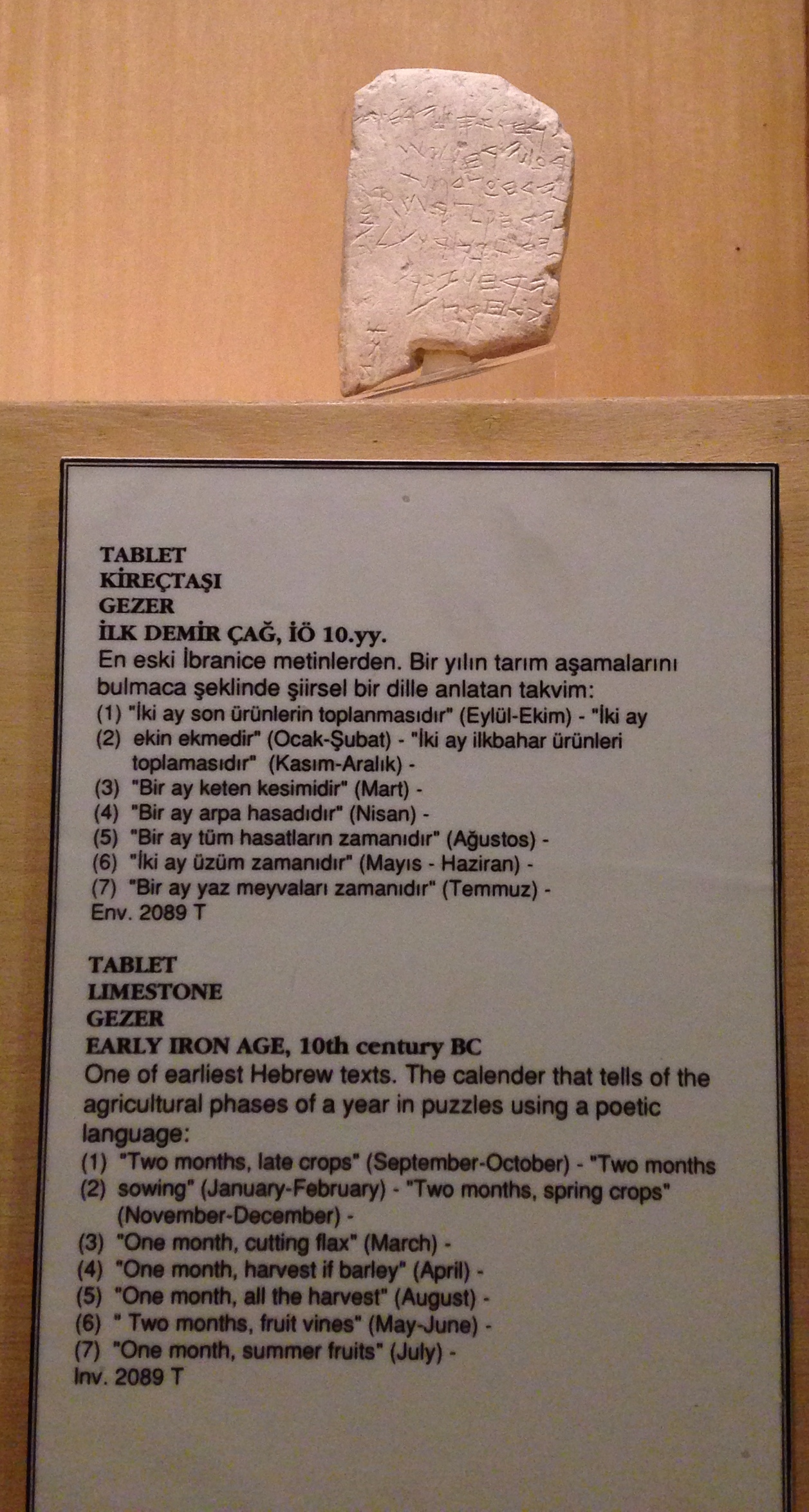
A list of the agricultural months: olive harvest, sowing, late sowing, flax, barley harvest, wheat harvest, vine tending, summer fruit.
Similar
The same sequence of harvests that sets Passover, Weeks and Booths
Different
Agricultural only; no festivals named
Babylonian · Mesopotamia
The Akitu (New Year) festival
Possible historical contact
Composed
3rd millennium BC onward
Earliest surviving copy
Many tablets; detailed late Babylonian program
Twelve days at the spring (and in some cities also the autumn) New Year: purification of temples, the reading of the creation epic, the king's humiliation and reinstatement, and a procession.
Similar
Festivals at spring and autumn turning points
Purification of the sanctuary
Renewal of the year
Different
Centered on Marduk and the king
No Sabbath or rest for the land
Back to the story
The Sabbath and the Spring Feasts →Leviticus 23 lays out Israel's sacred year, beginning with the weekly Sabbath. In spring come Passover, Unleavened Bread, the first sheaf of barley, and fifty days later the Feast of Weeks. The calendar ties Israel's harvests to its history.
Trumpets, Atonement, and Booths →The seventh month brings three holy occasions: a day of trumpet blasts, the solemn Day of Atonement, and the joyful Feast of Booths, when Israel lives in shelters of branches to remember the wilderness.
The Festivals and the Courts →Passover, Weeks and Booths are to be kept at the chosen place, with joy shared with servants, Levites, strangers, orphans and widows. Then judges in every town: "Justice, and only justice, shalt thou follow."
The Altar, the Foundation and Mixed Tears →In the seventh month the people gather "as one man" in Jerusalem. Jeshua and Zerubbabel build the altar on its old site, offerings resume, and Booths is kept. Masons and carpenters are paid; cedar comes by sea to Joppa. In the second year, the foundation is laid; priests blow trumpets and Levites sing "for he is good." Old men who had seen the first house weep aloud while others shout for joy.
The Public Reading of the Law and Booths →On the first day of the seventh month all the people, men, women and all who could understand, gather at the square before the Water Gate. Ezra the scribe reads the book of the law of Moses from a wooden platform from morning until midday; Levites help the people understand. The people weep; Nehemiah, Ezra and the Levites tell them to celebrate instead. The next day the leaders find the command to dwell in booths and the whole community keeps the feast as it had not been kept since Joshua.