Baal Cycle
- Language
- Ugaritic
- Composed
- Copied c. 1350–1200 BC
- Oldest surviving copy
- Clay tablets from Ugarit (Ras Shamra)
- Status
- Not scripture
Baal's palace, his battle with Mot, drought and return of rain.
Ancient Mysteries & Interpretations
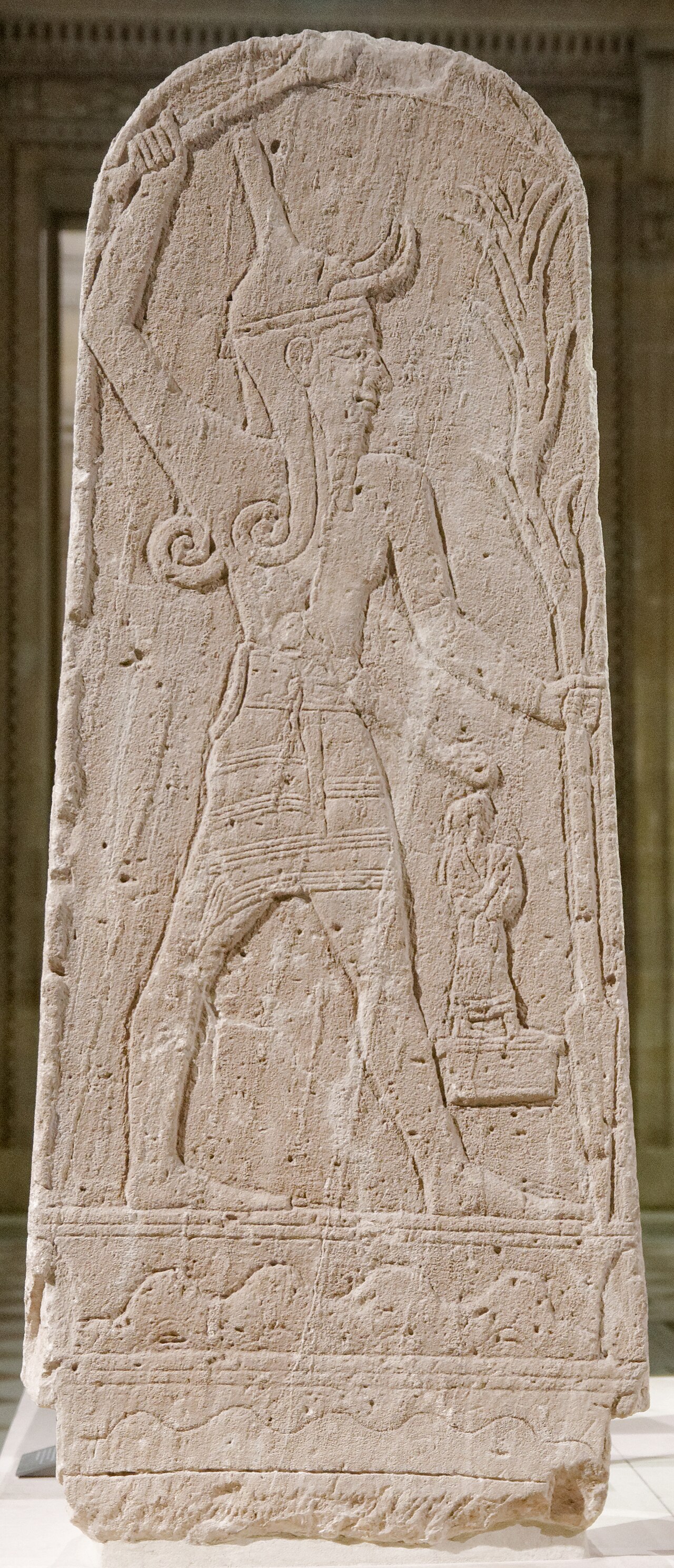
Ugaritic texts (13th century BC) portray Baal as the storm god who brings rain, fights Death, and whose absence dries the land. The Carmel story challenges Baal on exactly these powers. The Phoenician Baal of Jezebel's Tyre was probably Baal Shamem or Melqart. The contest itself is known only from Kings.
Baal religion: documented · Site of the contest: tradition · The miracle: faith
"The God that answereth by fire, let him be God" (1 Kings 18:24).
Baal's palace, his battle with Mot, drought and return of rain.
The "Baal with Thunderbolt" stele from Ugarit (Louvre); Baal-names in the Samaria Ostraca; Phoenician inscriptions naming Baal Shamem and Melqart.
Scholarly reconstruction
The story claims Baal's domain for YHWH.
Alternative explanation
The fire was a lightning strike.
Assessment: A natural explanation that the text does not offer; untestable.
Baal's rain theology was well established; Kings tells of YHWH's victory over Baal under the Omrides.
What the evidence shows