Traditional reading
Joshua's altar on Ebal
Zertal's structure is the altar of Joshua 8, and the lead tablet records the curse ceremony.
Assessment: Both identifications are contested; neither is established.
Ancient Mysteries & Interpretations
Mount Gerizim has a large sacred precinct of the Samaritans, excavated by Yitzhak Magen. Mount Ebal has an Iron Age structure that Adam Zertal identified as Joshua's altar, and a small lead object announced in 2023 as an early curse tablet naming YHW. Each claim needs careful sorting.
Gerizim sanctuary: real, first date debated · Ebal structure: real, function disputed · Ebal "curse tablet" reading: disputed
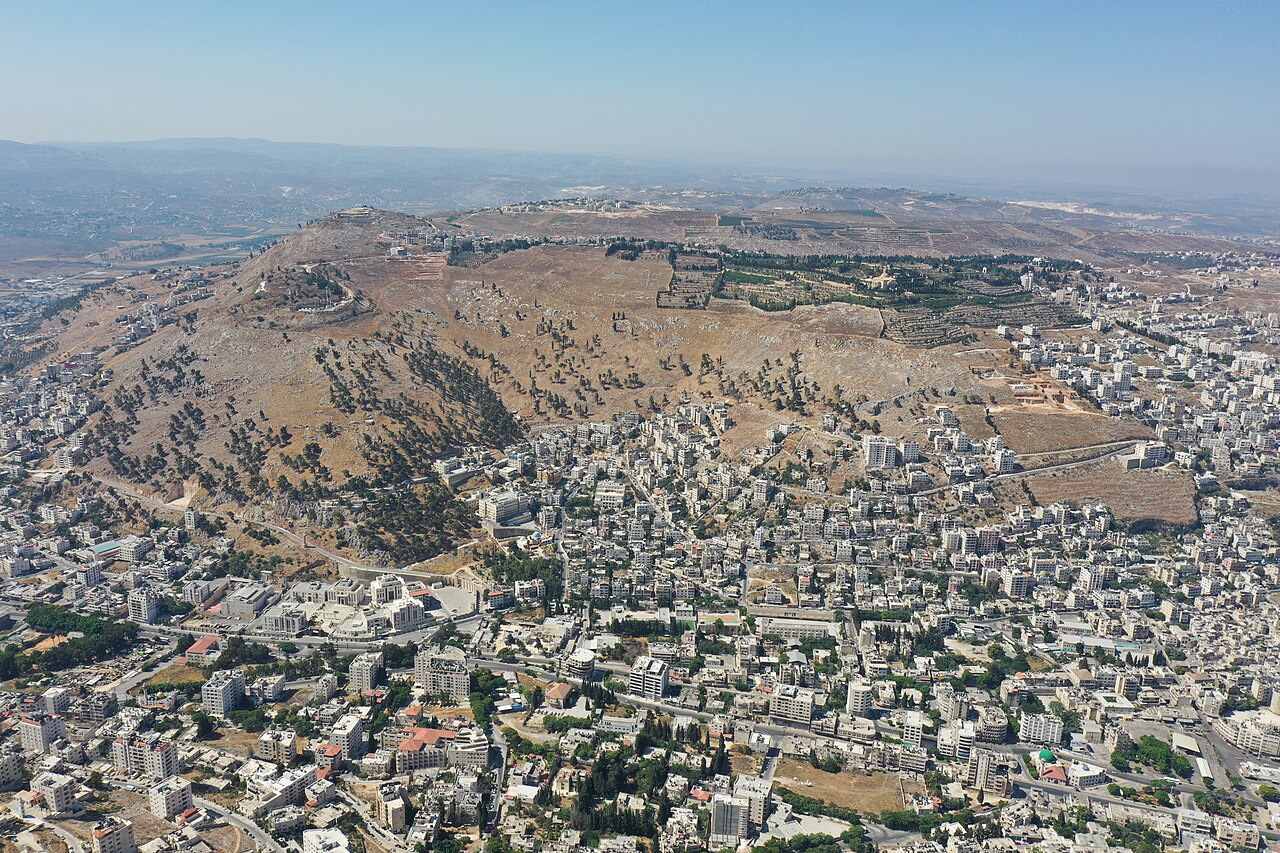
"Thou shalt put the blessing upon mount Gerizim, and the curse upon mount Ebal" (Deuteronomy 11:29). "Then Joshua built an altar unto the LORD God of Israel in mount Ebal" (Joshua 8:30).
Excavations (1982–2006) uncovered a walled sacred precinct, thousands of burnt animal bones, and hundreds of inscriptions in Aramaic, Hebrew and Greek, some naming priests. Magen dated a first phase to the mid-5th century BC and a larger Hellenistic phase to the 2nd century BC. John Hyrcanus destroyed it around 110 BC. Jodi Magness (2025) argues the stratified evidence does not securely establish a 5th-century temple.
Adam Zertal excavated (1982–1989) a stone structure with a ramp and surrounding wall, with burnt animal bones, dated to Iron Age I (12th century BC). He identified it as Joshua's altar. Other archaeologists have proposed a watchtower, a farmstead, or a cultic site of another kind.
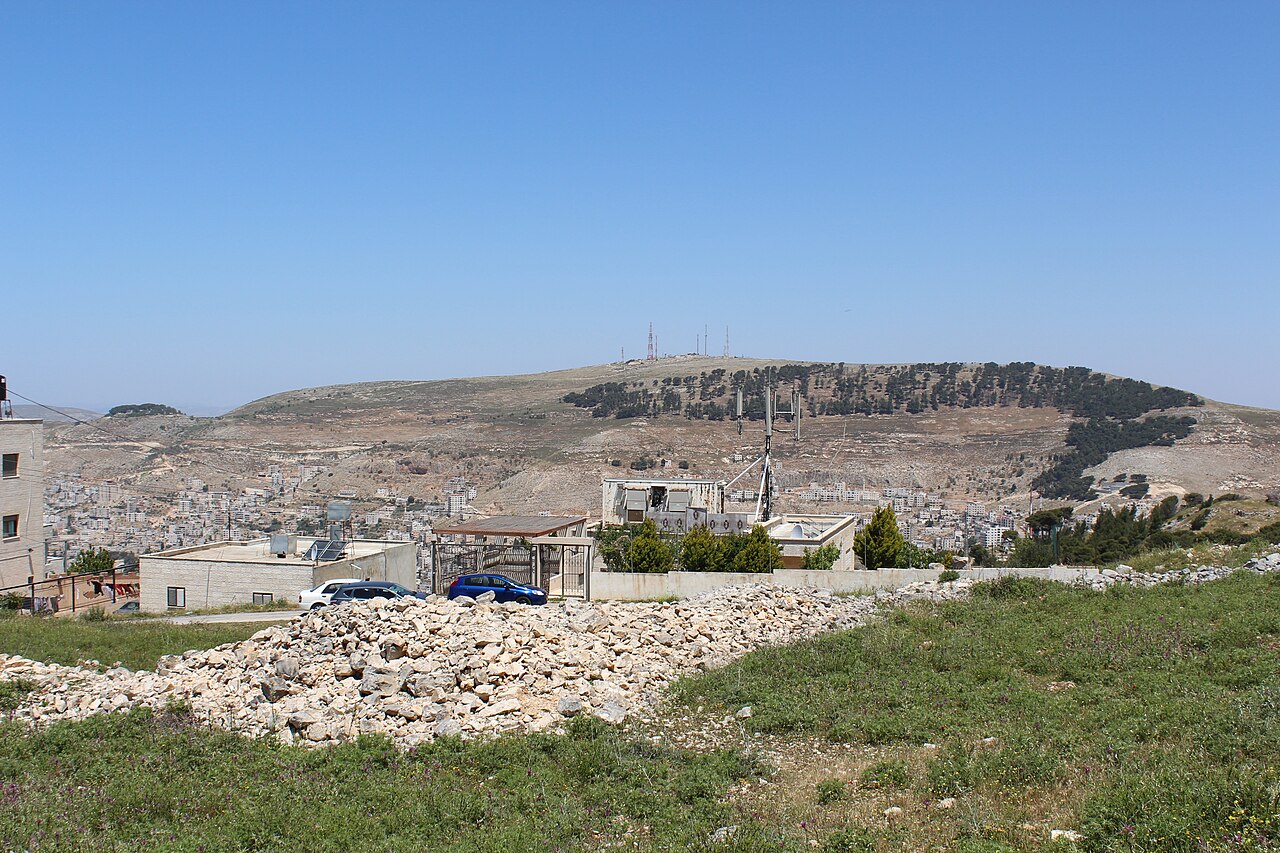
In 2019 a folded lead object about 2 cm across was found by wet-sifting debris dumped from Zertal's excavation. In 2023 Scott Stripling, Gershon Galil and colleagues announced that scans revealed an early Hebrew curse naming YHW, and later published their reading. A peer-reviewed response in Heritage Science (2024) argued that the claimed letters cannot be demonstrated. The object's context is a secondary dump, and it remains unopened.
Traditional reading
Zertal's structure is the altar of Joshua 8, and the lead tablet records the curse ceremony.
Assessment: Both identifications are contested; neither is established.
Scholarly reconstruction
Gerizim was the original site of the altar in Deuteronomy 27, later replaced by Ebal in the Jewish text.
Source: M. Segal, "From the Jordan to Mt. Ebal and Back," Vetus Testamentum 75 (2025) ↗
Scholarly reconstruction
The excavated Gerizim sanctuary reflects Samaritan worship from the Persian period on, not Joshua's time.
Source: Y. Magen, Mount Gerizim Excavations (2004–2008); "Gerizim, Mount," New Encyclopedia of Archaeological Excavations in the Holy Land ↗; J. Magness, "When Was the First Samaritan Temple on Mount Gerizim Built?" (2025) ↗
The mountains are exactly where Deuteronomy places them. Gerizim held a major Samaritan sanctuary from at least the Hellenistic period, possibly the Persian. Ebal has an Iron Age I structure whose function is disputed. The lead object's inscription is unconfirmed. None of these finds settles the text of Deuteronomy 27:4 or proves Joshua's ceremony.
What the evidence shows
Source: Y. Magen, Mount Gerizim Excavations (2004–2008); "Gerizim, Mount," New Encyclopedia of Archaeological Excavations in the Holy Land ↗; Mount Gerizim National Park (Israel Nature and Parks Authority) ↗
Source: J. Magness, "When Was the First Samaritan Temple on Mount Gerizim Built?" (2025) ↗
Source: A. Zertal, "Has Joshua's Altar Been Found on Mt. Ebal?" BAR 11:1 (1985)
Source: Heritage Science (2024): critique of the reading of the Mount Ebal lead object ↗