myBibleHistory

Ancient Mysteries & Interpretations

The Mesha Stele and Moab's Revolt

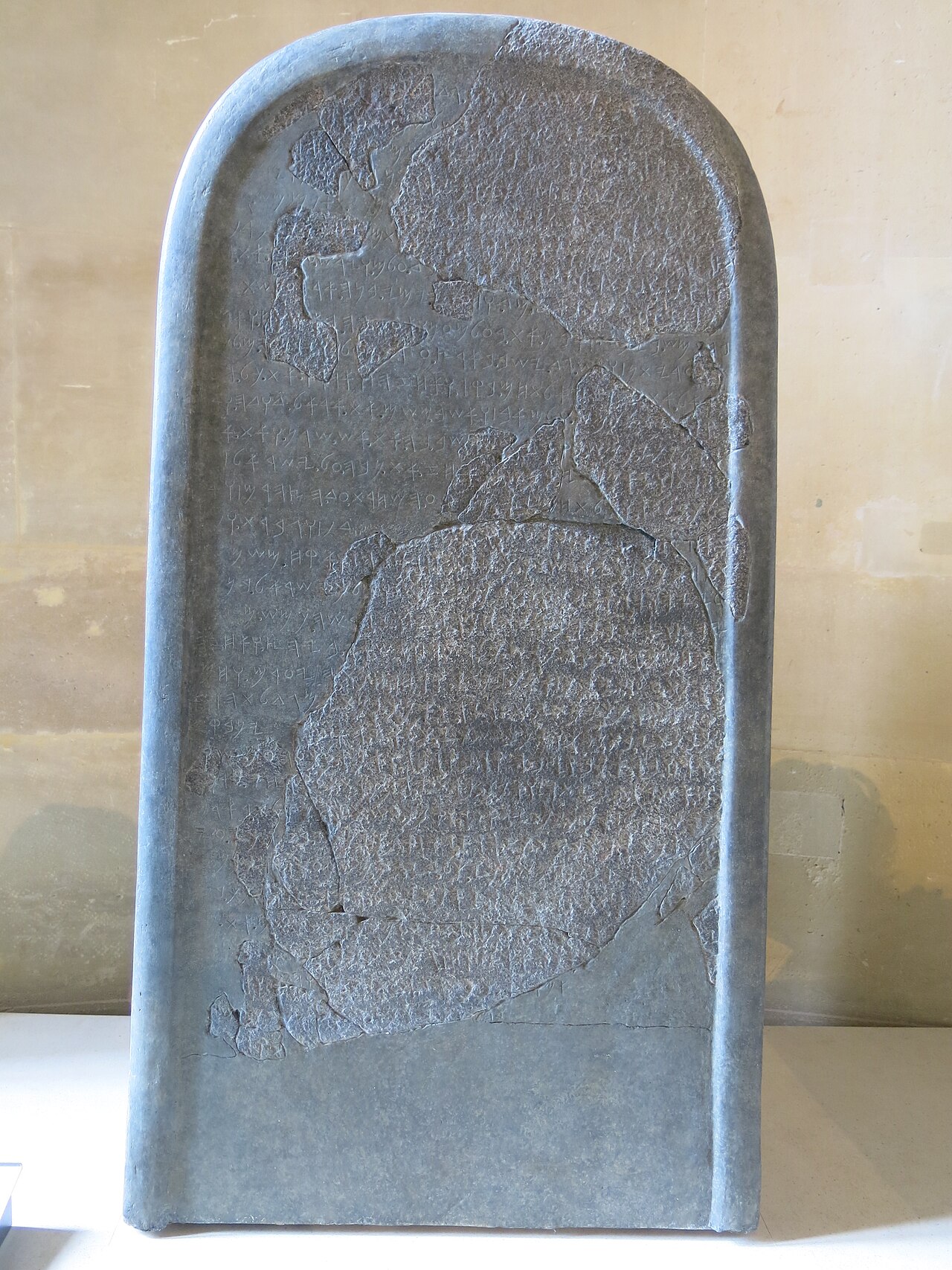
Found at Dhiban in 1868 and partly broken before it reached the Louvre (AO 5066), the Mesha Stele is a 34-line Moabite inscription of c. 840 BC. Mesha says Omri and his son oppressed Moab because Chemosh was angry, and that he then took back towns from Israel, devoted Nebo's population to Ashtar-Chemosh, and carried off "the vessels of YHWH." It is the longest Iron Age inscription from the region and the earliest outside text to name YHWH.

Stele: documented · Revolt: documented · Same events as 2 Kings 3: not established

The Mesha Stele
Authentic ancient artifactThe Mesha Stele, Louvre AO 5066, 9th century BC: the stone as reassembled after it was broken in 1869, with restored areas.Image credit

1 What Scripture says

"But it came to pass, when Ahab was dead, that the king of Moab rebelled against the king of Israel" (2 Kings 3:5).

2 What evidence we might expect

  • A Moabite account of breaking free from the Omrides.

3 What ancient sources survive

Mesha Stele

Language
Moabite
Composed
c. 840 BC
Oldest surviving copy
Louvre AO 5066 (reassembled; missing parts restored from an 1869 squeeze)
Status
Not scripture

"Omri was king of Israel, and he oppressed Moab many days… And his son succeeded him, and he too said, I will oppress Moab."

4 What discoveries exist

Seen by the missionary F. A. Klein in 1868; a paper squeeze was made before local people broke the stone. About two-thirds of the text survives on the original fragments. Line 31 may read "House of [D]avid" (debated).

The Mesha Stele
Authentic ancient artifactThe Mesha Stele, Louvre AO 5066, 9th century BC: the stone as reassembled after it was broken in 1869, with restored areas.Image credit

5 How interpretations compare

Scholarly reconstruction

Complementary accounts

The stele and 2 Kings 3 describe different phases of the same conflict from opposite sides.

Scholarly reconstruction

Different episodes

Mesha's victories may come after the campaign of 2 Kings 3; the timing of "his son" (Ahab or a grandson) is debated.

6 The strongest supported reconstruction

Moab threw off Israelite control in the mid-9th century BC; Mesha commemorated it as the work of Chemosh.

7 What remains possible or unknown

  • Whether line 31 mentions the House of David.
  • How Mesha's "forty years" fits Omride chronology.

What the evidence shows

  • Independently documentedThe stele names Omri, Chemosh and YHWH.

    Source: Louvre, Mesha Stele (AO 5066) ↗

  • Not independently verifiedIt describes the campaign of 2 Kings 3.

Where this connects