Scholarly reconstruction
Later addition
An editor or later poet added a voice that defends God more successfully than the friends.
Source: D. J. A. Clines, "Putting Elihu in His Place," JSOT 29 (2004) ↗
Ancient Mysteries & Interpretations
Elihu son of Barachel the Buzite speaks for six chapters and is never mentioned before or after. Arguments for a later addition: his absence from the prologue, epilogue and God's verdict; differences of style; his quoting of earlier speeches; the interruption between Job's challenge and God's answer. Arguments for integration: he prepares for the storm theophany; his absence from the verdict may be deliberate. Elihu material is present in Qumran Hebrew fragments.
Present in all manuscripts · Origin: debated
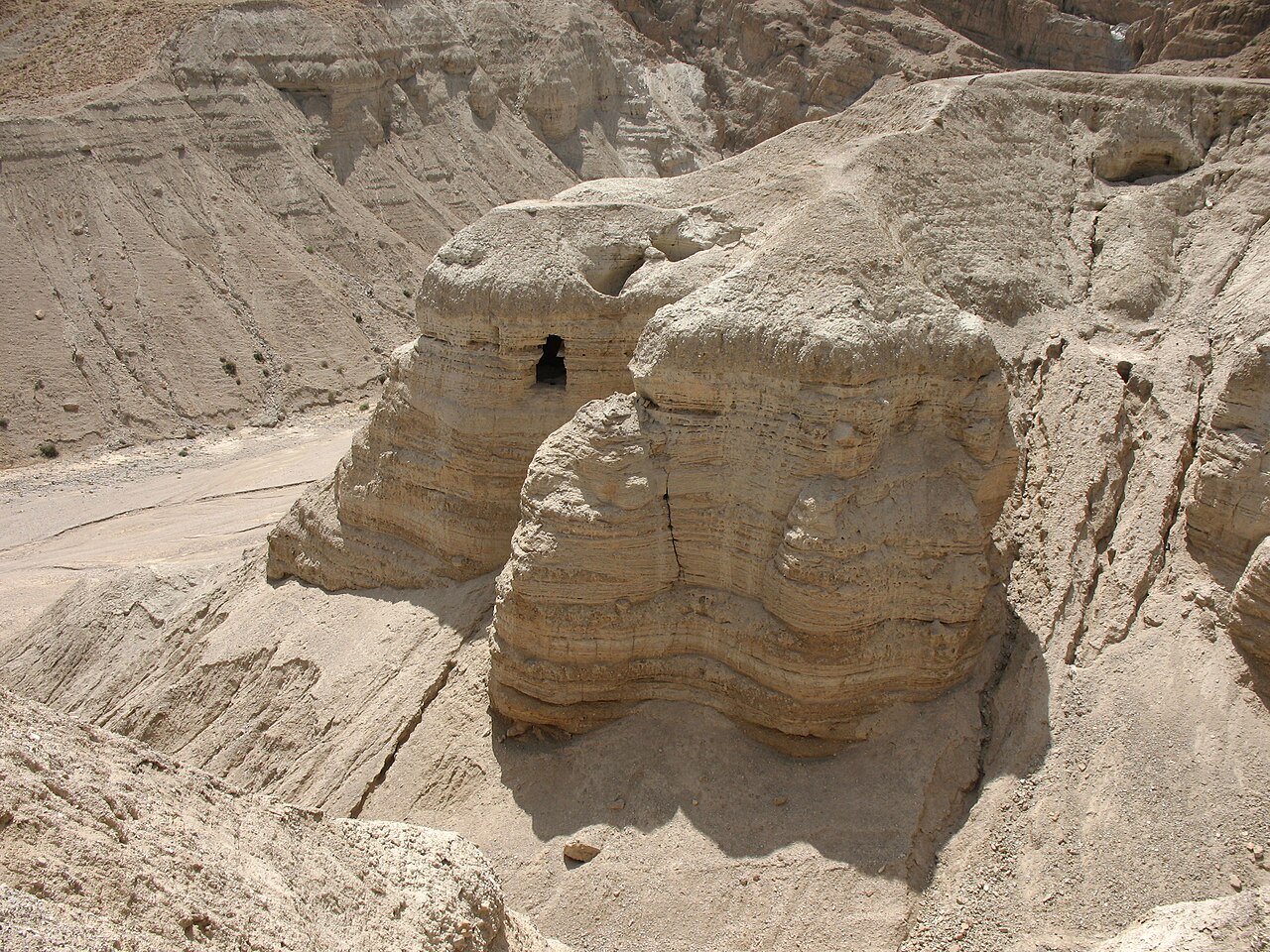
"Then was kindled the wrath of Elihu the son of Barachel the Buzite, of the kindred of Ram" (Job 32:2).
4Q99 and 2Q15 (Hebrew) are reported to preserve parts of Job 32–37; the Old Greek's Elihu was much shorter, filled out by Origen.
Scholarly reconstruction
An editor or later poet added a voice that defends God more successfully than the friends.
Source: D. J. A. Clines, "Putting Elihu in His Place," JSOT 29 (2004) ↗
Scholarly reconstruction
Elihu was part of the design, a transition to God's speech.
Traditional reading
Some Jewish and Christian readers saw Elihu as speaking truth, preparing for God.
Elihu's speeches were in Hebrew Job before the Christian era; whether they were part of the first composition is unknown.
What the evidence shows