"So these three men ceased to answer Job, because he was righteous in his own eyes. Then was kindled the wrath of Elihu the son of Barachel the Buzite, of the kindred of Ram: against Job was his wrath kindled, because he justified himself rather than God. Also against his three friends was his wrath kindled, because they had found no answer, and yet had condemned Job."
"I am young, and ye are very old; wherefore I was afraid, and durst not shew you mine opinion. I said, Days should speak, and multitude of years should teach wisdom. But there is a spirit in man: and the inspiration of the Almighty giveth them understanding. Great men are not always wise."
"For I am full of matter, the spirit within me constraineth me. Behold, my belly is as wine which hath no vent; it is ready to burst like new bottles. I will speak, that I may be refreshed."
Buz and Ram
Buz is a brother of Uz among Nahor's sons (Genesis 22:21), and a people of the Arabian desert (Jeremiah 25:23). Ram may be a family name (Ruth 4:19) or Aram. Elihu ("he is my God") is the only speaker with an Israelite-sounding name and a full genealogy. These details place him, like the others, on the desert fringe; they do not identify him historically.
Age and wisdom
Ancient cultures assumed the old were wise (12:12; 15:10). Elihu's claim that the spirit, not age, gives understanding is a young man's challenge to the elders. His four speeches (32–37) take up six chapters.
Elihu's style
Elihu speaks at length about himself before he says anything about Job (32:6–22), insisting that he will not flatter anyone. Commentators have found him pompous, young and earnest, or a genuine prophet; the text lets readers decide.
Was Elihu added later?
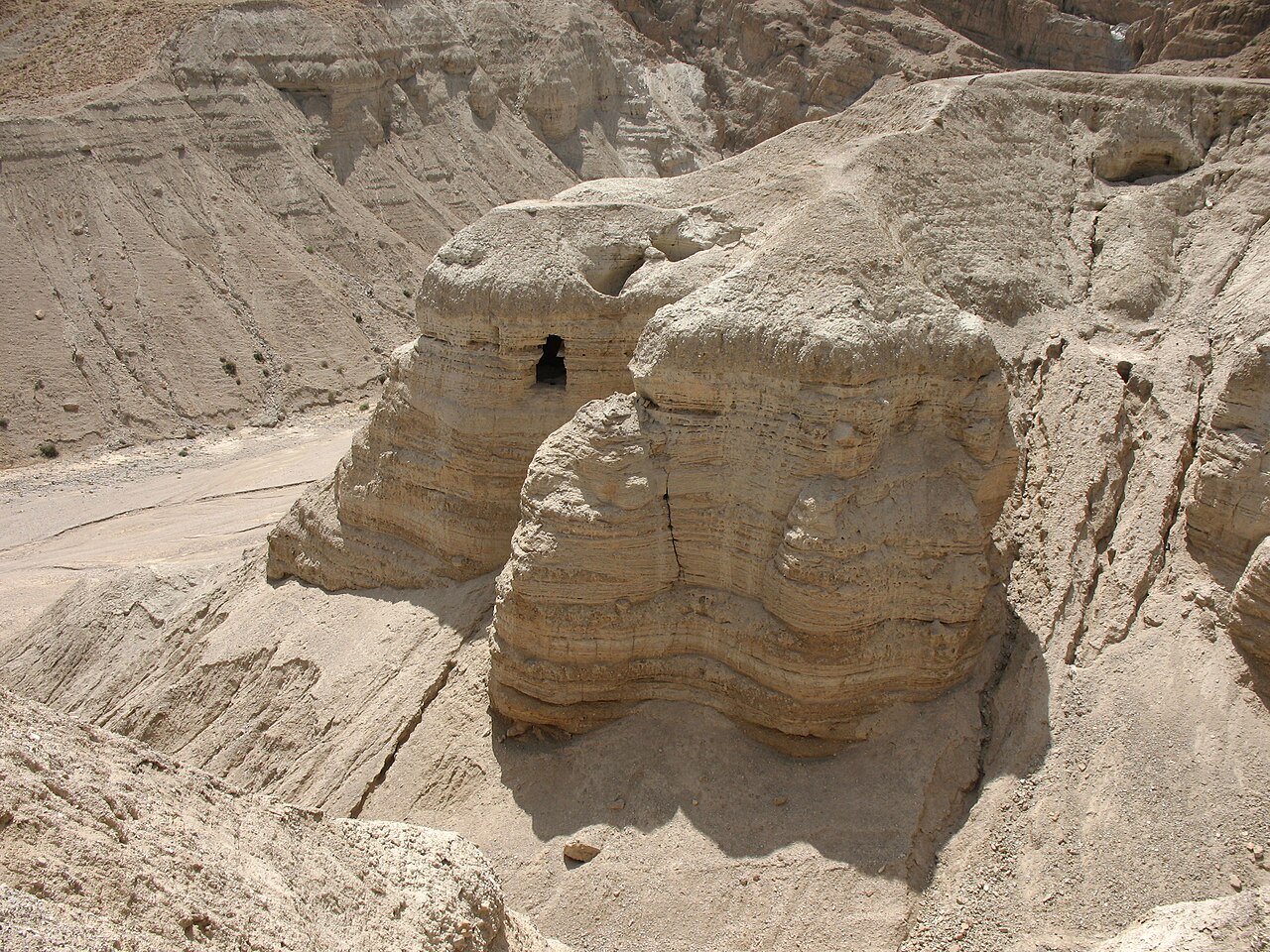
Arguments that Elihu's speeches are a later addition: he is not mentioned in the prologue, the epilogue, or God's verdict on the friends (42:7–9); his style and vocabulary differ (more Aramaisms, different divine names); he quotes Job and the friends as if from a written text; his speeches interrupt between Job's challenge (31:35) and God's answer (38:1). Arguments for integration: Elihu prepares for God's speeches (storm imagery in 36–37); his absence from the epilogue could mean he was neither right nor wrong; his youth and the shift in voice may be deliberate. Elihu is present in the Qumran Hebrew Job fragments (4Q99 and 2Q15 preserve parts of chs. 32–37), so the speeches were in Hebrew Job by the 1st century BC. See the investigation and the dossier.
Greek gaps
The library's Sahidic Coptic lacks many verses of chapters 32–37 (e.g. 32:12, 15–16; 33:28–29, 32–33; 34:28–33; 35:8–9, 15–16; 36:6–9, 26–33; 37:1–4), consistent with an Old Greek Elihu that was much shorter than the Hebrew. Origen supplied the missing lines. Check against Ziegler (JOB-C03).
Elihu in the Greek
The library's Greek adds to 32:2 that Elihu was "of the land of Ausis," Job's own country. It is one of several places where the Greek ties the book's characters to Uz and Edom (compare the appendix at 42:17).
What the evidence shows
- Elihu is not mentioned outside chapters 32–37.
- Elihu's speeches are a later addition to Job.Source: D. J. A. Clines, "Putting Elihu in His Place," JSOT 29 (2004) ↗; R. Andersen, "The Elihu Speeches: Their Place and Sense in the Book of Job," Tyndale Bulletin 66 (2015) ↗
- Qumran Hebrew Job (4Q99, 2Q15) includes Elihu material. Verse ranges to be confirmed in DJD (JOB-C04).Source: F. García Martínez and E. J. C. Tigchelaar, The Dead Sea Scrolls Study Edition (Brill, 1997–98)
Continue the journey
Journey of a PassageJob 32:1–5: Elihu entersThe prose introduction of Elihu son of Barachel the Buzite is stable in the versions, except that the library's Greek adds that he was "of the land of Ausis," Job's own country.More from this lesson
Investigations
Optional deep dives: the ancient sources, the physical evidence, and every interpretation side by side, including unconventional ones, each labeled for what it is.
Who Is Elihu?Present in all manuscripts · Origin: debated
Were Elihu's speeches part of the original book of Job?
Elihu son of Barachel the Buzite speaks for six chapters and is never mentioned before or after. Arguments for a later addition: his absence from the prologue, epilogue and God's verdict; differences of style; his quoting of earlier speeches; the interruption between Job's challenge and God's answer. Arguments for integration: he prepares for the storm theophany; his absence from the verdict may be deliberate. Elihu material is present in Qumran Hebrew fragments.
Open the full investigation →Why this matters to the rest of Scripture
- Uz and Buz, sons of Nahor.
- Dedan, Tema and Buz.