"Suffer me a little, and I will shew thee that I have yet to speak on God's behalf… Behold, God is mighty, and despiseth not any… He preserveth not the life of the wicked: but giveth right to the poor."
"And if they be bound in fetters, and be holden in cords of affliction; Then he sheweth them their work… He openeth also their ear to discipline… If they obey and serve him, they shall spend their days in prosperity… He delivereth the poor in his affliction, and openeth their ears in oppression."
"Behold, God is great, and we know him not… For he maketh small the drops of water: they pour down rain according to the vapour thereof: Which the clouds do drop and distil upon man abundantly. Also can any understand the spreadings of the clouds, or the noise of his tabernacle?"
The water cycle in poetry
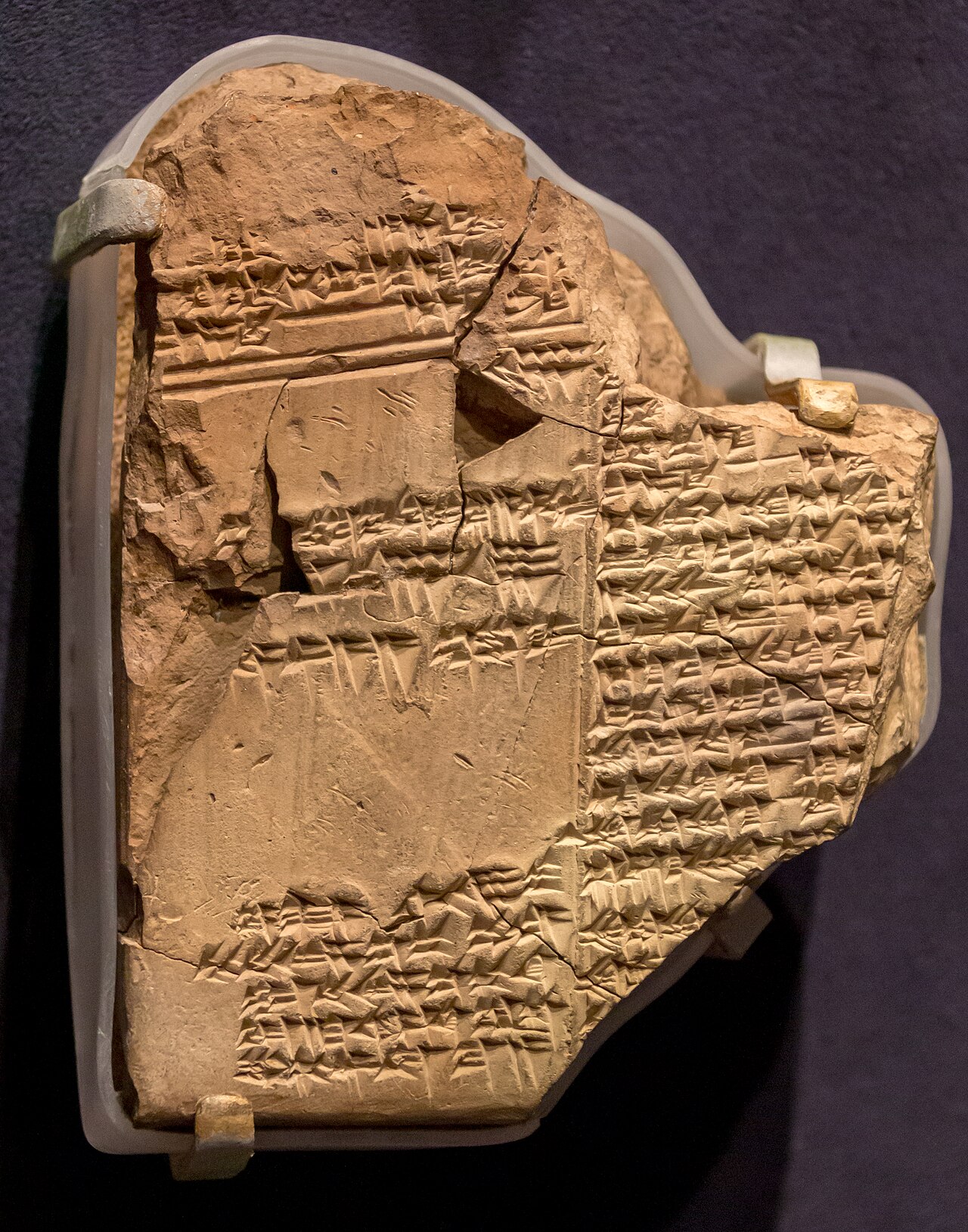
"He draws up the drops of water, they distil rain from his mist" (36:27, modern renderings) describes evaporation and rain in a way ancient observers could see: mist rising, clouds forming, rain falling. Rain was life in a land without great rivers; Mesopotamian stories like Atrahasis (above) tell of gods withholding rain as punishment.
Cattle or possession?
36:33 in the KJV reads "The noise thereof sheweth concerning it, the cattle also concerning the vapour." The Hebrew miqneh means "cattle" or "possession"; the library's Greek and the Vulgate both read "possession": God reveals it to his friends, "for it is the Lord's possession." The same consonants, two meanings, two translations.
General truth, particular case
"He delivereth the poor by his affliction" (36:15) is Elihu's key idea: suffering can teach. That may be true in some cases. It does not establish why Job suffered, which the prologue has already told us. The site keeps the difference between a general claim and evidence about a specific case.
Greek gaps
The library's Sahidic Coptic lacks 36:6–9, 11, 13, 16, 20, 26 and 29–33; much of Elihu's hymn may have been missing from the Old Greek (JOB-C03).
The versions
The KJV's "cattle" in 36:33 and the Greek and Latin "possession" are two readings of the same Hebrew consonants (mqnh). The library's Sahidic Coptic copy, which follows the shorter pre-Origen Greek, lacks 36:6–9, 36:11, 36:13, 36:16, 36:20, 36:26 and 36:29–33. Whether each missing line was absent from the Old Greek itself, or is damage in the Coptic manuscripts or our digital copy, is to be checked against Ziegler's edition (JOB-C03).
What the evidence shows
- Suffering always serves to instruct the sufferer. Elihu's view; the book offers other perspectives.
Continue the journey
Connected elsewhere in ScripturePsalm 119: Thy Word Is a LampPsalm 119:71: "It is good for me that I have been afflicted."More from this lesson
Why this matters to the rest of Scripture
- "It is good for me that I have been afflicted."
- Rivers run to the sea and return.