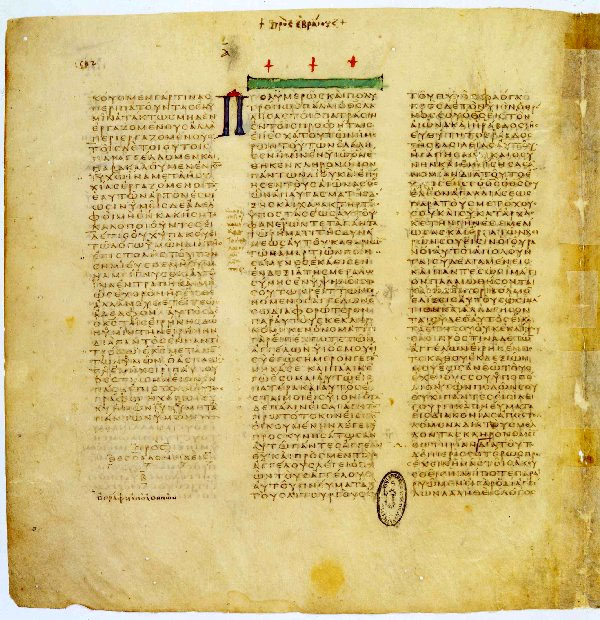
"Wherefore, Job, I pray thee, hear my speeches… The spirit of God hath made me, and the breath of the Almighty hath given me life… I also am formed out of the clay."
"For God speaketh once, yea twice, yet man perceiveth it not. In a dream, in a vision of the night, when deep sleep falleth upon men… Then he openeth the ears of men, and sealeth their instruction, That he may withdraw man from his purpose, and hide pride from man."
"He is chastened also with pain upon his bed… Yea, his soul draweth near unto the grave… If there be a messenger with him, an interpreter, one among a thousand, to shew unto man his uprightness: Then he is gracious unto him, and saith, Deliver him from going down to the pit: I have found a ransom. His flesh shall be fresher than a child's."
God speaks twice
Elihu offers two channels of divine teaching: dreams and suffering. Both aim to turn a person back before death. It is an educational view of suffering, more hopeful than the friends' punishment theory.
The ransom
Kopher is the payment that buys a life instead of forfeiting it (Exodus 21:30; 30:12). Elihu does not say what the ransom is; the messenger finds or declares it.
Three times
Elihu says God does all this "twice, three times" with a person (33:29), to bring his soul back from the pit. The Vulgate reads 33:14 differently from the Hebrew: "God speaks once, and does not repeat it"; the Hebrew says "once, yea twice."
Who is the messenger?
Mal'akh melits means "a messenger, an interpreter/intercessor." Readers have proposed an angel who intercedes, a human teacher, or Elihu himself. Later Jewish tradition developed intercessory angels; Christian readers linked the ransom to Christ. The library's Greek (Giguet) reads very differently: "Even if there were a thousand angels of death, not one of them shall wound him, if he resolves in his heart to turn to the Lord." The site shows the range without fixing one original sense.
Elihu does not know the prologue
Elihu's theory (suffering as warning against pride) cannot apply to Job, whom God called blameless before any suffering. His speeches add something real to the debate but share the friends' blind spot.
The versions
33:6: KJV "I am according to thy wish in God's stead," an obscure Hebrew phrase; the library's Greek and the Vulgate read "God made me as he made you; I too was formed from the same clay." The library's Sahidic Coptic copy, which follows the shorter pre-Origen Greek, lacks 33:28–29 and 33:32–33. Whether each missing line was absent from the Old Greek itself, or is damage in the Coptic manuscripts or our digital copy, is to be checked against Ziegler's edition (JOB-C03).
What the evidence shows
- The messenger of 33:23 can be identified.
- The library's Greek has "a thousand angels of death" in 33:23.Source: The site's library: Westminster Leningrad Codex (Hebrew), Giguet's French of the Greek, Clementine Vulgate, KJV, Church Slavonic, Sahidic Coptic
Continue the journey
Journey of a PassageJob 33:23–24: A messenger and a ransomHebrew: "If there be a messenger with him, an interpreter, one among a thousand… I have found a ransom." The library's Greek reads very differently: "even if there were a thousand angels of death, not one would wound him, if he resolves to turn to the Lord."More from this lesson
Investigations
Optional deep dives: the ancient sources, the physical evidence, and every interpretation side by side, including unconventional ones, each labeled for what it is.
Who Is Elihu?Present in all manuscripts · Origin: debated
Were Elihu's speeches part of the original book of Job?
Elihu son of Barachel the Buzite speaks for six chapters and is never mentioned before or after. Arguments for a later addition: his absence from the prologue, epilogue and God's verdict; differences of style; his quoting of earlier speeches; the interruption between Job's challenge and God's answer. Arguments for integration: he prepares for the storm theophany; his absence from the verdict may be deliberate. Elihu material is present in Qumran Hebrew fragments.
Open the full investigation →Why this matters to the rest of Scripture
- Kopher, a ransom for life.
- An angel interceding.
- "A ransom for many."