"After this opened Job his mouth, and cursed his day." The narrator's prose stops; from here until 42:6 the book is Hebrew poetry, dense, rare-worded and powerful.
"Let the day perish wherein I was born, and the night in which it was said, There is a man child conceived." Job wants that day undone: "Let that day be darkness; let not God regard it from above… Let darkness and the shadow of death stain it." He calls on those "who are ready to raise up their mourning" (KJV), or, in most modern translations, those "skilled to rouse Leviathan," to curse it. "Let the stars of the twilight thereof be dark; let it look for light, but have none; neither let it see the dawning of the day."
"Why died I not from the womb?… For now should I have lain still and been quiet, I should have slept: then had I been at rest, with kings and counsellors of the earth." In the grave, "the wicked cease from troubling; and there the weary be at rest. There the prisoners rest together; they hear not the voice of the oppressor. The small and great are there; and the servant is free from his master."
Then the question: "Wherefore is light given to him that is in misery, and life unto the bitter in soul; which long for death, but it cometh not?" He ends: "For the thing which I greatly feared is come upon me… I was not in safety, neither had I rest, neither was I quiet; yet trouble came."
Undoing creation
Genesis 1 begins "Let there be light." Job 3:4 says, in the same Hebrew form, "Let that day be darkness" (yehi hoshekh). Job's curse runs creation backwards: light to darkness, day to night, order to chaos. Jeremiah 20:14–18 curses his birthday in similar words; whether one borrowed from the other is debated.
Leviathan in the night sky
"Those ready to rouse Leviathan" (3:8) are probably spell-casters believed able to wake the sea-dragon, an image of chaos (see Job 41 and Isaiah 27:1). Some scholars suggest a word-play: yam, "sea," for yom, "day," giving "those who curse the Sea." The KJV took the word as "their mourning." The library's Greek reads "him who can master the great sea-monster"; the Vulgate keeps "Leviathan." Job wants the powers of chaos to swallow his birthday.
Equality in the grave
Job's picture of the dead (Sheol, the underworld of shadowy rest) is not of reward or punishment but of quiet: kings and slaves together, no oppressor. Egyptian harper's songs and Mesopotamian laments also picture death as the great leveller. This is Job's poetry of exhaustion, not the Bible's last word on the afterlife.
Prose and poetry, and the Masoretes' two accent systems
The prologue (1–2) and epilogue (42:7–17) are prose; 3:2–42:6 is poetry. The Masoretes marked the difference: Job, Psalms and Proverbs (the "books of truth," emet, from their Hebrew initials) use a special system of poetic accents, and in Job it is applied only to the poetic core. Whether the prose frame is an older folktale reused by a poet, or a single author's deliberate frame, is debated (see "How Job Came to Us").
Job and Jeremiah 20
Both curse the day of birth and the man who brought the news. Job's poem is longer and more elaborate. Scholars disagree about direction of influence or a shared lament tradition; neither text names the other.
Lament is not endorsement
Job wishes for death but does not take his life; he speaks his anguish to God and friends. Biblical lament (Psalm 88; Lamentations) gives voice to despair as part of faith. The narrator never calls these words sin, and in 42:7 God says Job spoke rightly; that is a judgement on his honesty, not an instruction to despair.
What the evidence shows
- From 3:2 to 42:6 Job is poetry; the frame is prose.
- The Masoretes used a special poetic accent system for the poetic core of Job.
- Job 3:8 refers to rousing Leviathan. The KJV reads "mourning"; the Hebrew word is livyatan.
Continue the journey
Journey of a PassageJob 3:8: Rousing Leviathan"Let them curse it that curse the day, who are ready to raise up their mourning" (KJV).More from this lesson
Echoes Across Civilizations
Optional: how other ancient peoples told similar stories. Open one to compare, then come back to the lesson.
The righteous suffererBabylonian · Sumerian · Egyptian
Did other ancient peoples write about a good person who suffers without knowing why?
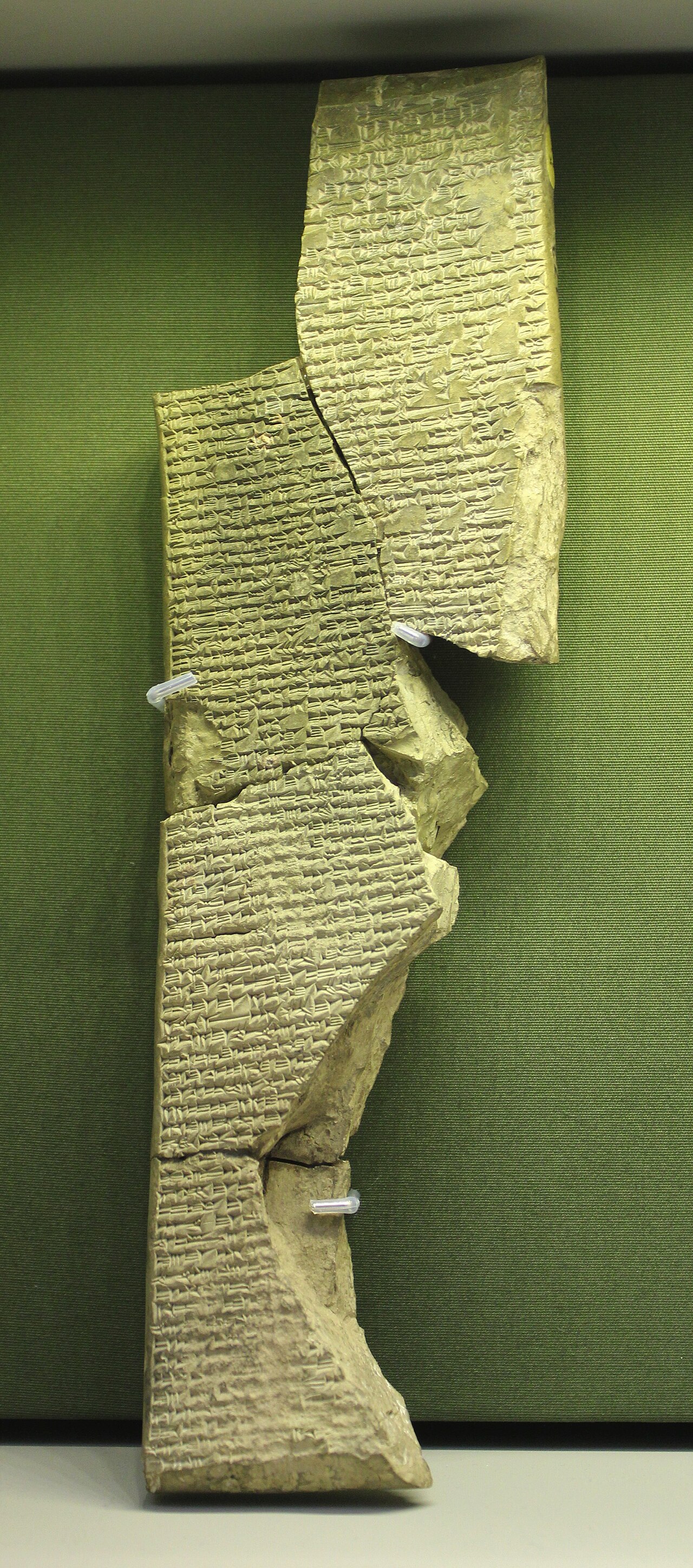
- Babylonian: Ludlul bēl nēmeqi ("I will praise the lord of wisdom") Shared literary world
- Babylonian: The Babylonian Theodicy Shared literary world
- Sumerian: "A Man and His God" Resemblance only
- Egyptian: The Dispute between a Man and his Ba Resemblance only
Taming the sea and its monstersUgaritic (Canaanite) · Babylonian · Egyptian
Did other ancient peoples picture a god defeating or restraining the sea and a many-headed sea-serpent?
- Ugaritic (Canaanite): The Baal Cycle Shared literary world
- Babylonian: Enuma Elish Shared literary world
- Egyptian: Apophis, the chaos serpent Resemblance only
Why this matters to the rest of Scripture
- "Let there be light" reversed.
- Another curse on a birthday.
- A psalm that ends in darkness.