"Knowest thou the time when the wild goats of the rock bring forth? or canst thou mark when the hinds do calve?… Who hath sent out the wild ass free?… Whose house I have made the wilderness, and the barren land his dwellings. He scorneth the multitude of the city."
"Will the unicorn be willing to serve thee, or abide by thy crib? Canst thou bind the unicorn with his band in the furrow?… Wilt thou trust him, because his strength is great?"
"Gavest thou the goodly wings unto the peacocks? or wings and feathers unto the ostrich? Which leaveth her eggs in the earth… And forgetteth that the foot may crush them… Because God hath deprived her of wisdom… What time she lifteth up herself on high, she scorneth the horse and his rider."
"Hast thou given the horse strength? hast thou clothed his neck with thunder?… He saith among the trumpets, Ha, ha; and he smelleth the battle afar off… Doth the hawk fly by thy wisdom…? Doth the eagle mount up at thy command, and make her nest on high?"
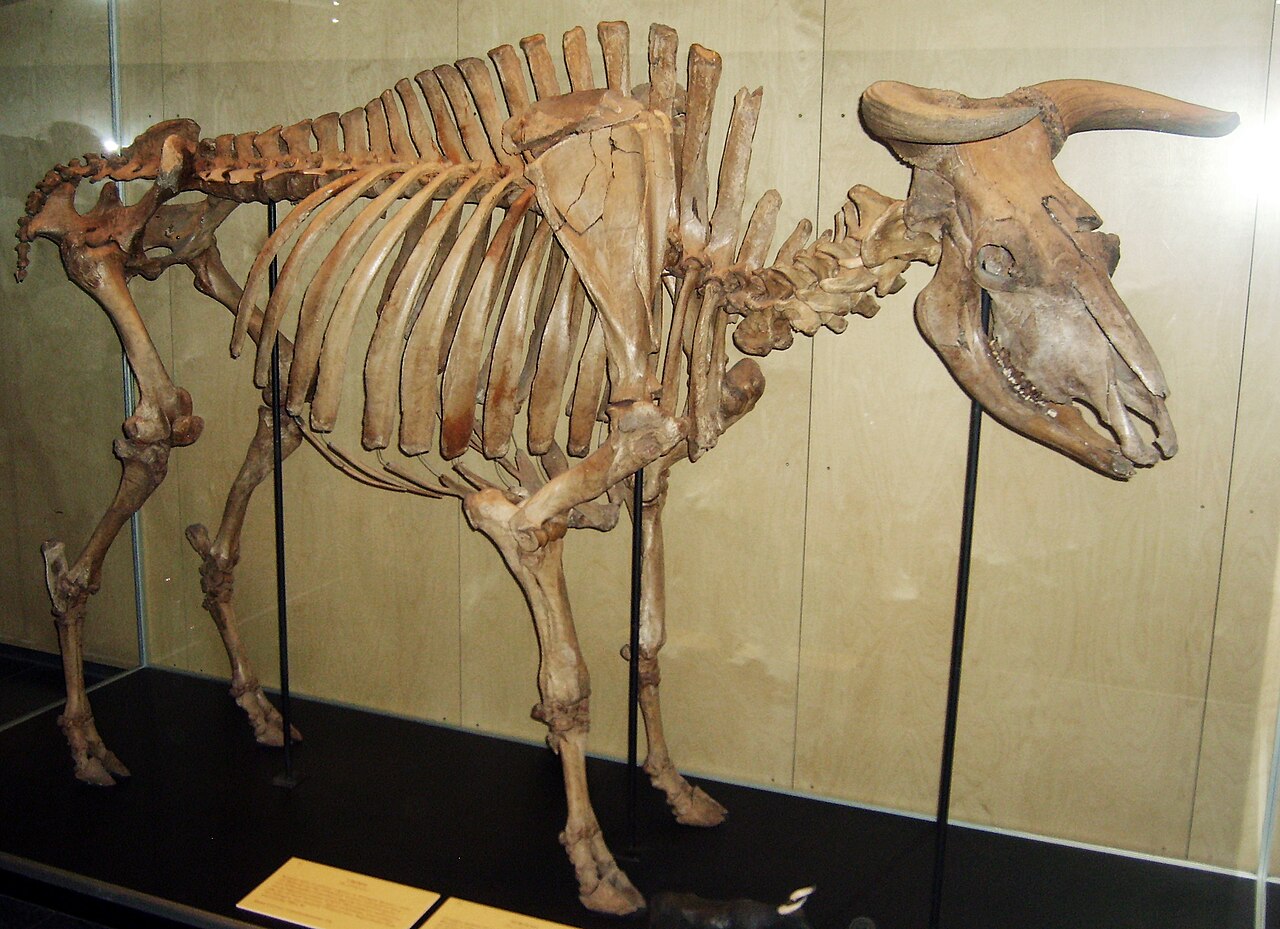
The wild ox (re'em)
The re'em is the aurochs, the great wild ox of the ancient Near East, extinct since 1627 (the last died in Poland). Assyrian kings hunted it (rimu in Akkadian). The Greek translators rendered it monokerōs, "one-horned," perhaps from reliefs that show a bull in profile with one horn visible; the Vulgate here says rhinoceros; the KJV followed with "unicorn." The skeleton above shows the real animal: no fable required.
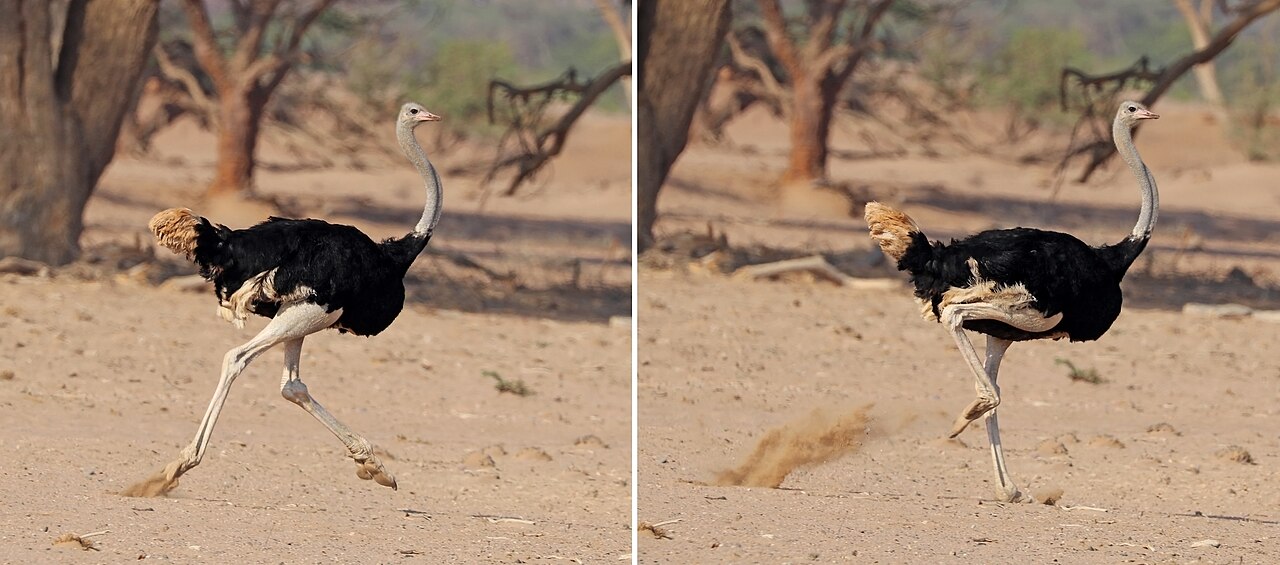
The ostrich
Ostriches lived in the deserts of Arabia and the Levant into the 20th century. They lay eggs in shallow scrapes, and several females may share a nest; eggs left at the edge can be lost, which may lie behind the idea that they "forget" them. Ostriches run at up to 70 km/h, faster than a horse. 39:13–18 is poetry, not a zoological report.
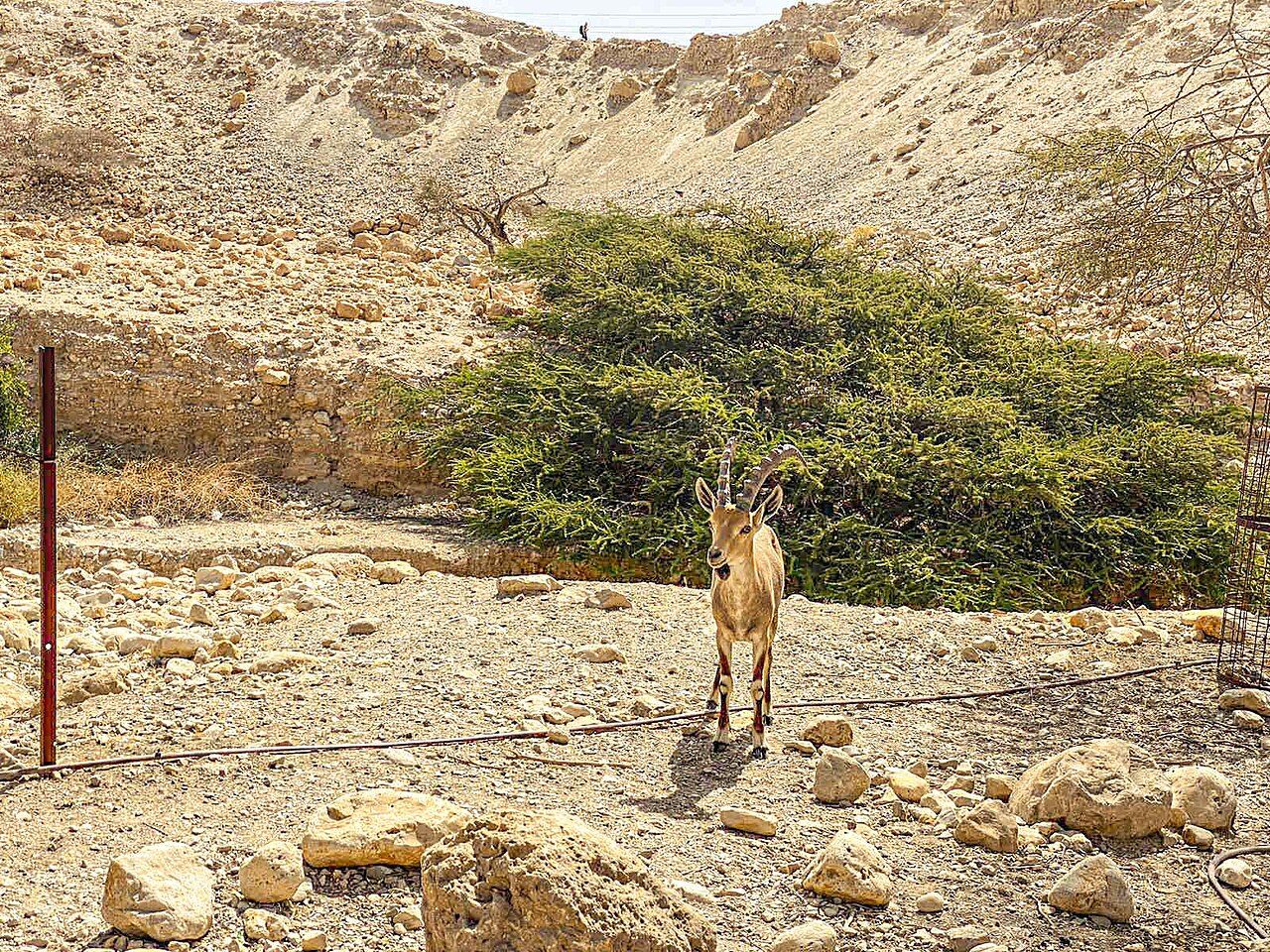
Goats, onagers and horses
The Nubian ibex lives on the cliffs around En-Gedi; the onager (wild ass) roamed the steppe; the war horse was the elite weapon of the Iron Age, harnessed to chariots or ridden by Assyrian cavalry.
Freedom outside human control
Every animal in chapter 39 is wild: not herded, not used, not even understood by humans, yet fed and timed by God. The poem decentres humanity. It also answers Job's picture of a God who only watches humans (7:17–20): God's attention runs to goat births and raven chicks.
Greek and Coptic
Our Sahidic Coptic copy lacks 39:10–30, more than the ostrich passage (39:13–18) that scholars report as absent from the Old Greek; the rest may be damage or a data gap. Check against Ziegler (JOB-C03).
What the evidence shows
- Re'em is the aurochs (wild ox). Akkadian rimu; not a unicorn.
- The Greek renders re'em as monokerōs; the Vulgate at 39:9 has rhinoceros.Source: The site's library: Westminster Leningrad Codex (Hebrew), Giguet's French of the Greek, Clementine Vulgate, KJV, Church Slavonic, Sahidic Coptic
- Ostriches lived in the Levant and Arabia until the 20th century.
Continue the journey
Connected elsewhere in ScriptureA Star out of JacobNumbers 23:22: "The strength of an unicorn" (wild ox).More from this lesson
Why this matters to the rest of Scripture
- "The strength of an unicorn" (wild ox).
- "The high hills are a refuge for the wild goats."
- "Behold the fowls of the air."