Investigation: The Righteous Sufferer Before Job
Babylon, Sumer, Ugarit and Egypt asked the same question
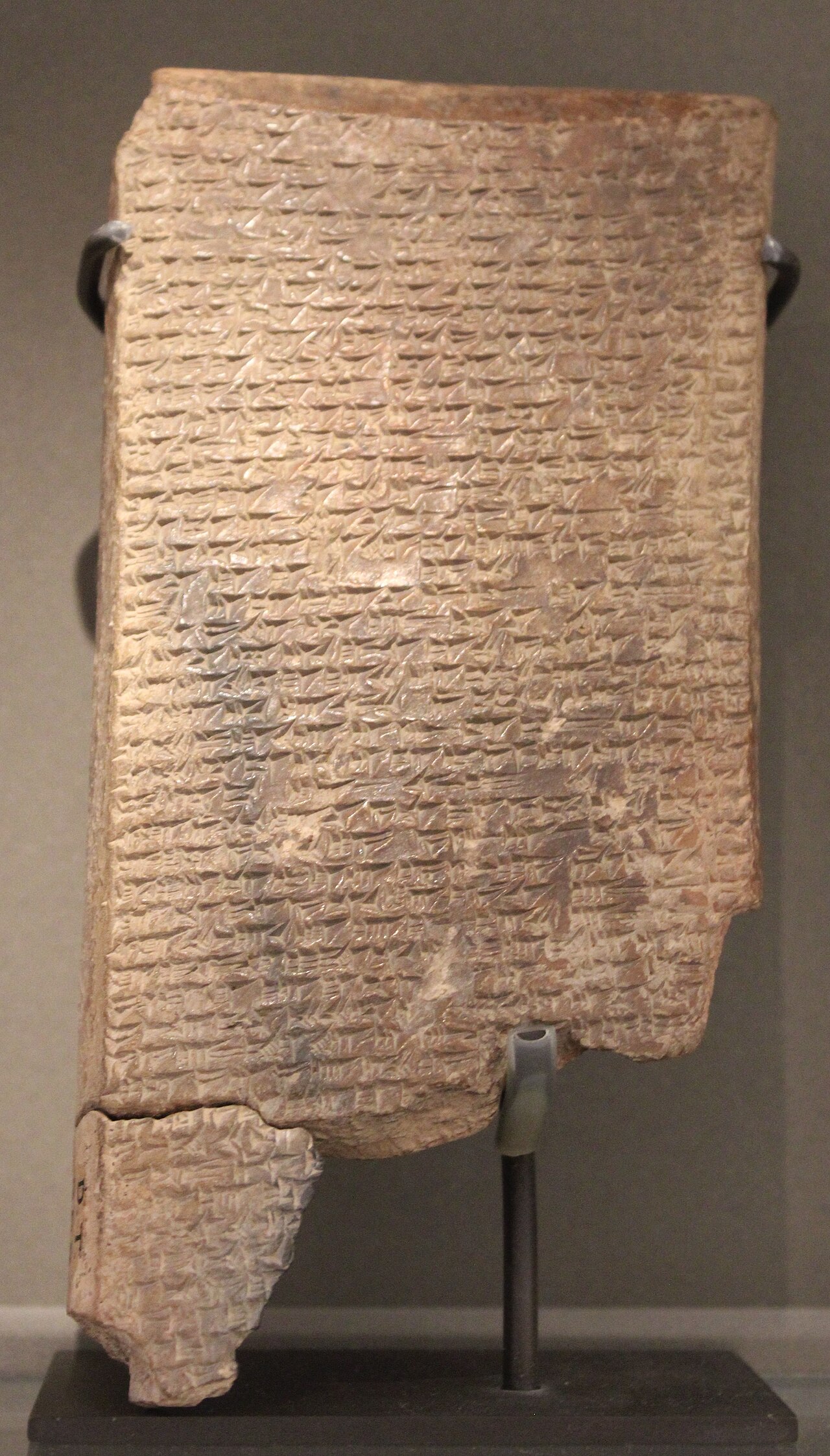
In the 19th and 20th centuries archaeologists recovered thousands of cuneiform tablets from the libraries of Nineveh, Nippur, Babylon and Ugarit. Among them were poems that sounded strangely familiar to readers of Job.
One begins: "I will praise the lord of wisdom," Marduk. Its speaker, Šubši-mešrê-Šakkan, a high official, tells how the gods abandoned him: the king turned against him, colleagues plotted, his household despised him, disease ravaged his body. He searched for his sin and found none: "I looked behind me: persecution, harassment." Diviners and exorcists could not help. Then in dreams messengers of Marduk appeared, and Marduk healed and restored him. He passes through the gates of Esagila, Marduk's temple in Babylon, giving thanks.
Another, the Babylonian Theodicy, is a dialogue in 27 stanzas between a sufferer and a friend. The sufferer complains that the wicked prosper and the pious suffer; the friend defends the gods' order. The first signs of each stanza spell out a sentence: "I, Saggil-kinam-ubbib, the incantation priest, am adorant of the god and the king." At the end the friend concedes that the gods made humans prone to lies and injustice.
| Text | Language and date | Oldest copies | Form | Shared with Job | Different from Job |
|---|---|---|---|---|---|
| "A Man and His God" | Sumerian; composed early 2nd millennium BC or earlier | Old Babylonian tablets from Nippur (c. 1800–1700 BC) | Lament and restoration | Unexplained suffering; restoration | The sufferer confesses unknown sins; no debate |
| Ludlul bēl nēmeqi | Akkadian; c. 1300–1100 BC (Kassite period) | Neo-Assyrian copies (7th c. BC, Nineveh) and later | First-person monologue, 4–5 tablets | Abandonment, disease, social rejection, dreams, restoration | Restoration by Marduk through ritual; no lawsuit; no divine speech to the sufferer |
| Babylonian Theodicy | Akkadian; c. 1000 BC (debated) | Neo-Assyrian and later copies | Acrostic dialogue, 27 stanzas of 11 lines | Sufferer and friend debate; the wicked prosper | No divine appearance; ends with the gods' making humans prone to injustice |
| Ugarit sufferer text (RS 25.460) | Akkadian; 13th c. BC | One tablet from Ugarit | Thanksgiving after suffering | Suffering and healing by Marduk | Short; no dialogue |
| Dispute between a Man and his Ba | Egyptian; Middle Kingdom, c. 1900 BC | Papyrus Berlin 3024 | Dialogue with one's own soul | Longing for death; weariness of life | No god answers; about death and burial |
Common themes
These texts share: a pious person suffers without known cause; friends or society turn away; physical illness described in detail; questions about the gods' justice and the limits of human knowledge ("Who knows the will of the gods in heaven?" Ludlul II); and, in Ludlul and "Man and His God," restoration. They show that the problem of innocent suffering was a long-standing topic of ancient wisdom.
Similarity is not borrowing
No Babylonian text is quoted in Job, and no direct literary dependence has been shown. The similarities are of theme and genre: ancient scribes across the Near East knew and copied such texts, and Israelite scribes may have known the type. Job differs sharply: the narrator tells the reader the cause (a test), so the sufferer is innocent by the book's own account; there is a sustained lawsuit against God; God speaks directly from the whirlwind without explaining; and God judges the friends wrong. Babylonian sufferers are restored after ritual and confession; Job is restored after God's speech and his prayer for his friends.
Sources and editions
Standard editions: W. G. Lambert, Babylonian Wisdom Literature (1960); Alan Lenzi, Suffering in Babylon (2023), with a new edition and history of scholarship on Ludlul; Takayoshi Oshima, The Babylonian Theodicy (2013). The ORACC project gives context on Marduk. The site's quotations are paraphrases from these editions and must be checked line by line against them before certification (JOB-C05).
Faith and comparison
Some readers worry that parallels make Job derivative. The comparison actually shows what Job does differently: it takes a question the whole ancient world asked and gives an answer no other text gives, God's own voice, refusing the friends' theology and affirming the sufferer's honesty.
What the evidence shows
- Ludlul bēl nēmeqi describes a righteous sufferer restored by Marduk.Source: A. Lenzi, Suffering in Babylon: Ludlul bēl nēmeqi and the Scholars, Ancient and Modern (2023) ↗; ORACC, Ancient Mesopotamian Gods and Goddesses: Marduk ↗; W. G. Lambert, Babylonian Wisdom Literature (1960), editions of Ludlul, the Theodicy and related texts
- The Babylonian Theodicy is an acrostic dialogue naming Saggil-kinam-ubbib.Source: T. Oshima, The Babylonian Theodicy (SAACT 9, 2013) ↗; W. G. Lambert, Babylonian Wisdom Literature (1960), editions of Ludlul, the Theodicy and related texts
- Job was copied or adapted from Ludlul or the Theodicy. Similarities are thematic; no direct dependence shown.
- "Man and His God" is a Sumerian sufferer's text known from Old Babylonian copies.Source: S. N. Kramer, "'Man and His God': A Sumerian Variation on the 'Job' Motif," VTSup 3 (1955)
- The Egyptian "Dispute between a Man and his Ba" is preserved in Papyrus Berlin 3024.Source: "The Dispute between a Man and His Ba," Papyrus Berlin 3024 (Middle Kingdom); tr. in Lichtheim, AEL 1
Continue the journey
Echoes Across CivilizationsThe righteous suffererDid other ancient peoples write about a good person who suffers without knowing why?More from this lesson
Echoes Across Civilizations
Optional: how other ancient peoples told similar stories. Open one to compare, then come back to the lesson.
The righteous suffererBabylonian · Sumerian · Egyptian
Did other ancient peoples write about a good person who suffers without knowing why?
- Babylonian: Ludlul bēl nēmeqi ("I will praise the lord of wisdom") Shared literary world
- Babylonian: The Babylonian Theodicy Shared literary world
- Sumerian: "A Man and His God" Resemblance only
- Egyptian: The Dispute between a Man and his Ba Resemblance only
Why this matters to the rest of Scripture
- Job's lament.
- The wicked prosper.
- An Israelite psalm with the same problem.