"I made a covenant with mine eyes; why then should I think upon a maid?… If I have walked with vanity, or if my foot hath hasted to deceit; Let me be weighed in an even balance, that God may know mine integrity."
"If I did despise the cause of my manservant or of my maidservant, when they contended with me; What then shall I do when God riseth up?… Did not he that made me in the womb make him? and did not one fashion us in the womb?"
"If I have withheld the poor from their desire, or have caused the eyes of the widow to fail… If I have seen any perish for want of clothing… If I have made gold my hope… If I beheld the sun when it shined, or the moon walking in brightness; And my heart hath been secretly enticed, or my mouth hath kissed my hand: This also were an iniquity to be punished by the judge: for I should have denied the God that is above… The stranger did not lodge in the street: but I opened my doors to the traveller."
"Oh that one would hear me! behold, my desire is, that the Almighty would answer me, and that mine adversary had written a book. Surely I would take it upon my shoulder, and bind it as a crown to me… If my land cry against me, or that the furrows likewise thereof complain… Let thistles grow instead of wheat, and cockle instead of barley. The words of Job are ended."
"As the LORD lives"
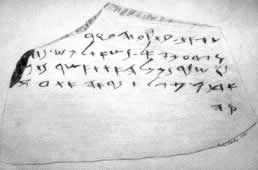
Oaths in ancient Israel were sworn by God's life. The Lachish letters, pictured above (early 6th century BC), include the oath "As YHWH lives" in a Judean officer's letter. Job's self-curses ("let my arm fall from my shoulder blade") follow the pattern of the "negative confession" in which one lists sins not committed.
Kissing the hand to the moon
Throwing a kiss toward the sun or moon was a gesture of worship (compare 1 Kings 19:18, kissing Baal). Moon and sun cults were widespread in Arabia and Mesopotamia (the moon god Sin at Harran and Tayma). Job denies this most secret disloyalty.
The Egyptian Book of the Dead
Chapter 125 of the Egyptian Book of the Dead has the deceased declare before the judges of the dead a long list of sins he did not commit ("I have not robbed the poor… I have not caused weeping"). Job's oath has a similar form, made before a living God.
"Behold my tav"
"Behold, my desire is" (31:35, KJV) is in Hebrew hen tavi, "here is my tav," the last letter of the alphabet, in old script a cross-mark: Job's signature or mark on his statement. He asks his "adversary" (God) to write the indictment. In 38:1 God answers, though not with an indictment.
Servants share one Maker
31:13–15 grounds the rights of slaves in a shared creation: one God made both master and servant in the womb. It is one of the strongest statements of common humanity in ancient literature, even though slavery remained part of Job's world.
Out of order?
"The words of Job are ended" comes after 31:38–40 (the land's complaint), which follows the climactic 31:35–37. Some scholars move 38–40 earlier; the manuscripts keep them where they are. The site keeps the received order.
What the evidence shows
- Hen tavi (31:35) means "here is my mark/signature."
- The Lachish letters contain the oath "As YHWH lives."
- Job 31 resembles the negative confession of the Book of the Dead in form.
Continue the journey
Journey of a PassageJob 31:35–37: "Here is my mark""Behold, my desire is, that the Almighty would answer me" (KJV) renders hen tavi, "here is my tav (mark, signature)." Job signs his oath and asks his adversary to write the charge.More from this lesson
Why this matters to the rest of Scripture
- Looking with lust.
- Not worshipping sun, moon and stars.
- The answer comes.