Happy Is the Man Whom God Correcteth
"Man is born unto trouble, as the sparks fly upward"
"Call now, if there be any that will answer thee; and to which of the saints wilt thou turn?" Eliphaz warns that wrath kills the foolish. "Affliction cometh not forth of the dust, neither doth trouble spring out of the ground; yet man is born unto trouble, as the sparks fly upward."
"I would seek unto God, and unto God would I commit my cause: which doeth great things and unsearchable… He taketh the wise in their own craftiness."
"Behold, happy is the man whom God correcteth: therefore despise not thou the chastening of the Almighty: for he maketh sore, and bindeth up: he woundeth, and his hands make whole. He shall deliver thee in six troubles: yea, in seven there shall no evil touch thee. In famine he shall redeem thee from death: and in war from the power of the sword… Thou shalt come to thy grave in a full age, like as a shock of corn cometh in in his season. Lo this, we have searched it, so it is; hear it, and know thou it for thy good."
Sparks, or the sons of Resheph
"As the sparks fly upward" translates bene reshef, literally "sons of Resheph." Resheph was a Canaanite and Syrian god of plague and fire, known at Ugarit and Egypt; in the Bible the word means flame, bolt or pestilence (Deuteronomy 32:24; Habakkuk 3:5). The poet may be playing on an older divine name as an image of what springs up naturally.
Famine and its memory
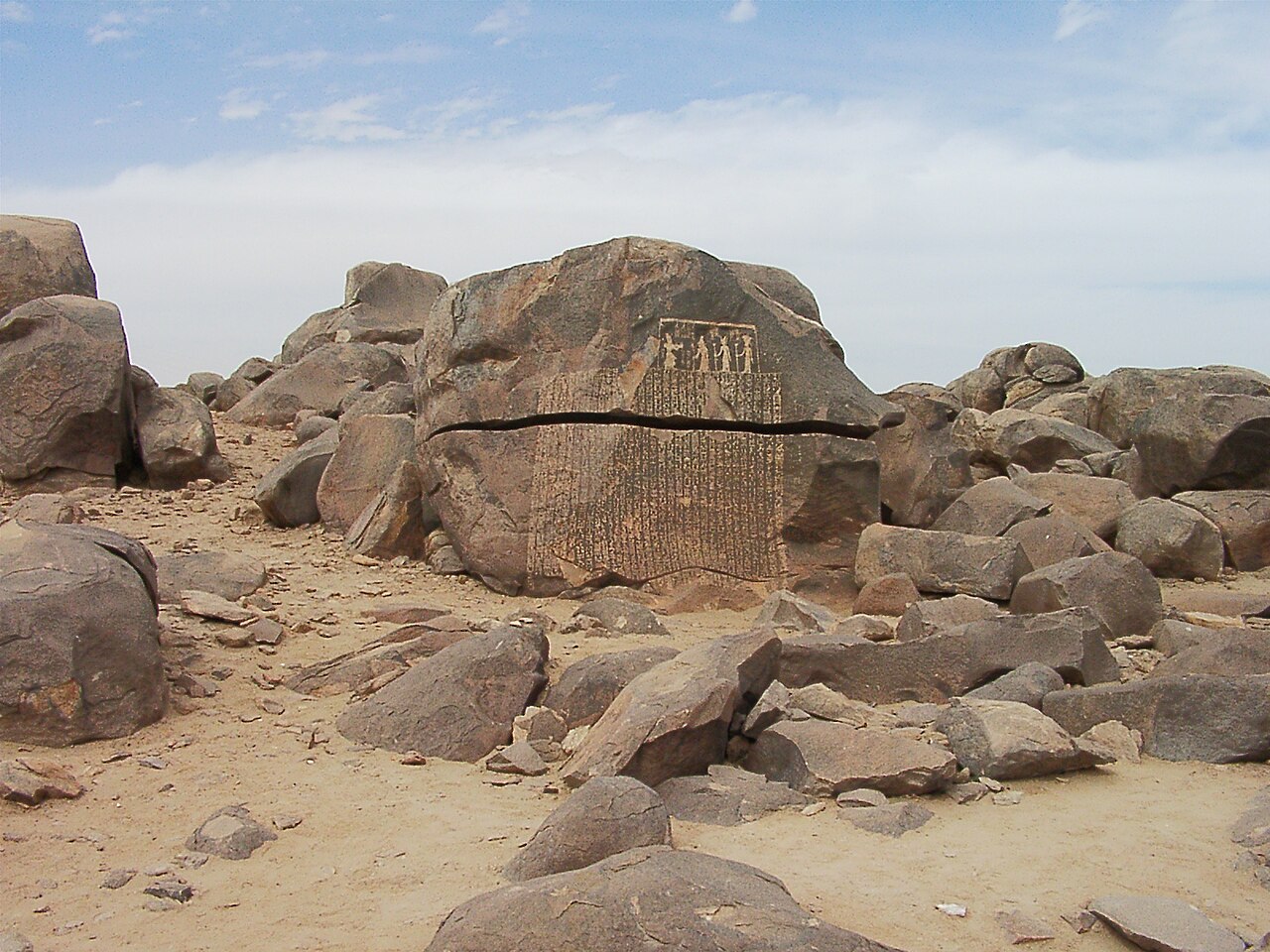
Eliphaz's list of rescues (famine, war, the tongue's scourge, wild beasts) is the stock list of ancient disaster. The Famine Stela on Sehel Island, a later Egyptian inscription pictured above, remembers seven years of low Nile under King Djoser: famine was the disaster every ancient community feared.
Six, yes seven
"In six troubles: yea, in seven" is a number pattern (x, x+1) common in wisdom poetry (Proverbs 6:16; 30:15–31; Amos 1–2). It means "every trouble," not a count of events.
Quoted in the New Testament
Job 5:13, "He taketh the wise in their own craftiness," is quoted by Paul in 1 Corinthians 3:19 ("For it is written"), the only direct quotation of Job in the New Testament. Paul uses Eliphaz's line approvingly. A true general saying can be misapplied to a particular case; the book's problem is not that Eliphaz's sentences are false in general but that they do not explain Job.
Discipline: Proverbs and Job
"Despise not the chastening of the Almighty" is close to Proverbs 3:11–12 ("despise not the chastening of the LORD"), also quoted in Hebrews 12:5–6. Suffering as discipline is a genuine biblical theme. Job's question is whether it applies when there is no sin to correct.
What the evidence shows
- Paul quotes Job 5:13 in 1 Corinthians 3:19.
- Bene reshef plays on the name of the god Resheph.
- Job's suffering is God's discipline for sin. The prologue says it was "without cause" (2:3).
Continue the journey
Connected elsewhere in ScriptureProverbs 3: Trust in the LORD with All Thine HeartProverbs 3:11–12: "Despise not the chastening of the LORD."More from this lesson
Why this matters to the rest of Scripture
- Paul quotes Job 5:13.
- "Despise not the chastening of the LORD."
- Discipline as a sign of sonship.