"Oh that I were as in months past, as in the days when God preserved me; When his candle shined upon my head… When the Almighty was yet with me, when my children were about me; When I washed my steps with butter, and the rock poured me out rivers of oil."
"When I went out to the gate through the city, when I prepared my seat in the street! The young men saw me, and hid themselves: and the aged arose, and stood up. The princes refrained talking… Because I delivered the poor that cried, and the fatherless, and him that had none to help him… I caused the widow's heart to sing for joy. I put on righteousness, and it clothed me: my judgment was as a robe and a diadem. I was eyes to the blind, and feet was I to the lame. I was a father to the poor: and the cause which I knew not I searched out. And I brake the jaws of the wicked, and plucked the spoil out of his teeth."
"I chose out their way, and sat chief, and dwelt as a king in the army, as one that comforteth the mourners."
The seat at the gate
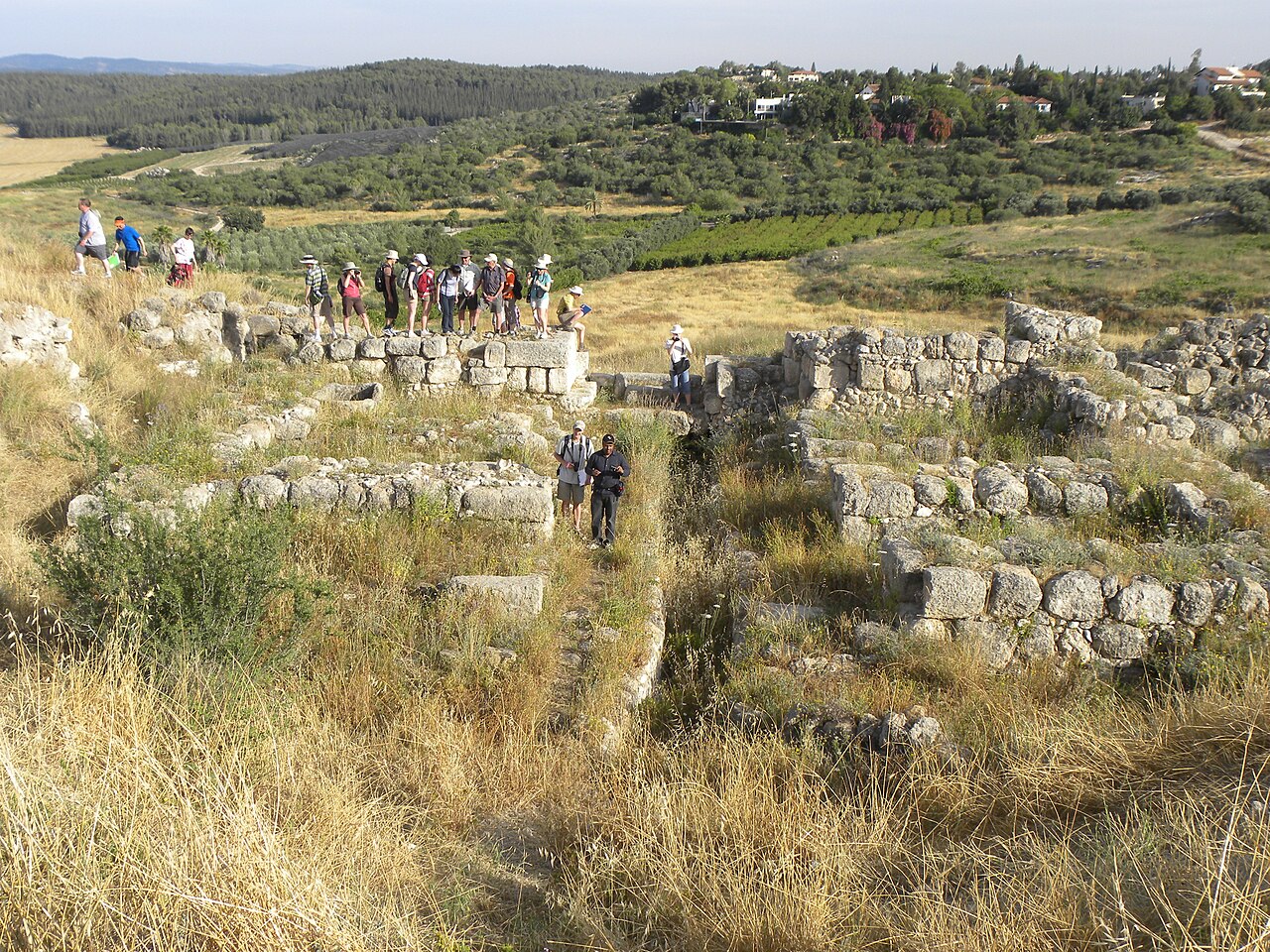
Elders sat at the city gate to hear cases and witness transactions (Ruth 4:1–2; Proverbs 31:23). Gates had benches; the six-chambered gate at Gezer pictured above had rooms where people could sit. Job was the leading elder, the one others rose for.
A just ruler's portrait
Ancient kings described themselves as protectors of widows and orphans: Hammurabi's prologue says he was called "that the strong might not oppress the weak, to give justice to the orphan and the widow." Job uses the same ideal, as a private man.
Sand, palm or phoenix?
29:18: "I shall die in my nest, and I shall multiply my days as the sand" (KJV). The Hebrew word is hol, which means "sand" but in rabbinic tradition also names the phoenix, the bird that dies and is reborn (Genesis Rabbah 19:5). The library's Greek reads "my age will last as long as the palm tree (phoinix)"; the Vulgate "like the palm I will multiply days." Greek phoinix means both palm and phoenix. A single word yields three ancient readings.
Self-defence, not biography
Chapter 29 is Job's testimony in his own defence, answering Eliphaz's invented charges (22:6–9). The narrator's word (1:1) supports Job's integrity, but the details of chapter 29 are not independently confirmed; they are his case. The reader is asked to weigh testimony.
The versions
The library's Sahidic Coptic copy, which follows the shorter pre-Origen Greek, lacks 29:19–20. Whether each missing line was absent from the Old Greek itself, or is damage in the Coptic manuscripts or our digital copy, is to be checked against Ziegler's edition (JOB-C03).
What the evidence shows
- Elders judged and witnessed at the city gate.
- Protecting widows and orphans was a royal ideal in Mesopotamian law prologues.
Continue the journey
Echoes Across CivilizationsAncient law collectionsDid other ancient peoples have laws like those in the Book of the Covenant?More from this lesson
Echoes Across Civilizations
Optional: how other ancient peoples told similar stories. Open one to compare, then come back to the lesson.
Ancient law collectionsBabylonian · Sumerian and Babylonian
Did other ancient peoples have laws like those in the Book of the Covenant?
- Babylonian: The Laws of Hammurabi Shared literary world
- Sumerian and Babylonian: The Laws of Ur-Nammu, Lipit-Ishtar and Eshnunna Shared literary world
Why this matters to the rest of Scripture
- Eliphaz's charges.
- "Her husband is known in the gates."
- Comfort to mourners.