"Should not the multitude of words be answered? and should a man full of talk be justified?… For thou hast said, My doctrine is pure, and I am clean in thine eyes. But oh that God would speak, and open his lips against thee; And that he would shew thee the secrets of wisdom… Know therefore that God exacteth of thee less than thine iniquity deserveth."
"Canst thou by searching find out God? canst thou find out the Almighty unto perfection? It is as high as heaven; what canst thou do? deeper than hell; what canst thou know?"
"If thou prepare thine heart, and stretch out thine hands toward him; If iniquity be in thine hand, put it far away… For then shalt thou lift up thy face without spot… Because thou shalt forget thy misery, and remember it as waters that pass away."
Zophar's tone
Zophar speaks only twice (chs. 11 and 20; he has no third speech). He is the most dogmatic: Job deserves worse than he got. Teachers in ancient wisdom texts often shame a student for talking too much; Zophar does the same.
Heaven, Sheol, earth and sea
Zophar measures God's wisdom by the four dimensions of the ancient world: higher than the sky, deeper than Sheol, longer than the earth, broader than the sea. God will later use the same cosmos to question Job (ch. 38).
The wild donkey's colt
Zophar's proverb in 11:12 is famous for its difficulty: "vain man would be wise, though man be born like a wild ass's colt" (KJV). Modern versions read it as "a stupid person will get understanding when a wild ass is born a man," that is, never. The insult is aimed at Job. Zophar promises that a repentant Job will "lie down, and none shall make thee afraid" (11:19), the language of covenant blessing (Leviticus 26:6).
"God knows more" is not evidence
Zophar's argument is that God's wisdom is unsearchable, so Job's guilt may be hidden. That God knows more is true; it does not show that Job committed any particular wrong. The irony is that God does speak (38:1), as Zophar wished, but against the friends, not Job (42:7).
Hidden sin in ancient thought
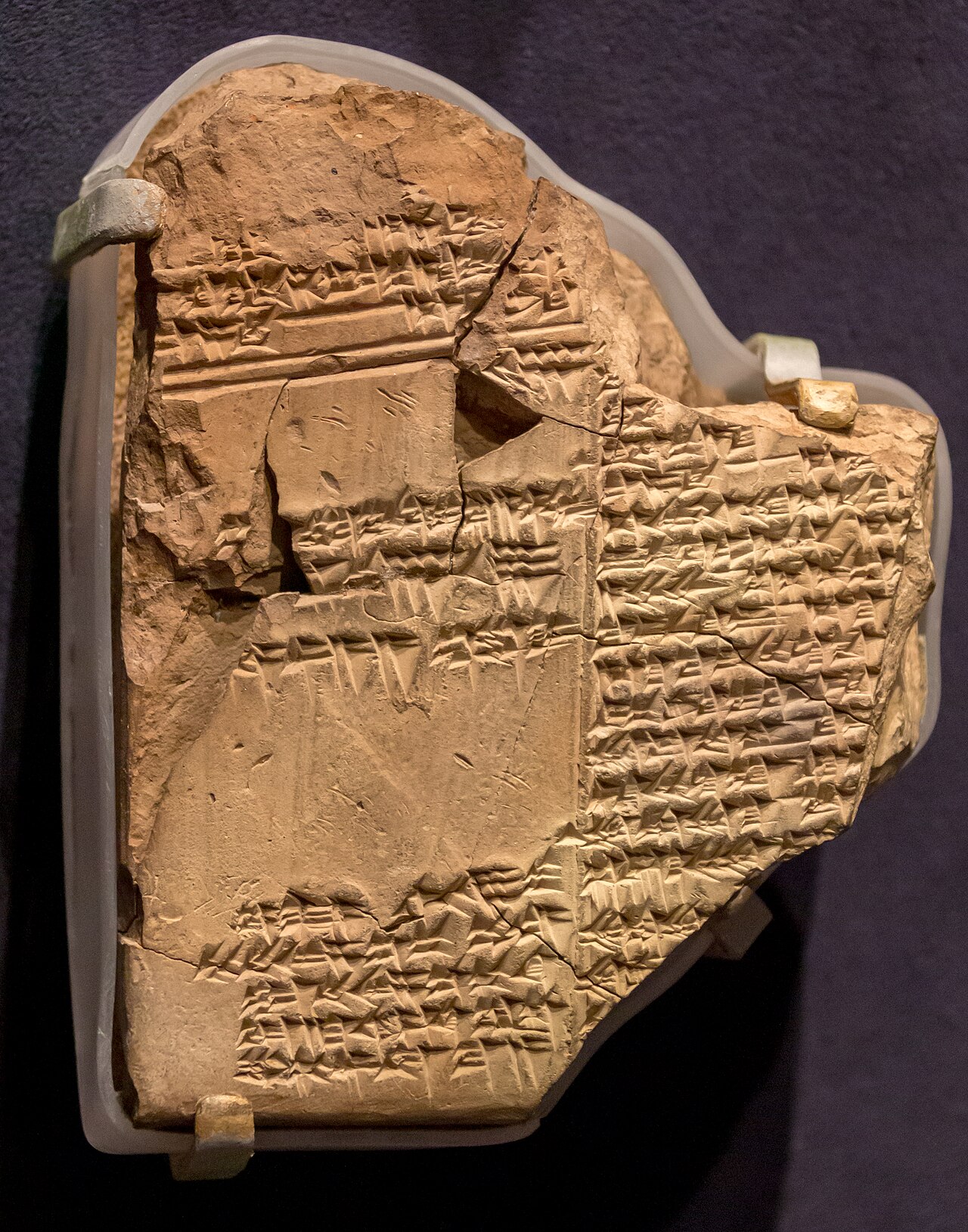
Mesopotamian prayers, such as the "prayer to every god," confess sins the sufferer does not know he committed. The Ludlul sufferer also cannot find his fault. Zophar's idea of hidden guilt was a common ancient answer to unexplained suffering.
What the friends never say
Zophar, like Eliphaz and Bildad, appeals to God's hidden wisdom, to tradition and to observation, but never to God's own word or to a specific sin. The book lets the reader notice that the friends' certainty rests on a theory, not evidence. The library's Greek and Latin follow the Hebrew closely in this short speech.
What the evidence shows
- Zophar has no third speech in the received text.
- God exacted less than Job's iniquity deserved (Zophar). The narrator says Job was upright and suffered without cause.
Continue the journey
Echoes Across CivilizationsThe righteous suffererDid other ancient peoples write about a good person who suffers without knowing why?More from this lesson
Echoes Across Civilizations
Optional: how other ancient peoples told similar stories. Open one to compare, then come back to the lesson.
The righteous suffererBabylonian · Sumerian · Egyptian
Did other ancient peoples write about a good person who suffers without knowing why?
- Babylonian: Ludlul bēl nēmeqi ("I will praise the lord of wisdom") Shared literary world
- Babylonian: The Babylonian Theodicy Shared literary world
- Sumerian: "A Man and His God" Resemblance only
- Egyptian: The Dispute between a Man and his Ba Resemblance only
Why this matters to the rest of Scripture
- God does speak, from the whirlwind.
- "How unsearchable are his judgments."