With Him Is Wisdom and Strength
"No doubt but ye are the people, and wisdom shall die with you"
"No doubt but ye are the people, and wisdom shall die with you. But I have understanding as well as you… The tabernacles of robbers prosper, and they that provoke God are secure."
"But ask now the beasts, and they shall teach thee; and the fowls of the air, and they shall tell thee… Who knoweth not in all these that the hand of the LORD hath wrought this? In whose hand is the soul of every living thing, and the breath of all mankind."
"With him is wisdom and strength, he hath counsel and understanding. Behold, he breaketh down, and it cannot be built again: he shutteth up a man, and there can be no opening. Behold, he withholdeth the waters, and they dry up: also he sendeth them out, and they overturn the earth… He leadeth counsellors away spoiled, and maketh the judges fools. He looseth the bond of kings… He increaseth the nations, and destroyeth them: he enlargeth the nations, and straiteneth them again."
Counsellors led away
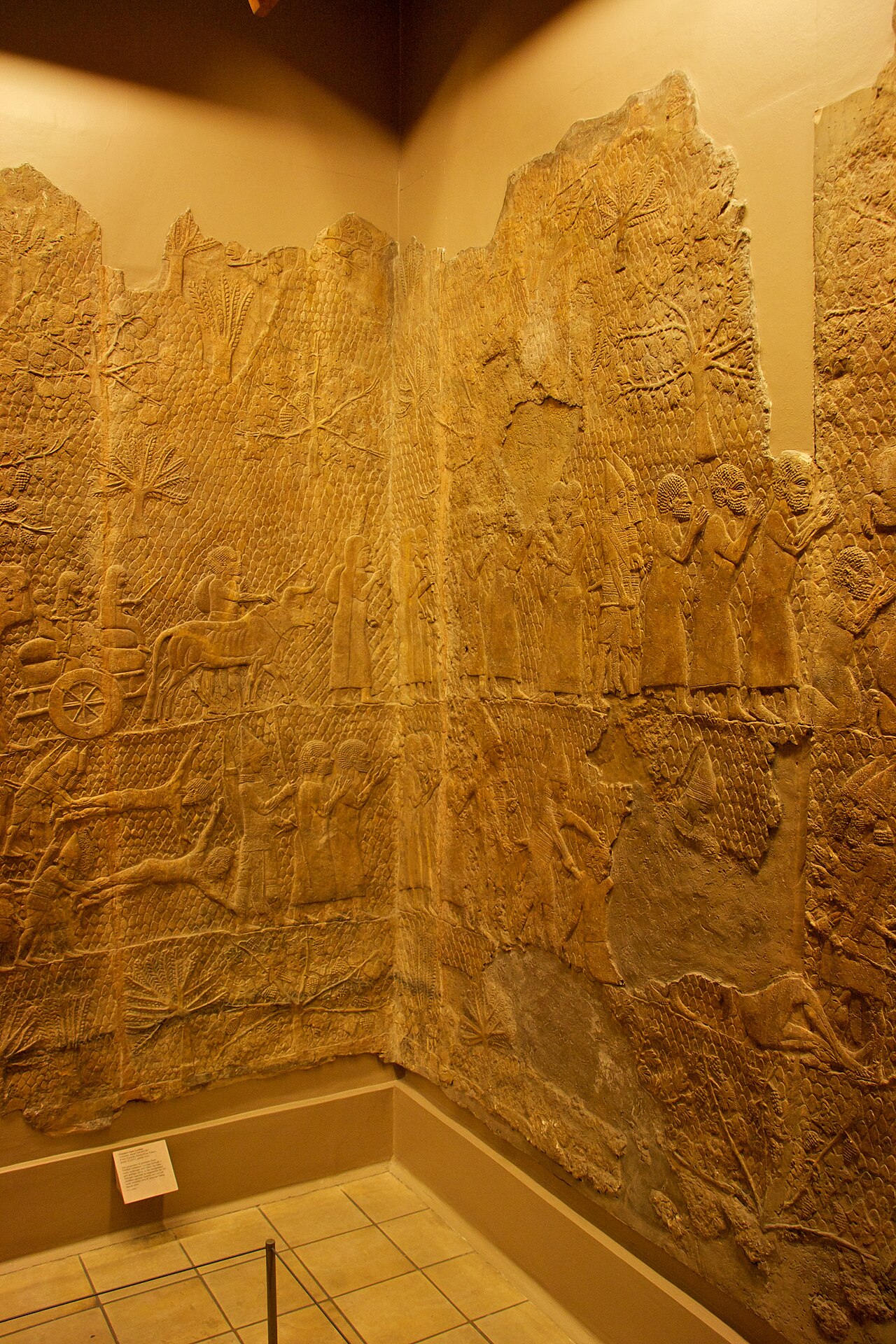
"He leadeth counsellors away spoiled" (stripped) describes what ancient readers saw in war: officials marched barefoot into exile. The Lachish reliefs, pictured above, show Judean captives led away after the Assyrian siege of 701 BC. Job's point: power and position prove nothing about righteousness.
Ask the animals
Wisdom teachers often learned from animals (Proverbs 6:6; 30:24–28). Job uses the method against his friends: everyone, even beasts, knows that God controls all, but that does not explain why the good suffer. God's own speeches will be full of animals.
The ear tests words
"Doth not the ear try words? and the mouth taste his meat?" (12:11): Job claims the right to judge the friends' teaching as a palate judges food. "With the ancient is wisdom" (12:12) may be quoted ironically, since Job goes on to show God overturning the old and wise (12:20: he "taketh away the understanding of the aged").
The only "LORD" in the dialogues
Job 12:9 is the only place in the dialogues (3:1–42:6, outside the headings of God's speeches) where the divine name YHWH, "the LORD," appears in the Masoretic text; elsewhere the speakers say El, Eloah, Elohim or Shaddai. Some Hebrew manuscripts read Eloah here. The line also matches Isaiah 41:20 ("that the hand of the LORD hath done this"), and may be a quotation.
A disturbing providence
Job's hymn to God's rule (12:13–25) is a list of overturnings, mostly destructive. It challenges the assumption that political success shows God's favour. It is a theology of power without explanation, which God's speeches will both confirm and transform.
The versions
The library's Greek reads 12:9 "that the hand of the Lord created them," as does the Vulgate ("manus Domini"), consistent with YHWH in the Hebrew here. The library's Sahidic Coptic copy, which follows the shorter pre-Origen Greek, lacks 12:9, 20 and 23. Whether each missing line was absent from the Old Greek itself, or is damage in the Coptic manuscripts or our digital copy, is to be checked against Ziegler's edition (JOB-C03).
What the evidence shows
- Job 12:9 is the only occurrence of YHWH in the poetic dialogues of the Masoretic text. Some manuscripts read Eloah.
- The Lachish reliefs show captives led away after 701 BC.
Continue the journey
Connected elsewhere in ScriptureIsaiah 41: Fear Thou NotIsaiah 41:20: "The hand of the LORD hath done this."More from this lesson
Why this matters to the rest of Scripture
- "The hand of the LORD hath done this."
- "He removeth kings, and setteth up kings."