How Job Came to Us
A story without a date, a poem in hard Hebrew, and many ancient Jobs
Setting is not the same as date. The story is set in Uz, among "the men of the east," in a world of flocks, family sacrifice and long life that feels like Genesis. That setting tells us how the storyteller imagined Job's world, not when the book was written.
The book has no author's name. The Babylonian Talmud says "Moses wrote his own book, the portion of Balaam, and Job" (Bava Batra 14b), and records other opinions on Job's date. The Syriac Peshitta places Job after Deuteronomy in many manuscripts, and at Qumran one Job scroll was copied in the old Hebrew script otherwise used mostly for the Torah: two hints that some ancient readers linked Job with Moses.
Ezekiel (14:14, 20), in the early 6th century BC, names "Noah, Daniel, and Job" as proverbially righteous men. So a righteous-Job tradition was known by then. That does not prove the 42-chapter book existed in its present form; Ezekiel's "Daniel" may be the ancient Danel known from Ugarit, another figure of legend.
A. An uncertain landscape
Uz is linked with Aram (Genesis 10:23), Nahor's family (22:21) and Edom (Lamentations 4:21). Teman is Edomite; Buz is Arabian. The characters are outsiders to Israel's monarchy and temple. No inscription names Job or identifies his home; the atlas marks Uz as an uncertain region.
B. Who wrote it, and when?
Arguments for a date in the 6th–4th centuries BC: the developed idea of ha-satan (like Zechariah 3), many Aramaisms, possible dependence on Psalms and on Isaiah 40–55, and the theme of a righteous sufferer which fits the questions of the exile. Arguments for earlier: archaic poetic forms, the patriarchal setting, Ezekiel's reference. Some propose a pre-exilic prose folktale reshaped by a poet; others a single author using a deliberately old-fashioned frame; others several stages (dialogue, then Job 28, then Elihu). The vocabulary is so unusual (dozens of words occur nowhere else in the Bible) that dating by language is uncertain. Jerome said the Hebrew of Job was "slippery, like an eel: the tighter you hold it, the faster it slips away."
C. The oldest Hebrew
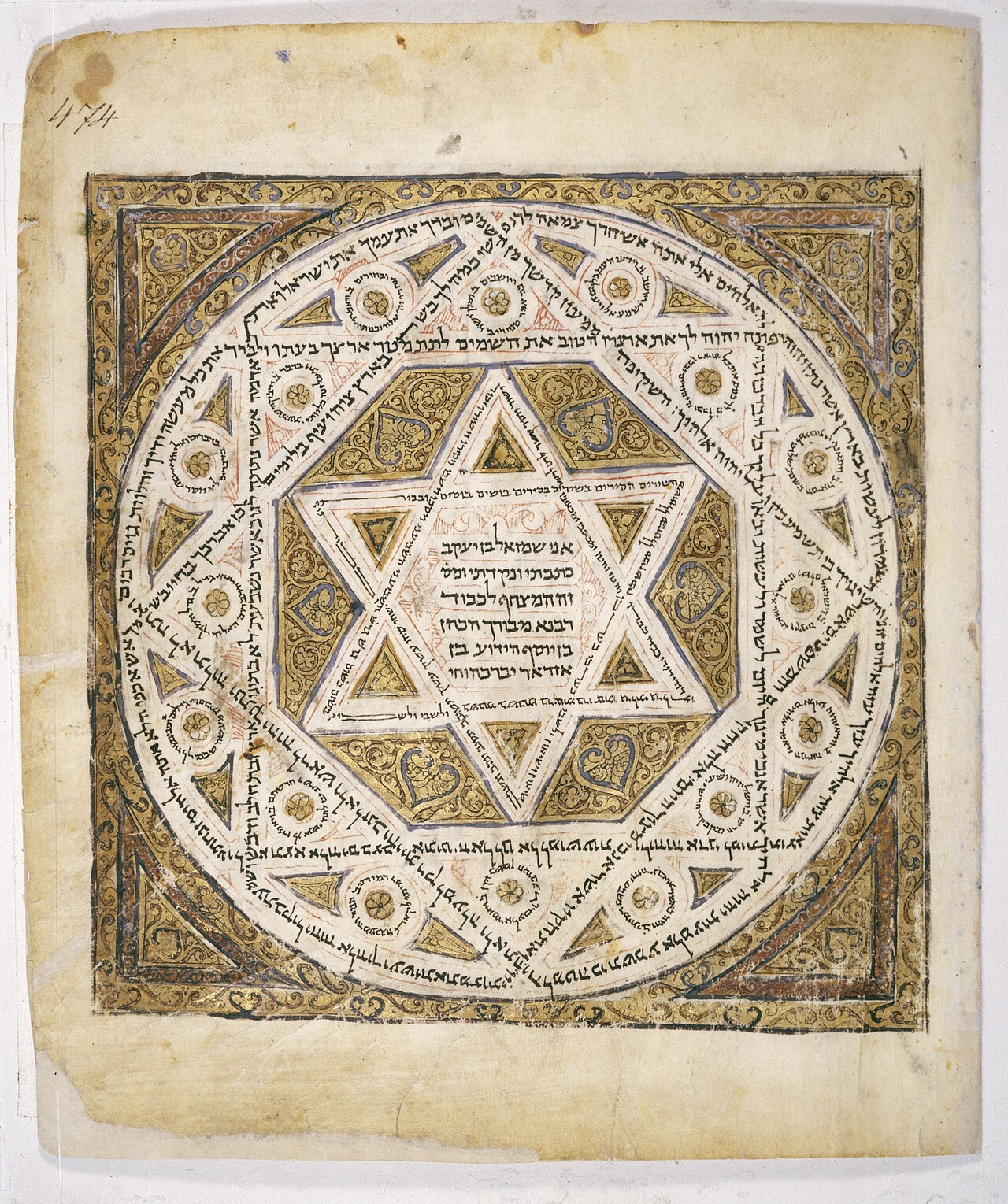
Hebrew fragments from Qumran: 2Q15, 4Q99 (4QJob-a), 4Q100 (4QJob-b) and 4Q101 (4QpaleoJob-c, in paleo-Hebrew script). They are small and fragmentary; there is no complete Qumran Job scroll. They show that Hebrew Job, including Elihu, was copied before AD 70, and that its text was close to the later Masoretic. Exact verse ranges and readings must be checked against the DJD editions (JOB-C04). The complete Hebrew text comes from the Aleppo Codex (c. 930) and the Leningrad Codex (1008), which uses the special poetic accents for Job 3:2–42:6.
D. Aramaic Job
11Q10 from Cave 11 is a substantial Aramaic translation of chapters 17–42; 4Q157 from Cave 4 preserves bits of chapters 3–5. They are translations and interpretations, evidence for how Job was read, and cautiously for its Hebrew. Rabbinic tradition remembers a Targum of Job hidden away at Gamaliel's command.
E. Greek Job
The Old Greek (perhaps 2nd–1st century BC) is about a sixth shorter and adds the wife's speech and the Jobab ending. Aristeas the Exegete, a Hellenistic Jewish writer (perhaps 2nd century BC), already knew the Jobab identification found in the Greek ending. Origen's Hexapla (c. 240) filled the gaps from Theodotion with asterisks. Critical edition: J. Ziegler, Göttingen (1982); English: NETS. The library's Greek (Giguet's French, 1872) follows the filled-out printed text.
F. Latin, Syriac, Coptic
The Old Latin was made from Greek. Jerome first revised Job from Origen's Greek with asterisks and obeli (that version survives), then translated it from Hebrew (the Vulgate). The Syriac Peshitta is from Hebrew. The Sahidic Coptic is from the pre-Origen Greek. Arabic and later versions followed. Each must be labelled by its base text; the reader never fills one tradition's gap with another's text.
G. Canon and reception
In Jewish Bibles Job is among the Writings (Ketuvim), usually with Psalms and Proverbs (the order varies: the Talmud lists Ruth, Psalms, Job, Proverbs…). Christian Old Testaments place it first among the poetic and wisdom books. James 5:11 praises Job's endurance; 1 Corinthians 3:19 quotes Job 5:13. The Testament of Job (Greek, c. 1st century BC–1st century AD) retells his life. Gregory the Great's Moralia on Job (6th century) shaped medieval Christian reading. Jewish commentators from Saadia Gaon to Maimonides treated Job as philosophy of providence.
| Stage | Date | Evidence | Status |
|---|---|---|---|
| Righteous-Job tradition | By early 6th century BC | Ezekiel 14:14, 20 | Documented |
| Composition of the poem | Often dated 6th–4th century BC; wider range proposed | Language, themes, literary relations | Debated |
| Hebrew copies at Qumran | c. 2nd century BC – 1st century AD | 2Q15, 4Q99–101 | Documented (fragmentary) |
| Aramaic translations | 1st century BC – 1st century AD | 11Q10, 4Q157 | Documented |
| Old Greek | c. 2nd–1st century BC | Greek manuscripts, Coptic, citations | Documented (reconstructed) |
| Origen's supplements | c. AD 240 | Hexaplaric manuscripts and fragments | Documented |
| Vulgate from Hebrew | c. AD 390s | Latin manuscripts | Documented |
| Masoretic codices | c. 930 (Aleppo); 1008 (Leningrad) | Codices | Documented |
H. Why versions differ
Job's rare words, compressed poetry and hard syntax invited different vocalizations and translations; the Greek translator condensed; Origen supplemented; copyists erred; and interpreters, Jewish and Christian, read their hopes into ambiguous lines (14:14; 19:25–27; 42:6). A difference may be textual, translational or interpretive. The site labels each kind and never calls them all "scribal changes."
Where Job sits on the site's timeline
The site places Job in the Restoration era (539–400 BC), the period to which many scholars date the poem, while marking its story setting as undated. That placement is a judgement about the book's likely composition, not about Job's lifetime.
What we know, infer, and cannot yet verify
Known: the Masoretic text; Qumran Hebrew and Aramaic fragments; the shorter Old Greek and Origen's supplements; the Greek additions. Inferred: a long composition history, a 1st-millennium date for the poem. Not yet verified by the site: exact Qumran contents and readings (DJD), Ziegler's asterisked lines, the cuneiform parallels line by line, 11Q10's readings of 42:6 and its ending.
What the evidence shows
- Ezekiel 14:14 names Job with Noah and Daniel as righteous men.
- The Talmud attributes Job to Moses (Bava Batra 14b).Source: Babylonian Talmud, Bava Batra 14b–16b (authorship and date of Job; "Job never existed, but was a parable")
- Moses wrote Job. A traditional attribution; the book names no author.
- The poem of Job was composed in the 6th–4th centuries BC. A common scholarly dating; not certain.
- Qumran preserves fragments of Hebrew Job, one in paleo-Hebrew script.Source: F. García Martínez and E. J. C. Tigchelaar, The Dead Sea Scrolls Study Edition (Brill, 1997–98); Discoveries in the Judaean Desert (DJD) editions of 2Q15, 4Q99–101, 4Q157 and 11Q10 (not yet consulted directly by the site)
- Rabban Gamaliel ordered an Aramaic Job hidden. A rabbinic tradition.Source: Tosefta Shabbat 13:2; Babylonian Talmud Shabbat 115a (Gamaliel and the Aramaic translation of Job)
- Jerome described the Hebrew of Job as slippery as an eel.Source: Jerome, Preface to Job translated from the Hebrew (c. AD 390s)
Continue the journey
Journey of a PassageJob 2:9: The speech of Job's wifeIn Hebrew, Job's wife speaks one line: "Dost thou still retain thine integrity?More from this lesson
Investigations
Optional deep dives: the ancient sources, the physical evidence, and every interpretation side by side, including unconventional ones, each labeled for what it is.
When Was Job Written?Author: unknown · Composition: debated (often 6th–4th century BC) · Earliest copies: Qumran
Can the book of Job be dated, and who wrote it?
Job names no author and no date. Its story is set in an undated, patriarchal-feeling world. Jewish tradition attributed it to Moses; Ezekiel (early 6th century BC) knew a proverbial righteous Job. Many scholars date the poem to the 6th–4th centuries BC on grounds of language and theme; others argue for earlier stages. Qumran fragments show Hebrew Job was being copied by the 2nd–1st century BC.
Open the full investigation →The Shorter Greek JobShorter Old Greek: documented · Cause: debated (abridgement favoured)
Why was the earliest Greek translation of Job about a sixth shorter than the Hebrew?
The Old Greek of Job lacked roughly 390 of the Hebrew's poetic lines, mostly in the later chapters. Origen (c. AD 240) supplied them from Theodotion and marked them with asterisks; later copies kept the additions and lost the marks. Most scholars think the translator abridged a Hebrew text much like ours; some propose a shorter Hebrew original. The Sahidic Coptic preserves the shorter form; the library's Coptic copy lacks 168 verses, concentrated in chapters 21–42.
Open the full investigation →Why this matters to the rest of Scripture
- Noah, Daniel and Job.
- The endurance of Job.
- Paul quotes Job 5:13.