"Knowest thou not this of old, since man was placed upon earth, That the triumphing of the wicked is short, and the joy of the hypocrite but for a moment? Though his excellency mount up to the heavens… Yet he shall perish for ever like his own dung."
"Though wickedness be sweet in his mouth, though he hide it under his tongue… Yet his meat in his bowels is turned, it is the gall of asps within him. He hath swallowed down riches, and he shall vomit them up again: God shall cast them out of his belly."
"Because he hath oppressed and hath forsaken the poor; because he hath violently taken away an house which he builded not… He shall flee from the iron weapon, and the bow of steel shall strike him through… This is the portion of a wicked man from God, and the heritage appointed unto him by God."
Swallowed wealth
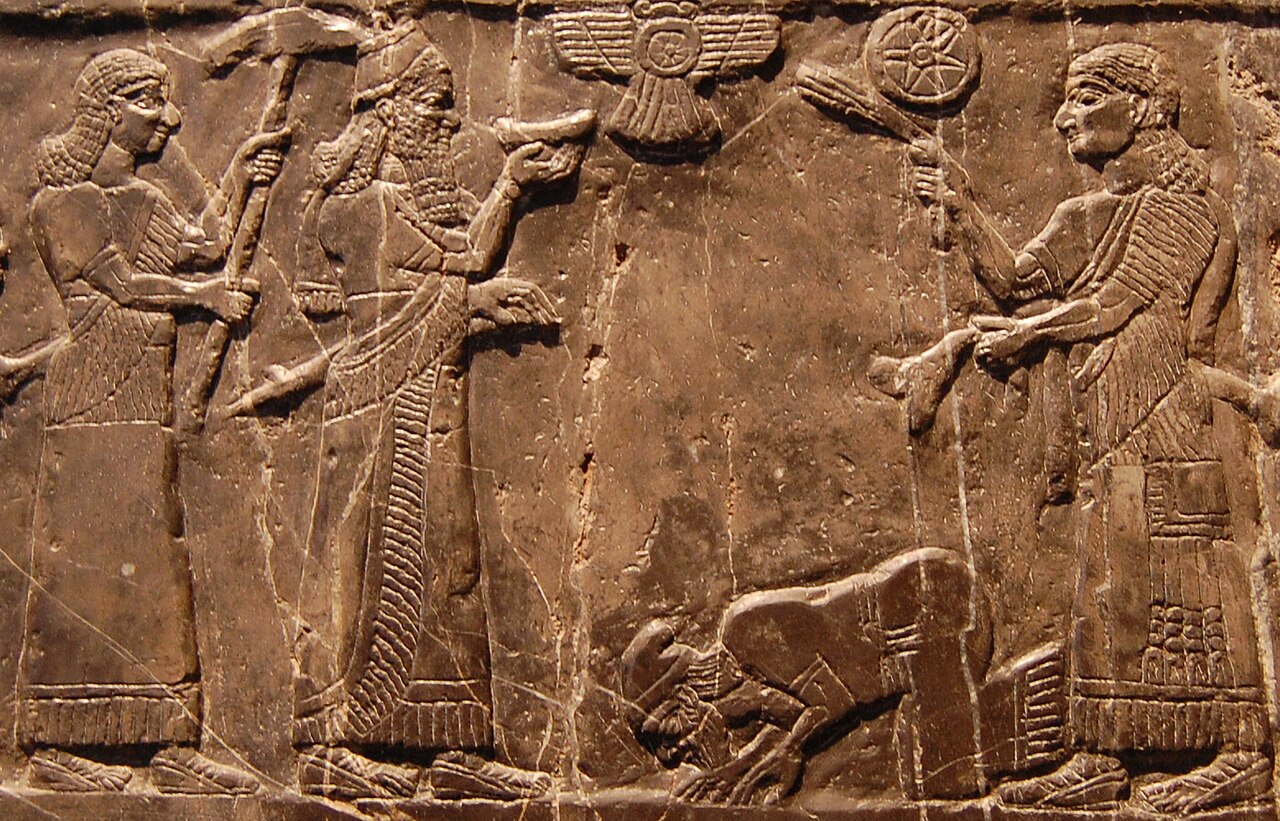
The image of a tyrant forced to disgorge what he has swallowed was common: tribute given and taken away. The Black Obelisk of Shalmaneser III, pictured above, shows kings bringing tribute to Assyria; fortunes changed hands with conquest. Zophar says ill-gotten wealth is poison.
Iron and bronze
"The bow of steel" is a bow of bronze (nehoshet), the metal of composite bow fittings and arrowheads; the iron weapon is a sword or spear. Fleeing one weapon, he meets another (compare Amos 5:19).
Rivers of honey and butter
Zophar says the wicked will never see "the rivers, the floods, the brooks of honey and butter" (20:17): the image of a land flowing with plenty (compare "milk and honey"). The library's Greek reads "milk drawn in the pasture… neither butter nor honey."
A rule Job will test
Zophar's rule (the wicked's success is short) is true often enough to be convincing. Job answers in chapter 21 with counterexamples: the wicked who live long and die in peace. The book sets the two observations side by side.
The versions
The library's Sahidic Coptic copy, which follows the shorter pre-Origen Greek, lacks 20:9 and 20:11–13. Whether each missing line was absent from the Old Greek itself, or is damage in the Coptic manuscripts or our digital copy, is to be checked against Ziegler's edition (JOB-C03). Zophar's "bow of steel" (20:24) is bronze in Hebrew (nehoshet); the KJV's "steel" reflects 17th-century English for hard metal.
What the evidence shows
- The wicked always perish quickly (Zophar). Job disputes it from experience in chapter 21.
Continue the journey
Connected elsewhere in ScripturePsalm 73: Until I Went into the SanctuaryPsalm 73:3–20: The prosperity of the wicked, and their end.More from this lesson
Why this matters to the rest of Scripture
- The prosperity of the wicked, and their end.
- Fleeing a lion, meeting a bear.