"If we assay to commune with thee, wilt thou be grieved? but who can withhold himself from speaking?" Eliphaz begins with courtesy: "Behold, thou hast instructed many, and thou hast strengthened the weak hands… But now it is come upon thee, and thou faintest."
Then the principle: "Remember, I pray thee, who ever perished, being innocent? or where were the righteous cut off? Even as I have seen, they that plow iniquity, and sow wickedness, reap the same."
And the vision: "Now a thing was secretly brought to me… In thoughts from the visions of the night, when deep sleep falleth on men, fear came upon me, and trembling… Then a spirit passed before my face; the hair of my flesh stood up: It stood still, but I could not discern the form thereof… there was silence, and I heard a voice, saying, Shall mortal man be more just than God? shall a man be more pure than his maker? Behold, he put no trust in his servants; and his angels he charged with folly: How much less in them that dwell in houses of clay, whose foundation is in the dust."
Eliphaz the Temanite
Eliphaz is the name of Esau's firstborn, father of Teman (Genesis 36:10–11). The friend is likely the eldest and most respected. His first speech (chs. 4–5) is the gentlest of all; his later speeches harden.
Night visions
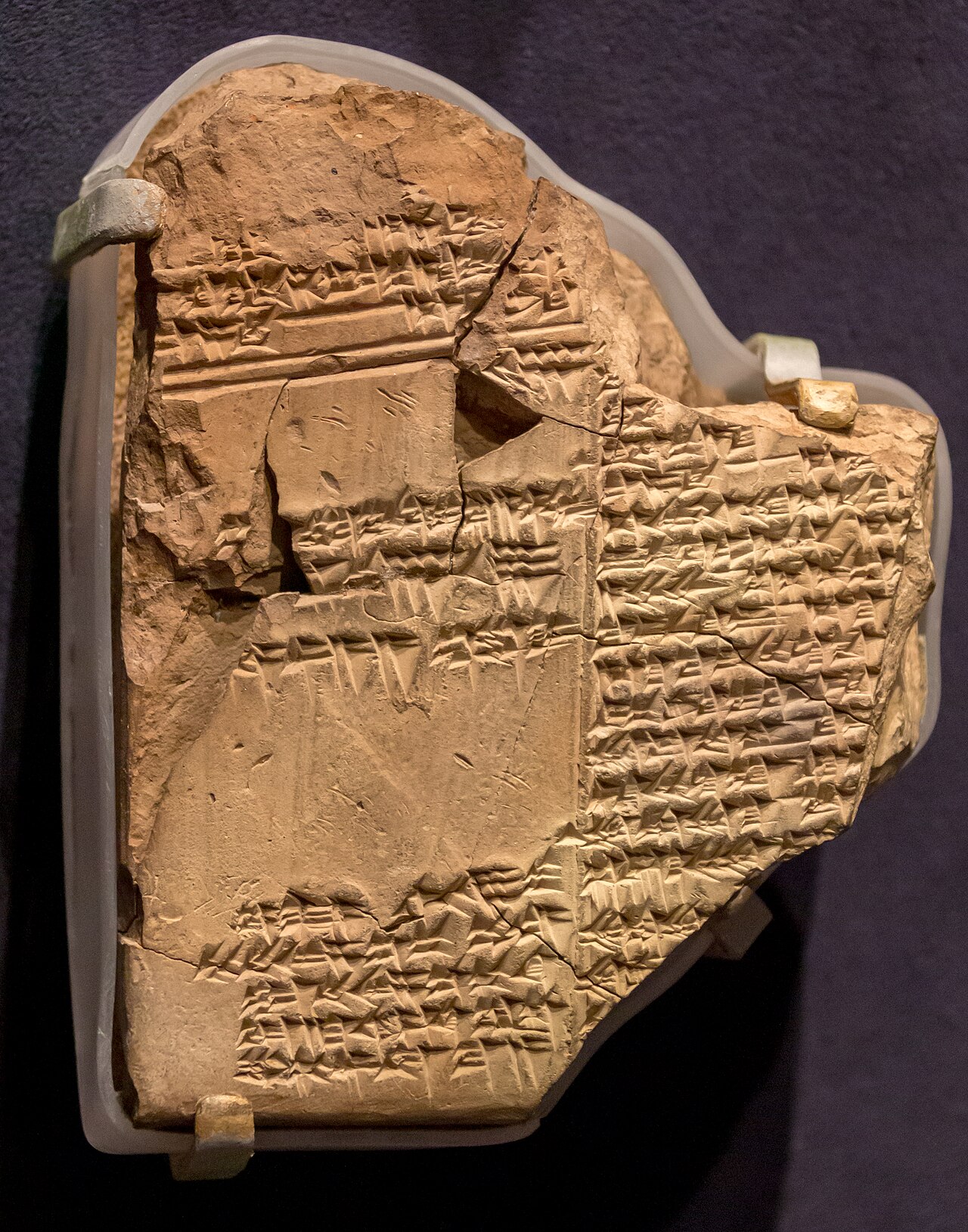
Ancient Near Eastern texts often report revelation in dreams: Mesopotamian dream omens, a god appearing to a king in sleep, the Bible's dreams of Jacob and Solomon. Eliphaz's account is unusual for its terror and its vagueness: a form he cannot make out, a hushed voice. It gives his opinion the weight of revelation.
Houses of clay
People "that dwell in houses of clay" are mortals, made of earth (Genesis 2:7) and living in mud-brick houses. Job will pick up the image: "Thou hast made me as the clay" (10:9).
Reported speech is not narrator's truth
The book quotes the friends at length, and their words sound pious. The epilogue says otherwise: "ye have not spoken of me the thing that is right, as my servant Job hath" (42:7). A reader must separate what a character says from what the book affirms. Eliphaz's principle (the innocent never perish) is exactly what the prologue has shown to be false in Job's case.
A vision that echoes Job
The vision's question, "Shall mortal man be more just (yitsdaq) than God?" uses the language of the lawcourt that Job will take up (9:2: "how should man be just with God?"). Some scholars note that Eliphaz's vision anticipates Job's own words and may be meant as a counterfeit revelation; others take it as genuine but misapplied.
What the evidence shows
- God judges that the three friends did not speak rightly (42:7).
- The innocent never perish (Eliphaz, 4:7). Contradicted by the book's own prologue (1:1, 8; 2:3).
Continue the journey
Connected in this bookNow Mine Eye Seeth TheeJob 42:7: God's verdict on the friends.More from this lesson
Why this matters to the rest of Scripture
- God's verdict on the friends.
- Eliphaz and Teman in Esau's line.