Oh That I Knew Where I Might Find Him
"When he hath tried me, I shall come forth as gold"
"Even to day is my complaint bitter… Oh that I knew where I might find him! that I might come even to his seat! I would order my cause before him, and fill my mouth with arguments… Will he plead against me with his great power? No; but he would put strength in me. There the righteous might dispute with him; so should I be delivered for ever from my judge."
"Behold, I go forward, but he is not there; and backward, but I cannot perceive him: On the left hand, where he doth work, but I cannot behold him… But he knoweth the way that I take: when he hath tried me, I shall come forth as gold. My foot hath held his steps, his way have I kept… I have esteemed the words of his mouth more than my necessary food."
"But he is in one mind, and who can turn him?… Therefore am I troubled at his presence: when I consider, I am afraid of him."
Refining
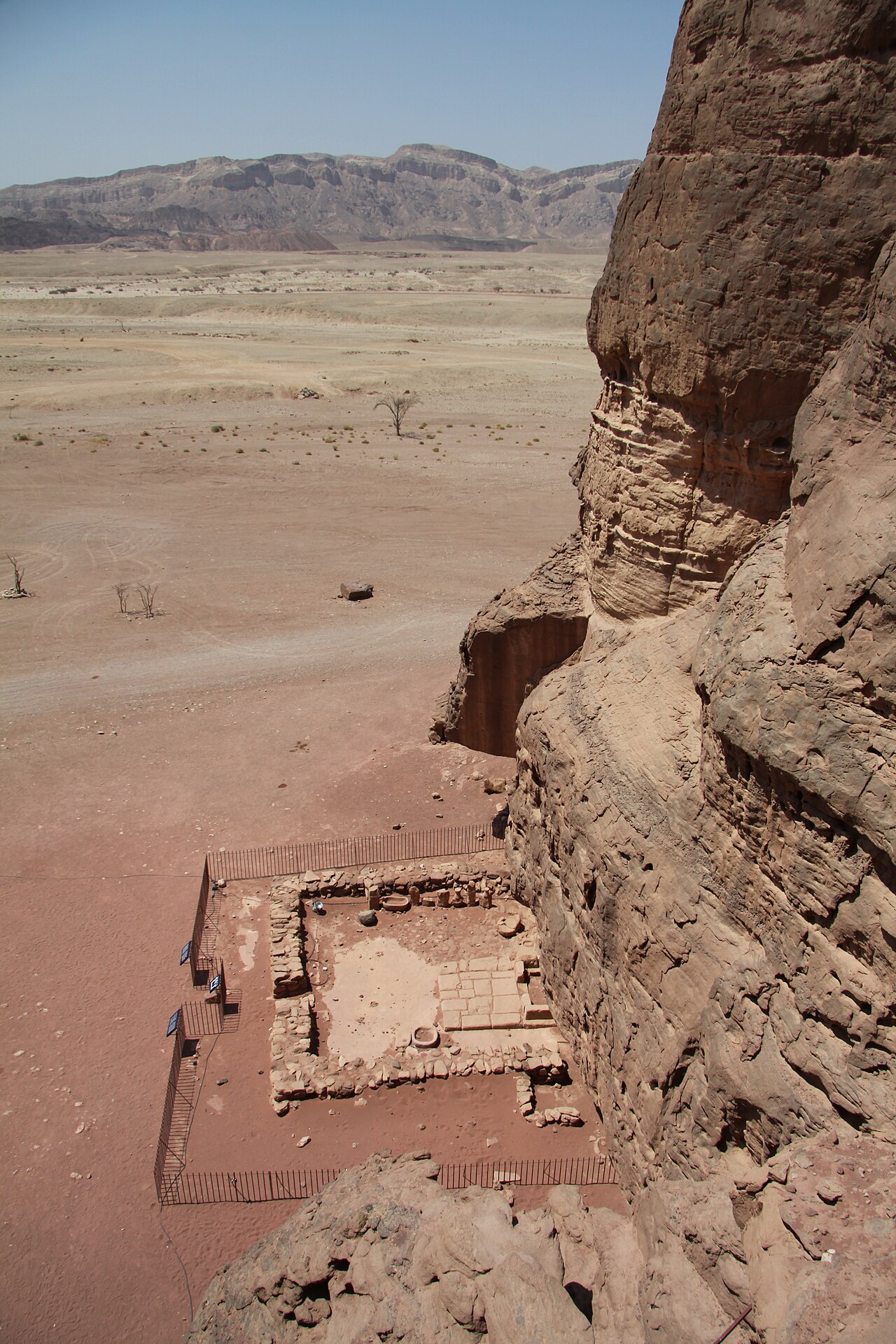
Smelters heated ore and metal until impurities separated. At Timna in the southern Arabah, pictured above, copper was mined and smelted from the late Bronze Age; furnaces and slag heaps survive. "Tried as gold" means tested and proved pure (Psalm 66:10; Zechariah 13:9; 1 Peter 1:7).
Forward, backward, left and right
In Hebrew "forward" is east, "backward" west, "left" north and "right" south. Job searches every direction of the world.
Words more than food
"I have esteemed the words of his mouth more than my necessary food" (23:12). The Greek reads "in my bosom I have hidden his words." Job's devotion is to God's words, the same God he cannot find. Deuteronomy 8:3 ("man doth not live by bread only") expresses a similar priority.
What Job knows and what the reader knows
Job's "when he hath tried me" sounds like he has guessed the prologue. He has not heard the heavenly scene; he is expressing confidence that a test would prove him pure. The reader knows the scene was a test, but not of the kind Job imagines (a trial of his metal by God); it was a test of whether he serves God for nothing. The verb (bahan) can mean "test" or "examine."
The versions
The library's Sahidic Coptic copy, which follows the shorter pre-Origen Greek, lacks 23:3, 23:9 and 23:15. Whether each missing line was absent from the Old Greek itself, or is damage in the Coptic manuscripts or our digital copy, is to be checked against Ziegler's edition (JOB-C03).
What the evidence shows
- Copper was mined and smelted at Timna from the Late Bronze Age.
- Job knows of the heavenly test. Nothing in the text says he learns of it.
Continue the journey
Connected elsewhere in ScripturePsalm 66: Come and See the Works of GodPsalm 66:10: "Thou hast tried us, as silver is tried."More from this lesson
Why this matters to the rest of Scripture
- "Thou hast tried us, as silver is tried."
- Faith tried like gold.
- "Whither shall I flee from thy presence?"