Psalm 66: Come and See the Works of God
Through fire and water, and a vow kept
"Make a joyful noise unto God, all ye lands: sing forth the honour of his name… Say unto God, How terrible art thou in thy works!… Come and see the works of God: he is terrible in his doing toward the children of men. He turned the sea into dry land: they went through the flood on foot: there did we rejoice in him."
"O bless our God, ye people… For thou, O God, hast proved us: thou hast tried us, as silver is tried. Thou broughtest us into the net; thou laidst affliction upon our loins. Thou hast caused men to ride over our heads; we went through fire and through water: but thou broughtest us out into a wealthy place."
"I will go into thy house with burnt offerings: I will pay thee my vows, which my lips have uttered, and my mouth hath spoken, when I was in trouble… Come and hear, all ye that fear God, and I will declare what he hath done for my soul… If I regard iniquity in my heart, the Lord will not hear me: but verily God hath heard me… Blessed be God, which hath not turned away my prayer, nor his mercy from me."
Sea and river
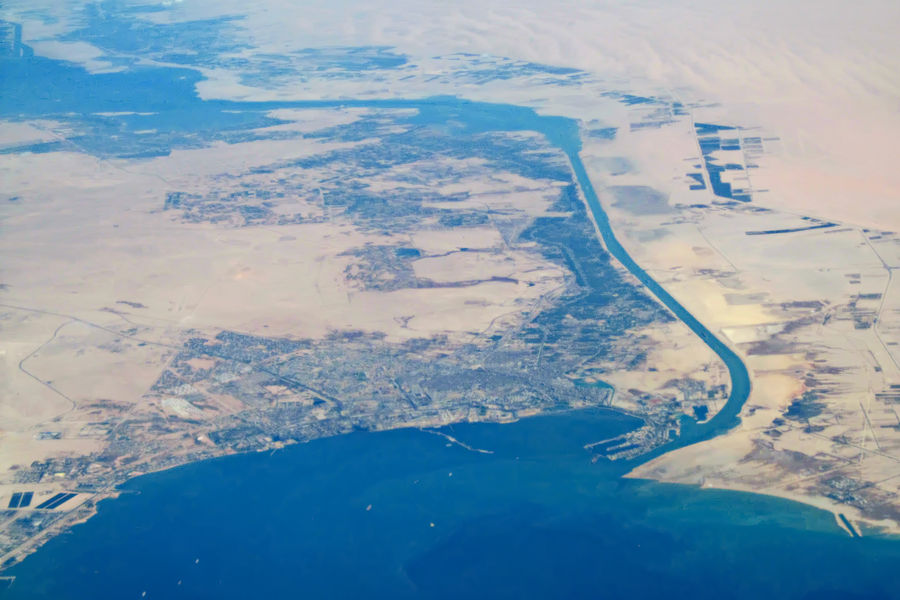
"He turned the sea into dry land" recalls the Red Sea (Exodus 14; pictured, the Gulf of Suez); "they went through the flood (nahar, 'river') on foot" recalls the Jordan (Joshua 3). Two crossings that began and ended the journey from Egypt become one act of God to be praised by "all lands."
From "we" to "I"
Verses 1–12 speak for the community; verses 13–20 are one person fulfilling vows. The shift may show a leader speaking for the people, or a worshipper placing personal rescue inside the nation's story. It does not require two authors.
"A psalm of the resurrection"
The Hebrew heading is "To the chief Musician, A Song or Psalm," with no author. The library's Vulgate reads "Canticum psalmi resurrectionis," and Giguet's Greek "psaume de la Résurrection." The Greek addition reflects early reading of "thou broughtest us out" and "holdeth our soul in life" (v. 9); it is not in the Hebrew. Psalm 66 has three selahs (vv. 4, 7, 15).
Jubilate Sunday
In the Latin liturgy the Introit of the Third Sunday after Easter began with this psalm, "Jubilate Deo, omnis terra" (Vulgate 65:1), and the Sunday was named "Jubilate" after it; Lutheran calendars still use the name.
What the evidence shows
- The Greek/Latin heading calls Psalm 66 a psalm "of the resurrection."Source: The site's library: Westminster Leningrad Codex, KJV, Clementine Vulgate (Gallican Psalter), Giguet's French of the Greek, Douay-Rheims
- The shift from "we" to "I" shows two authors.
Continue the journey
Connected elsewhere in ScripturePharaoh's PursuitExodus 14:21–22: The sea made dry land.More from this lesson
Why this matters to the rest of Scripture
- The sea made dry land.
- The Jordan crossed on foot.
- "When thou passest through the waters… the fire."