"Not unto us, O LORD, not unto us, but unto thy name give glory, for thy mercy, and for thy truth's sake. Wherefore should the heathen say, Where is now their God? But our God is in the heavens: he hath done whatsoever he hath pleased. Their idols are silver and gold, the work of men's hands. They have mouths, but they speak not: eyes have they, but they see not: they have ears, but they hear not… They that make them are like unto them; so is every one that trusteth in them."
"O Israel, trust thou in the LORD: he is their help and their shield. O house of Aaron, trust in the LORD… Ye that fear the LORD, trust in the LORD… The LORD hath been mindful of us: he will bless us… The heaven, even the heavens, are the LORD's: but the earth hath he given to the children of men. The dead praise not the LORD, neither any that go down into silence. But we will bless the LORD from this time forth and for evermore. Praise the LORD."
Images and those who make them
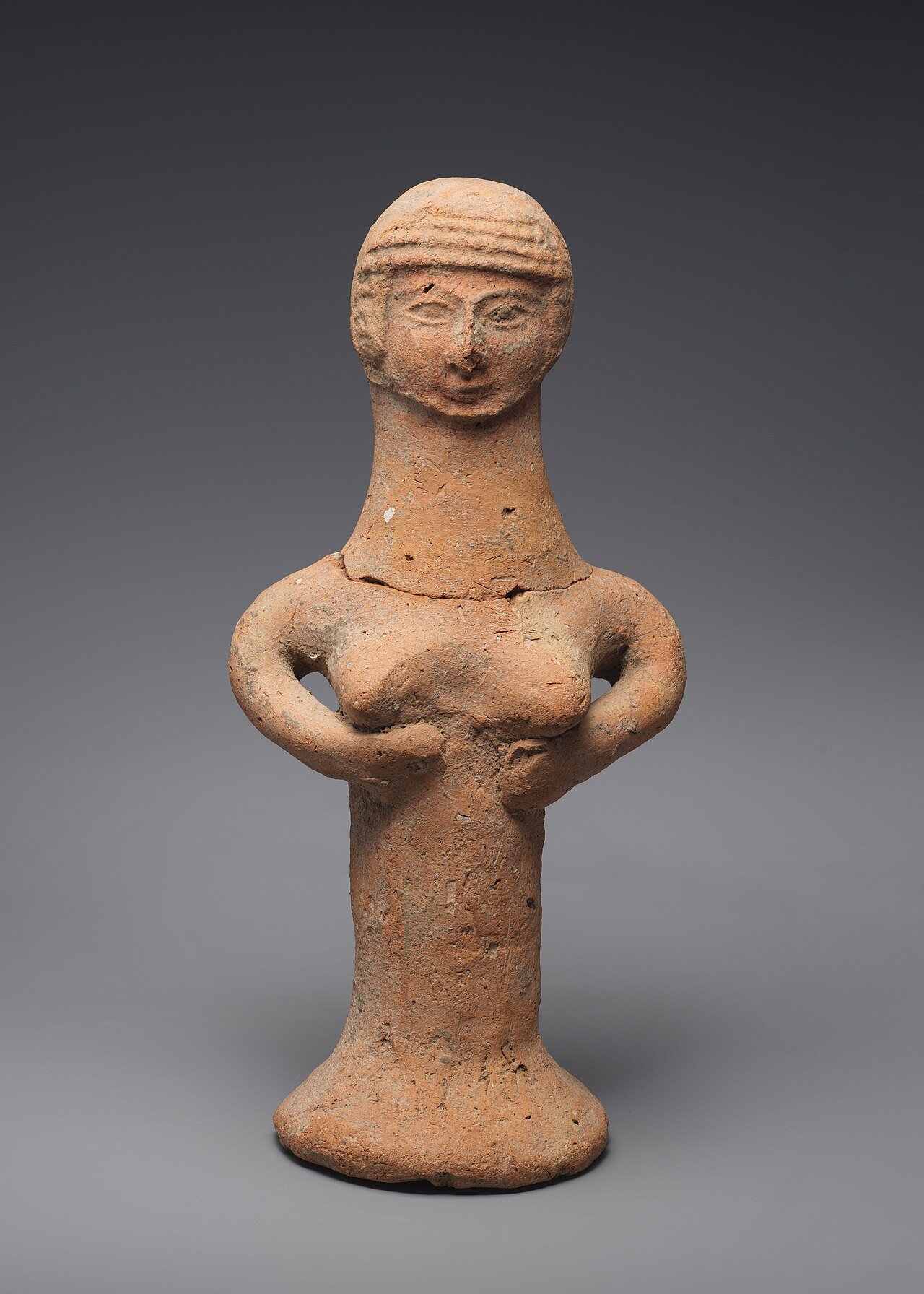
Ancient temples housed cult statues that priests washed, clothed and fed; Mesopotamian rituals of "mouth-opening" were thought to bring them to life. The psalm mocks the statues' senseless mouths, eyes and ears, and adds a sharp line: those who make them become like them. Clay figurines from Judah (pictured) show that household images were also known in Israel. The polemic simplifies how other religions understood their images, which were not usually equated with the gods themselves.
Three groups
Israel, the house of Aaron (priests) and "ye that fear the LORD" are each called to trust (vv. 9–11) and each promised blessing (vv. 12–13). "Ye that fear the LORD" may include non-Israelites who worshipped Israel's God, as in later "God-fearers" (Acts 10:2).
Numbering and reuse
In the Greek and Latin, Psalm 115 is the second half of Psalm 113 (Vulgate 113:9–26, "Non nobis, Domine"). Verses 4–11 are closely paralleled in Psalm 135:15–20. "Non nobis, Domine" became a hymn of thanksgiving after victory, as in Shakespeare's Henry V after Agincourt.
Heading
Psalm 115 has no heading; in the Hebrew Psalter it follows Psalm 114 within the Hallel.
What the evidence shows
- 115:4–11 is closely paralleled in 135:15–20.
- In the Greek and Latin, Psalm 115 is part of Psalm 113.Source: The site's library: Westminster Leningrad Codex, KJV, Clementine Vulgate (Gallican Psalter), Giguet's French of the Greek, Douay-Rheims
Continue the journey
Connected elsewhere in ScriptureRemember Horeb: No Images and No Other GodsDeuteronomy 4:28: Gods that neither see nor hear nor eat nor smell.More from this lesson
Why this matters to the rest of Scripture
- Gods that neither see nor hear nor eat nor smell.
- The same description of idols.
- The making of an idol.
- Idols that cannot speak.