"Praise waiteth for thee, O God, in Sion: and unto thee shall the vow be performed. O thou that hearest prayer, unto thee shall all flesh come. Iniquities prevail against me: as for our transgressions, thou shalt purge them away. Blessed is the man whom thou choosest, and causest to approach unto thee, that he may dwell in thy courts."
"By terrible things in righteousness wilt thou answer us, O God of our salvation; who art the confidence of all the ends of the earth… Which by his strength setteth fast the mountains… Which stilleth the noise of the seas, the noise of their waves, and the tumult of the people."
"Thou visitest the earth, and waterest it: thou greatly enrichest it with the river of God, which is full of water: thou preparest them corn… Thou waterest the ridges thereof abundantly: thou settlest the furrows thereof: thou makest it soft with showers: thou blessest the springing thereof. Thou crownest the year with thy goodness; and thy paths drop fatness."
"They drop upon the pastures of the wilderness: and the little hills rejoice on every side. The pastures are clothed with flocks; the valleys also are covered over with corn; they shout for joy, they also sing."
A farmer's year
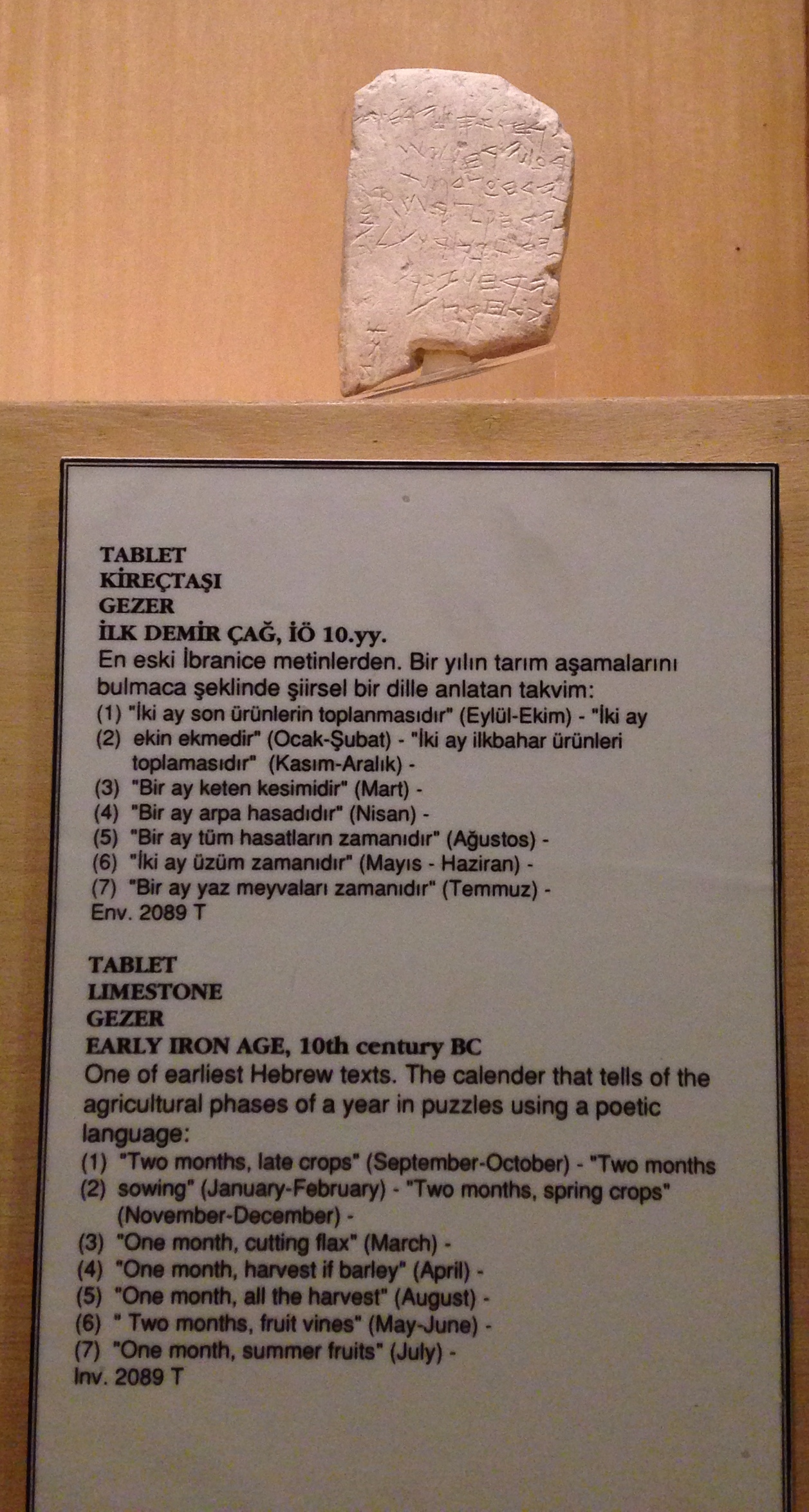
Rain soaks the ridges, levels the furrows, softens the clods; the year is "crowned" with harvest. The Gezer Calendar (pictured, 10th century BC), a schoolboy's or farmer's list of the agricultural months ("two months of ingathering, two months of sowing… a month of barley harvest"), shows the rhythm of the same land. The psalm names no festival; any of the harvest feasts could suit it.
Hills and valleys singing
The poem ends with nature personified: hills wear joy like a belt, meadows are "clothed" with flocks, valleys "wrap themselves" in grain, and they shout and sing. The last word is the sound of the harvest itself.
"Praise waiteth" or "praise is fitting"
65:1 Hebrew lekha dumiyyah tehillah: "For you silence is praise" or "For you there is silence, praise." The Greek read a different vowelling (domiyyah, "it is fitting/like") and translated "To you a hymn is fitting" (prepei; Vulgate "Te decet hymnus, Deus, in Sion"; Giguet "il convient… de vous chanter des hymnes"). "Te decet hymnus" became a much-sung chant in the Latin Requiem Mass. See the passage page.
A heading for the exiles
Hebrew: "To the chief Musician, A Psalm and Song of David." The library's Vulgate adds "canticum Jeremiae et Ezechielis populo transmigrationis, cum inciperent exire," "a song of Jeremiah and Ezekiel for the people of the exile, when they were beginning to go out." This Greek addition reflects a later reading of the psalm in the light of the return from exile; it is not in the Hebrew.
What the evidence shows
- The Greek/Latin read 65:1 as "a hymn is fitting."Source: The site's library: Westminster Leningrad Codex, KJV, Clementine Vulgate (Gallican Psalter), Giguet's French of the Greek, Douay-Rheims
- The Vulgate heading names Jeremiah and Ezekiel.Source: The site's library: Westminster Leningrad Codex, KJV, Clementine Vulgate (Gallican Psalter), Giguet's French of the Greek, Douay-Rheims
- Psalm 65 was composed for a particular harvest festival.
Continue the journey
Journey of a PassagePsalm 65:1: "Praise waiteth for thee" or "a hymn is fitting"Hebrew lekha dumiyyah tehillah: "For you silence is praise," or "To you, silence; praise." The Greek read the same letters with different vowels, domiyyah ("it is fitting"), and translated "To you a hymn is fitting": Vulgate "Te decet hymnus."More from this lesson
Why this matters to the rest of Scripture
- Rain in its season.
- The river of God.