"O clap your hands, all ye people; shout unto God with the voice of triumph. For the LORD most high is terrible; he is a great King over all the earth. He shall subdue the people under us, and the nations under our feet. He shall choose our inheritance for us, the excellency of Jacob whom he loved. Selah."
"God is gone up with a shout, the LORD with the sound of a trumpet. Sing praises to God, sing praises: sing praises unto our King, sing praises. For God is the King of all the earth: sing ye praises with understanding." "Sing praises" (zammeru) sounds five times in two verses.
"God reigneth over the heathen: God sitteth upon the throne of his holiness. The princes of the people are gathered together, even the people of the God of Abraham: for the shields of the earth belong unto God: he is greatly exalted."
Shout and shofar
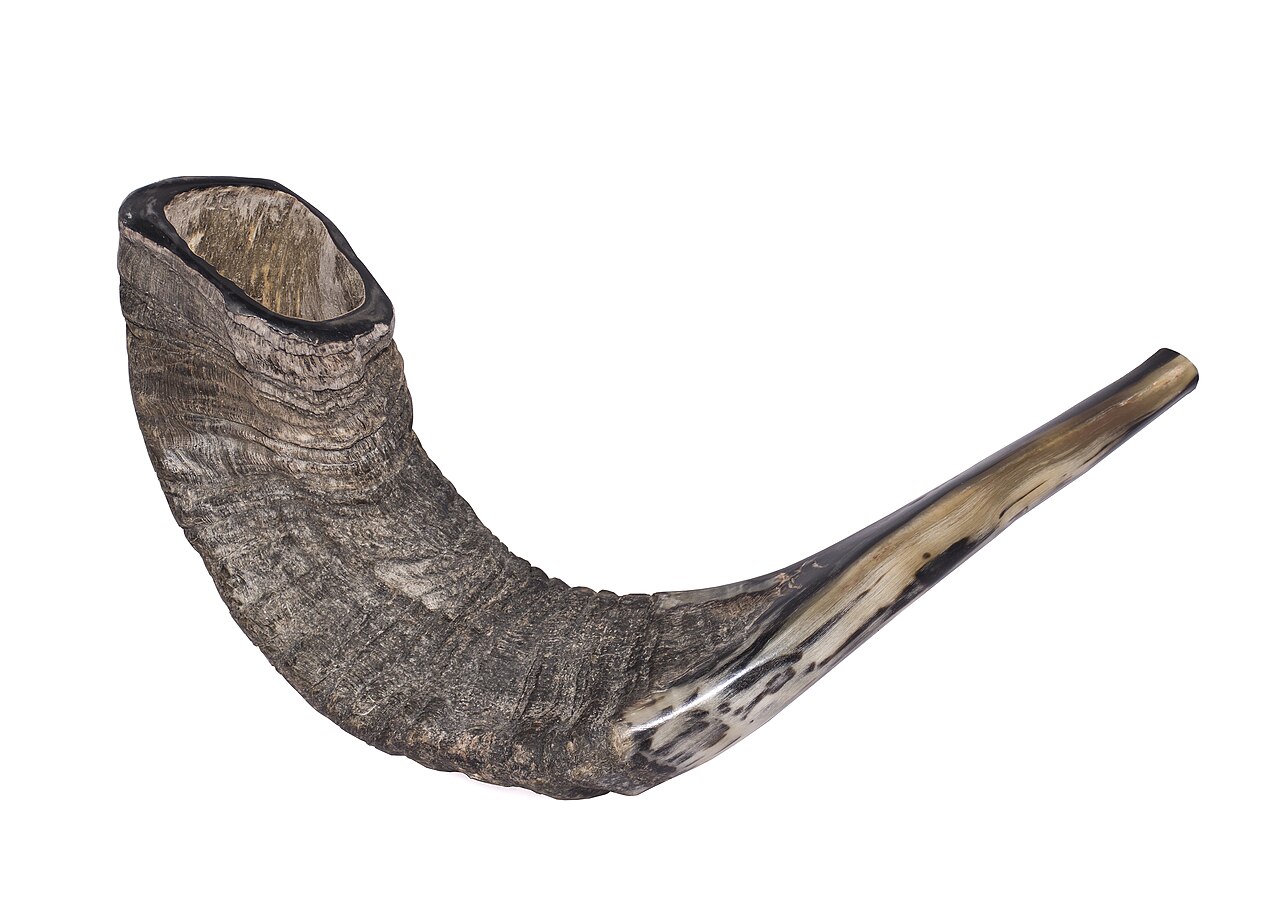
Teru'ah ("shout") and the shofar (ram's horn trumpet) accompanied the coronation of kings (1 Kings 1:39–40; 2 Kings 9:13) and the ark's procession to Jerusalem (2 Samuel 6:15). "God is gone up" pictures God ascending his throne, perhaps with the ark carried up to the temple.
The nations as the people of Abraham
The last verse imagines the rulers of the nations gathering "as the people of the God of Abraham," recalling the promise that in Abraham all families of the earth would be blessed (Genesis 12:3).
An enthronement festival?
Sigmund Mowinckel (1922) proposed that Psalms 47, 93 and 95–99 belonged to an autumn New Year festival celebrating the LORD's enthronement, comparable to the Babylonian Akitu. The idea has been influential but no such festival is described in the Bible; many scholars see these psalms as celebrating God's kingship without a specific rite.
In Jewish and Christian worship
In Jewish liturgy Psalm 47 is recited seven times before the blowing of the shofar on Rosh Hashanah. In Christian tradition "God is gone up with a shout" is the classic psalm of Ascension Day.
Heading and versions
"To the chief Musician, A Psalm for the sons of Korah." Greek and Latin number it 46. In v. 9 the Greek and Latin read "with the God of Abraham" ('im) instead of "the people of the God of Abraham" ('am), the same consonants differently vowelled (Vulgate "cum Deo Abraham"), and turn "the shields of the earth" into "the mighty gods of the earth" ("dii fortes terrae").
What the evidence shows
- Psalm 47 is recited seven times before the shofar on Rosh Hashanah.
- Psalm 47 was composed for an enthronement festival.
- The Greek/Latin read "with the God of Abraham" in 47:9.Source: The site's library: Westminster Leningrad Codex, KJV, Clementine Vulgate (Gallican Psalter), Giguet's French of the Greek, Douay-Rheims
Continue the journey
Connected elsewhere in ScriptureDavid's Last Days1 Kings 1:39–40: Solomon crowned with trumpet and shouting.More from this lesson
Why this matters to the rest of Scripture
- Solomon crowned with trumpet and shouting.
- The ark brought up with shouting and trumpet.
- "In thee shall all families of the earth be blessed."