"The king shall joy in thy strength, O LORD; and in thy salvation how greatly shall he rejoice! Thou hast given him his heart's desire, and hast not withholden the request of his lips. Selah. For thou preventest him with the blessings of goodness: thou settest a crown of pure gold on his head."
"He asked life of thee, and thou gavest it him, even length of days for ever and ever. His glory is great in thy salvation… For the king trusteth in the LORD, and through the mercy of the most High he shall not be moved."
"Thine hand shall find out all thine enemies… Thou shalt make them as a fiery oven in the time of thine anger… For they intended evil against thee… Be thou exalted, LORD, in thine own strength: so will we sing and praise thy power."
Psalms 20 and 21 as a pair
Psalm 20 prays "grant thee according to thine own heart" (20:4); Psalm 21 answers "thou hast given him his heart's desire" (21:2). The two form a before-and-after pair around a royal battle.
Crown and long life
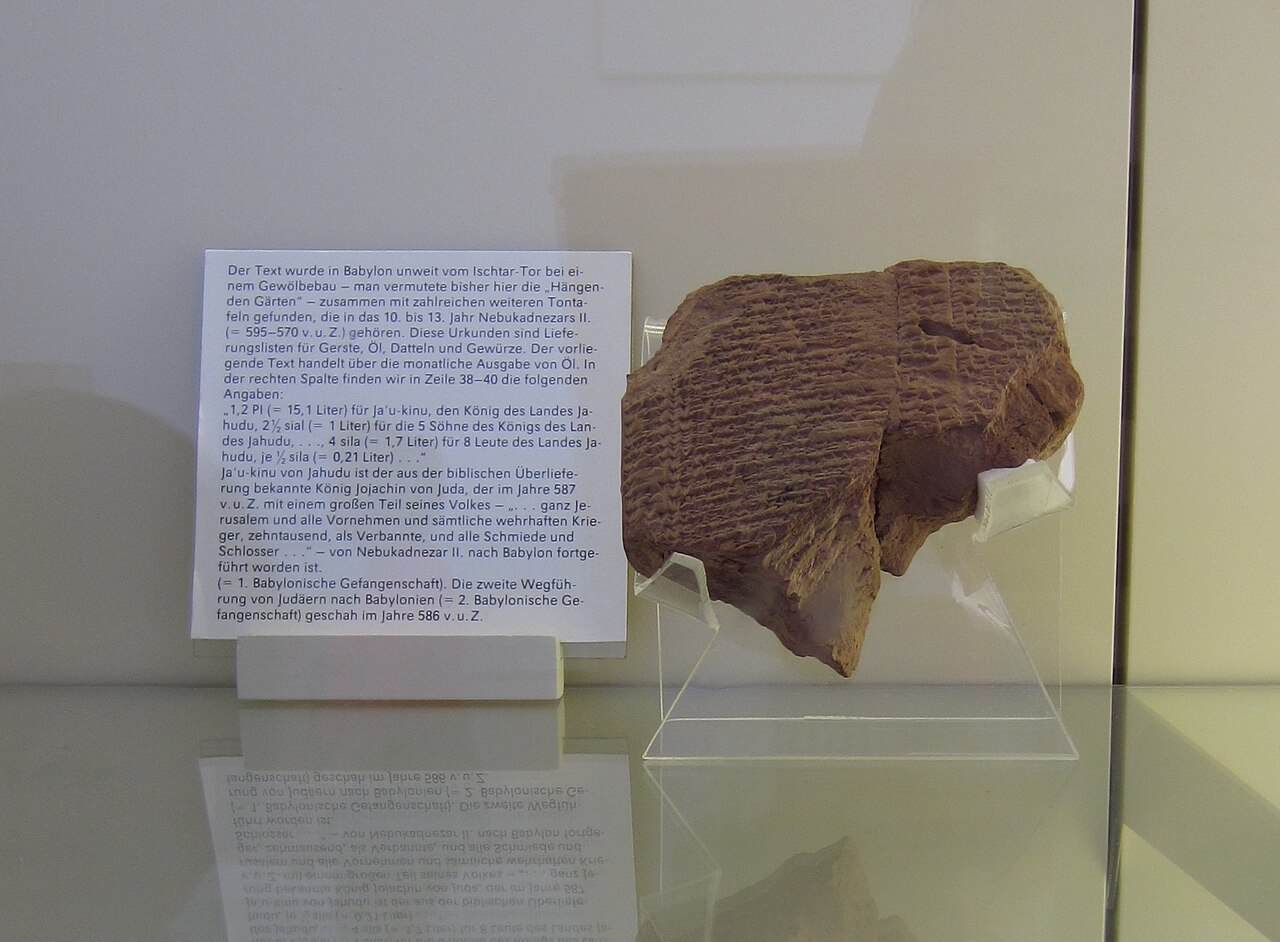
"Length of days for ever and ever" is court language: "may the king live for ever" (1 Kings 1:31; Daniel 2:4). Babylonian and Egyptian royal inscriptions wish kings eternal life. The Jehoiachin ration tablet (pictured) is a reminder of the other side of royal fortune: a king of David's line fed as a captive in Babylon.
Framed by "strength"
The psalm begins "The king shall joy in thy strength, O LORD" and ends "Be thou exalted, LORD, in thine own strength": the same word, 'oz, encloses the poem. At its centre (v. 7) stands the sentence that explains everything else: "For the king trusteth in the LORD." Verses 1–6 speak to God about the king; verses 8–12 speak to the king about his enemies.
Who is addressed in 21:8–12?
The "thine hand" of v. 8 could be the king's or God's. Most read the king, empowered by God; the closing verse returns to God. Later Jewish tradition (the Targum) applied the psalm to the king Messiah.
The versions
Greek and Latin Psalm 20, with the title "to the end, a psalm of David." Hebrew counts the title as verse 1.
What the evidence shows
- Psalms 20 and 21 form a before-and-after pair.
Continue the journey
Connected in this bookPsalm 20: Some Trust in ChariotsPsalm 20:4: "Grant thee according to thine own heart."More from this lesson
Why this matters to the rest of Scripture
- "Grant thee according to thine own heart."
- "Let my lord king David live for ever."