"O God, thou art my God; early will I seek thee: my soul thirsteth for thee, my flesh longeth for thee in a dry and thirsty land, where no water is; to see thy power and thy glory, so as I have seen thee in the sanctuary. Because thy lovingkindness is better than life, my lips shall praise thee."
"Thus will I bless thee while I live: I will lift up my hands in thy name. My soul shall be satisfied as with marrow and fatness; and my mouth shall praise thee with joyful lips: when I remember thee upon my bed, and meditate on thee in the night watches. Because thou hast been my help, therefore in the shadow of thy wings will I rejoice. My soul followeth hard after thee: thy right hand upholdeth me."
"But those that seek my soul, to destroy it, shall go into the lower parts of the earth. They shall fall by the sword: they shall be a portion for foxes. But the king shall rejoice in God; every one that sweareth by him shall glory: but the mouth of them that speak lies shall be stopped."
The Judean wilderness
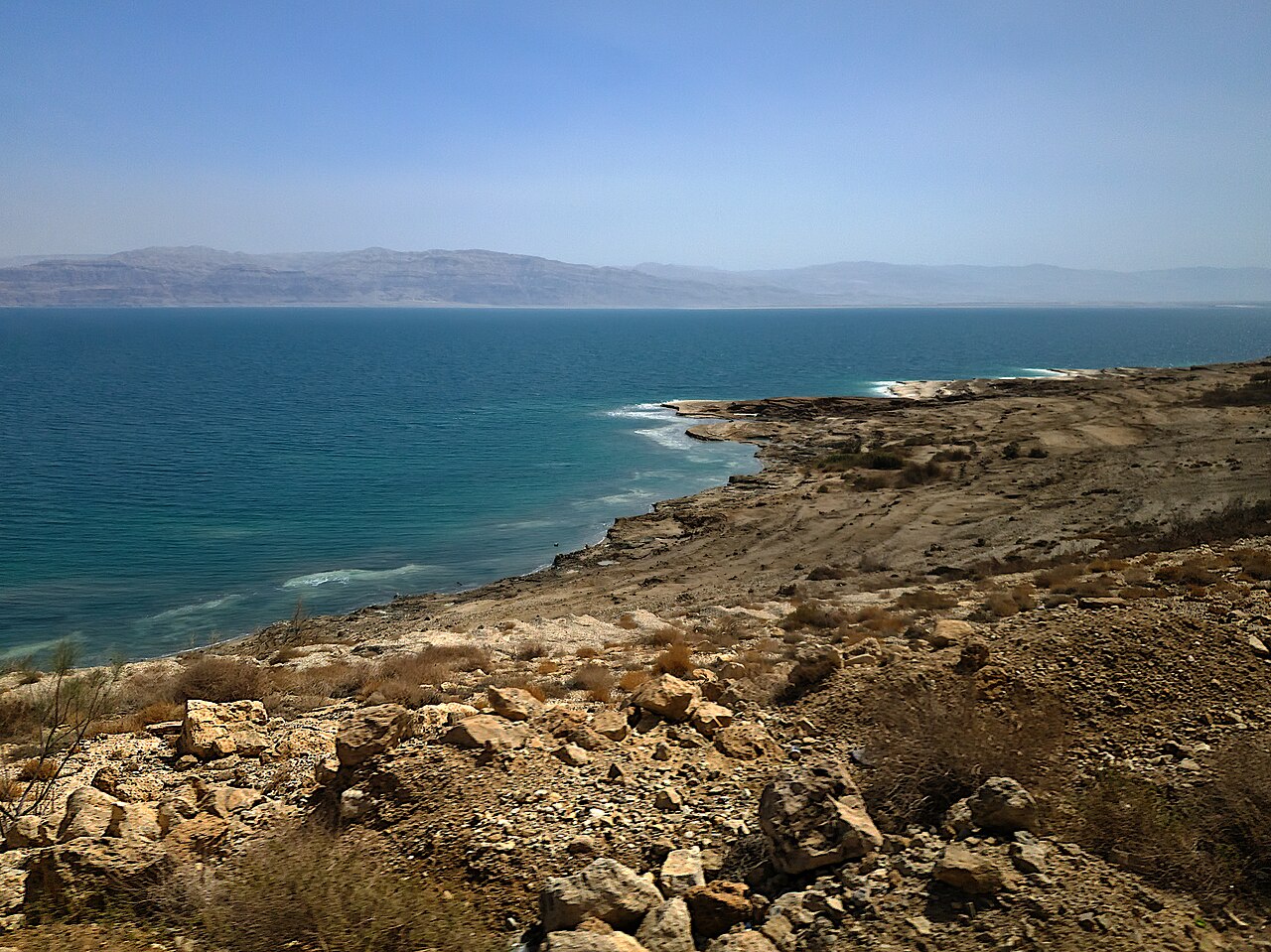
East of Jerusalem and Bethlehem the land drops steeply to the Dead Sea (pictured near En-gedi): bare limestone hills with little rain, where David hid from Saul (1 Samuel 23–24) and crossed when fleeing Absalom (2 Samuel 15:23–28). Thirst in such a place is literal before it is spiritual.
"Early will I seek thee"
'Ashaharekka is from shahar, "dawn": "I seek you at dawn," or simply "I seek you eagerly." The library's Vulgate reads "ad te de luce vigilo," "I watch for you from the first light." Early Christian writers report that this psalm was sung at morning prayer (John Chrysostom, on Psalm 140), and it remains the classic morning psalm in Christian daily prayer.
Judah or Idumea?
The heading reads "in the wilderness of Judah." The library's Vulgate (and Giguet's Greek) say "in the desert of Idumaea" (Vulgate "cum esset in deserto Idumaeae"). In the Hellenistic period, when the Greek Psalter was made, the southern Judean hills were part of Idumaea, so the translators may have updated the geography. The heading is a setting tradition; the poem's "the king shall rejoice" (v. 11) may reflect a royal speaker or a prayer for the king.
What the evidence shows
- The Greek/Latin heading reads "desert of Idumea" for "wilderness of Judah."Source: The site's library: Westminster Leningrad Codex, KJV, Clementine Vulgate (Gallican Psalter), Giguet's French of the Greek, Douay-Rheims
- Psalm 63 was the morning psalm of early Christian worship. Reported from Chrysostom; passage not checked by the site.
Continue the journey
Connected in this bookPsalm 42: As the Deer Longs for StreamsPsalm 42:1–2: "My soul thirsteth for God."More from this lesson
Why this matters to the rest of Scripture
- "My soul thirsteth for God."
- David crosses toward the wilderness.