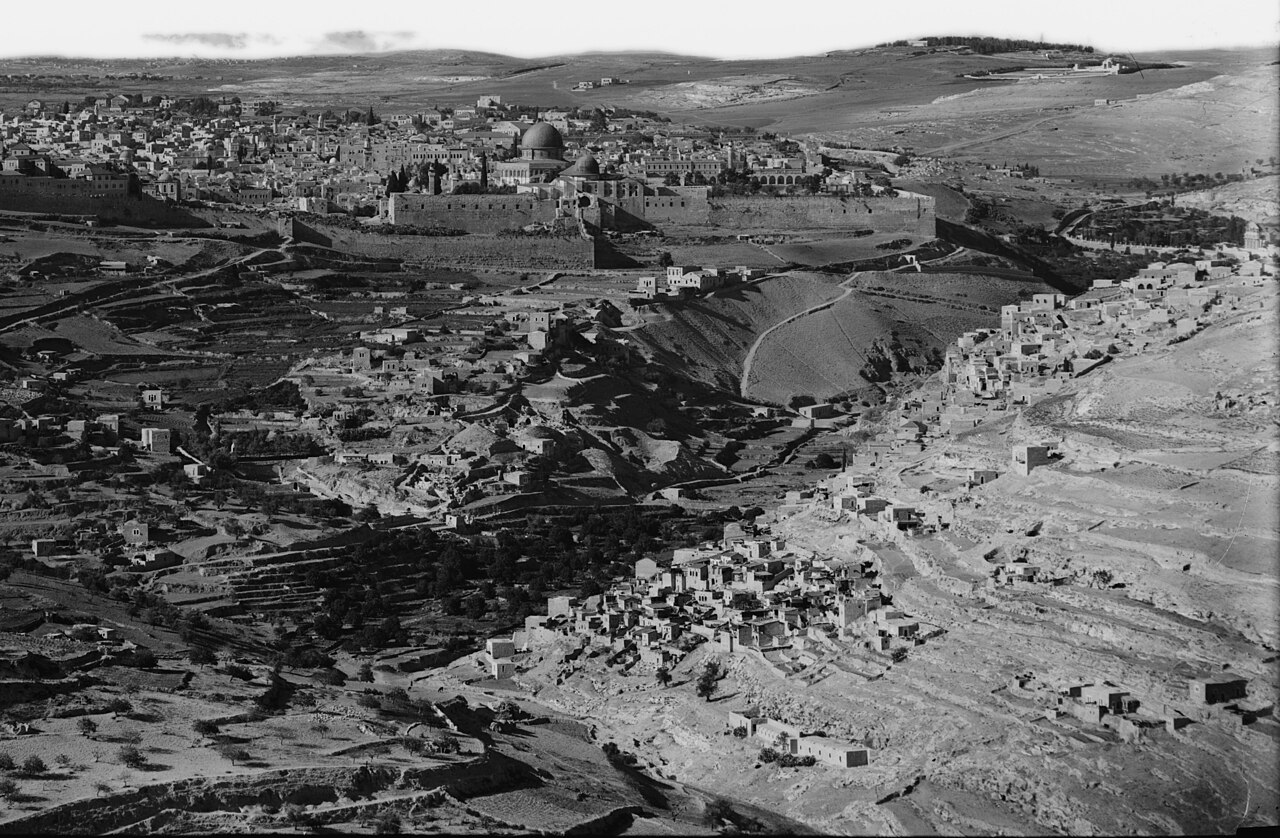
Psalm 48: Mount Zion, the Joy of All the Earth
"Walk about Zion, and tell the towers thereof"
"Great is the LORD, and greatly to be praised in the city of our God, in the mountain of his holiness. Beautiful for situation, the joy of the whole earth, is mount Zion, on the sides of the north, the city of the great King. God is known in her palaces for a refuge."
"For, lo, the kings were assembled, they passed by together. They saw it, and so they marvelled; they were troubled, and hasted away. Fear took hold upon them there, and pain, as of a woman in travail. Thou breakest the ships of Tarshish with an east wind."
"As we have heard, so have we seen in the city of the LORD of hosts… We have thought of thy lovingkindness, O God, in the midst of thy temple… Walk about Zion, and go round about her: tell the towers thereof. Mark ye well her bulwarks, consider her palaces; that ye may tell it to the generation following. For this God is our God for ever and ever: he will be our guide even unto death."
"The sides of the north"
Yarkete tsafon, "the heights of Zaphon." In the Ugaritic texts Mount Zaphon (Jebel Aqra, on the Syrian coast) is Baal's holy mountain. Applying the phrase to Zion, which is not in the north and is a modest hill, claims for Jerusalem the status of the cosmic mountain of God. Isaiah 14:13 uses the same phrase of the "mount of the congregation."
Counting the towers
The invitation to walk around the walls is the poet's, not an archaeological report. Jerusalem's walls changed greatly over the centuries; the psalm cannot be tied to a particular excavated fortification. The point is testimony: what was heard about God (v. 8) has now been seen, and must be told.
Heading and the Monday psalm
"A Song and Psalm for the sons of Korah." The library's Vulgate adds "secunda sabbati," "for the second day of the week." The Mishnah (Tamid 7:4) lists Psalm 48 as the Levites' Monday psalm, matching the Greek heading.
"Even unto death"
The last words, 'al-mut, "unto death," are odd; some manuscripts and translations read 'olamot, "for ever," and others take 'al-mut as a musical note belonging to the next psalm (compare "Muth-labben" in Psalm 9). The Greek and Latin read "for ever."
What the evidence shows
- "The sides of the north" uses the name of Baal's mountain Zaphon.Source: M. S. Smith and W. T. Pitard, The Ugaritic Baal Cycle (VTSup, 1994–2009)
- The Greek/Latin heading assigns Psalm 48 to Monday, as does Mishnah Tamid 7:4.Source: The site's library: Westminster Leningrad Codex, KJV, Clementine Vulgate (Gallican Psalter), Giguet's French of the Greek, Douay-Rheims
Continue the journey
Connected elsewhere in ScriptureIsaiah and Jerusalem's Deliverance2 Kings 19:32–34: "I will defend this city": God's protection of Zion.More from this lesson
Why this matters to the rest of Scripture
- "I will defend this city": God's protection of Zion.
- "In the sides of the north."
- God is in the midst of her.
- "Jerusalem… the city of the great King."