Investigation: King, Covenant and Messiah
The royal psalms in their court, in exile, and in later Jewish and Christian hope
"Why do the heathen rage, and the people imagine a vain thing? The kings of the earth set themselves, and the rulers take counsel together, against the LORD, and against his anointed" (2:1–2). "Yet have I set my king upon my holy hill of Zion… Thou art my Son; this day have I begotten thee" (2:6–7). In its own setting, this is a coronation: on the day of enthronement the king is declared God's son, as 2 Samuel 7:14 promised David's heir: "I will be his father, and he shall be my son."
"The LORD said unto my Lord, Sit thou at my right hand, until I make thine enemies thy footstool… Thou art a priest for ever after the order of Melchizedek" (110:1, 4). A court oracle installs the king beside God and gives him the priestly title of Jerusalem's ancient king-priest (Genesis 14:18).
Then the dynasty fell. Psalm 89 quotes the covenant at length and ends: "thou hast cast off and abhorred, thou hast been wroth with thine anointed… Lord, where are thy former lovingkindnesses, which thou swarest unto David in thy truth?" (89:38, 49). Book III ends there.
| Psalm | Royal occasion (in its own setting) | Later Jewish reading | New Testament use |
|---|---|---|---|
| 2 | Coronation; vassal kings warned | Applied to the Messiah in some rabbinic texts and in 4QFlorilegium (4Q174) | Acts 4:25–26; 13:33; Hebrews 1:5; 5:5; heard at Jesus' baptism (Mark 1:11 echoes 2:7) |
| 18 | Thanksgiving after victory (= 2 Samuel 22) | David's song | Romans 15:9 (18:49) |
| 20, 21 | Prayer before battle; thanksgiving for the king | Targum of Psalm 21 speaks of "King Messiah" (reported) | — |
| 45 | Royal wedding; the king called elohim (45:6) | Targum applies 45:3 to "King Messiah" (reported) | Hebrews 1:8–9 |
| 72 | Prayer for the king's justice and long reign | Targum 72:1 "King Messiah" (reported) | — |
| 89 | The covenant with David, and its apparent failure | Hope for its renewal | Acts 13:22 echoes 89:20 |
| 110 | Enthronement oracle; king-priest | Applied to Abraham in Nedarim 32b; later to the Messiah | Mark 12:36; Acts 2:34–35; Hebrews 1:13; 5–7 |
| 132 | David's vow, the ark, and the oath to David's sons | Hope for David's line | Acts 2:30 echoes 132:11 |
What mashiach means in the Psalms
Mashiach means "anointed." In the Psalms it almost always refers to the reigning king (2:2; 18:50; 20:6; 28:8; 84:9; 89:38, 51; 132:10, 17), sometimes to the people (105:15, "Touch not mine anointed"). In the Hebrew Bible the term is not yet a title for a future end-time figure; that usage develops in later Jewish texts (Psalms of Solomon 17, 1st century BC; the Dead Sea Scrolls; the Similitudes of Enoch).
Ancient Near Eastern kingship
Egyptian kings were called sons of the gods; Mesopotamian kings were chosen and cared for by gods; enthronement texts promise dominion over enemies. Israel's royal psalms share this language (the king as God's son, enemies as a footstool, rule "from sea to sea"), and adapt it: the king is son by adoption on his enthronement day, and is bound to justice for the poor (Psalm 72). See the echo Royal grants and dynasties.
From royal psalm to messianic text
After 586 BC there was no reigning Davidic king, but these psalms remained in the Psalter and in worship. Editors placed 2 at the start, 72 and 89 at seams, and 110 and 132 in Book V. Many scholars argue the editors meant them to be read as hope: God's promise to David still stands, and a future king will fulfil it. This is how Jewish interpreters at Qumran (4Q174 on Psalm 2 and 2 Samuel 7), in the Psalms of Solomon, in the Targums and in rabbinic literature came to read some of them messianically, while other Jewish readings kept them historical (Psalm 110 of Abraham or David; Psalm 2 of David or of Israel).
Christian reading
The New Testament quotes Psalm 110:1 more than any other Old Testament verse, and Psalm 2:7 at key points. Christian interpretation reads these psalms as fulfilled in Jesus, son of David, raised and seated at God's right hand. Hebrews builds an argument on the Greek wording of Psalms 2, 45, 102 and 110.
Holding the layers apart
The site describes the royal setting first because the psalms themselves describe a king, battles, a wedding and a dynasty. It then shows how Jewish communities reread them, and how the New Testament applied them. Readers may believe these psalms point to the Messiah, or to Jesus as Messiah; that is a matter of faith and interpretation, recorded as such. What the site does not do is erase the original royal setting, or claim that only one theological conclusion is historically possible.
Archaeology and the house of David
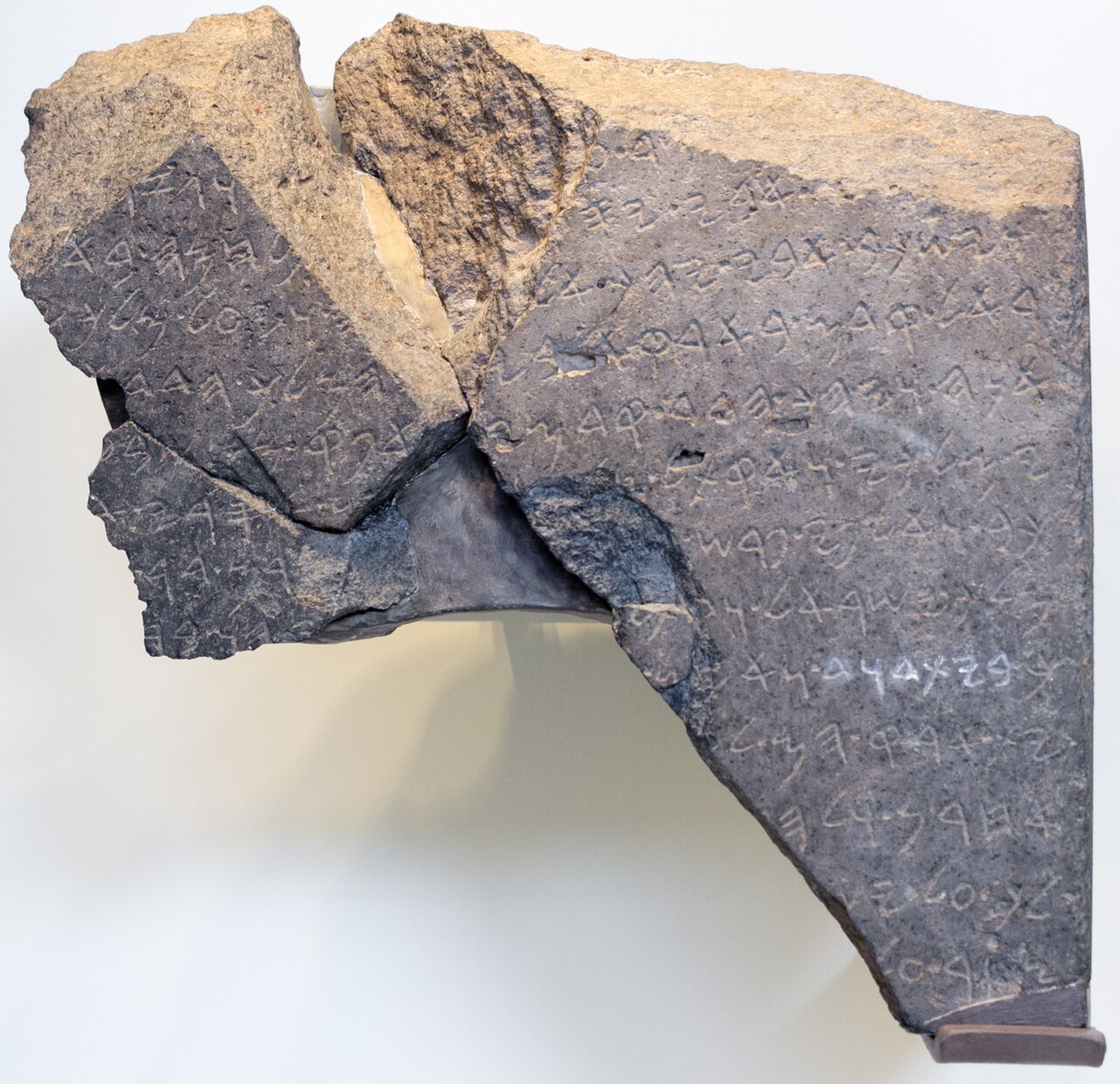
The Tel Dan inscription (9th century BC) names "the house of David" (bytdwd), showing that Judah's dynasty was known by David's name a century and a half after his time. It does not confirm details of the covenant psalms. See the dossier on the Tel Dan stele and the Psalm 89 investigation.
What the evidence shows
- In the Psalms mashiach normally refers to the reigning king.
- Psalm 2:7 echoes the promise to David's heir in 2 Samuel 7:14.
- Psalm 110:1 is the Old Testament verse most often quoted or alluded to in the New Testament.
- The Targums apply Psalms 45 and 72 to King Messiah. Reported; Targum text not yet checked by the site (C).
- The royal psalms were composed as predictions of the Messiah. A traditional reading; in their setting they concern the reigning king.
- The Tel Dan stele names the house of David.
Continue the journey
Journey of a PassagePsalm 2:7: "Thou art my Son"The decree to the king is the same in every version in the library: "The LORD said to me: You are my son; today I have begotten you." It became one of the most quoted Old Testament verses in the New Testament.More from this lesson
Why this matters to the rest of Scripture
- The promise to David's house.
- Melchizedek, king of Salem and priest.
- Psalms 2, 45, 102 and 110 in Greek.
- "David himself calleth him Lord."