Investigation: The Psalms of the Dead Sea Scrolls
Forty manuscripts, a great scroll from Cave 11, and a Psalter still taking shape
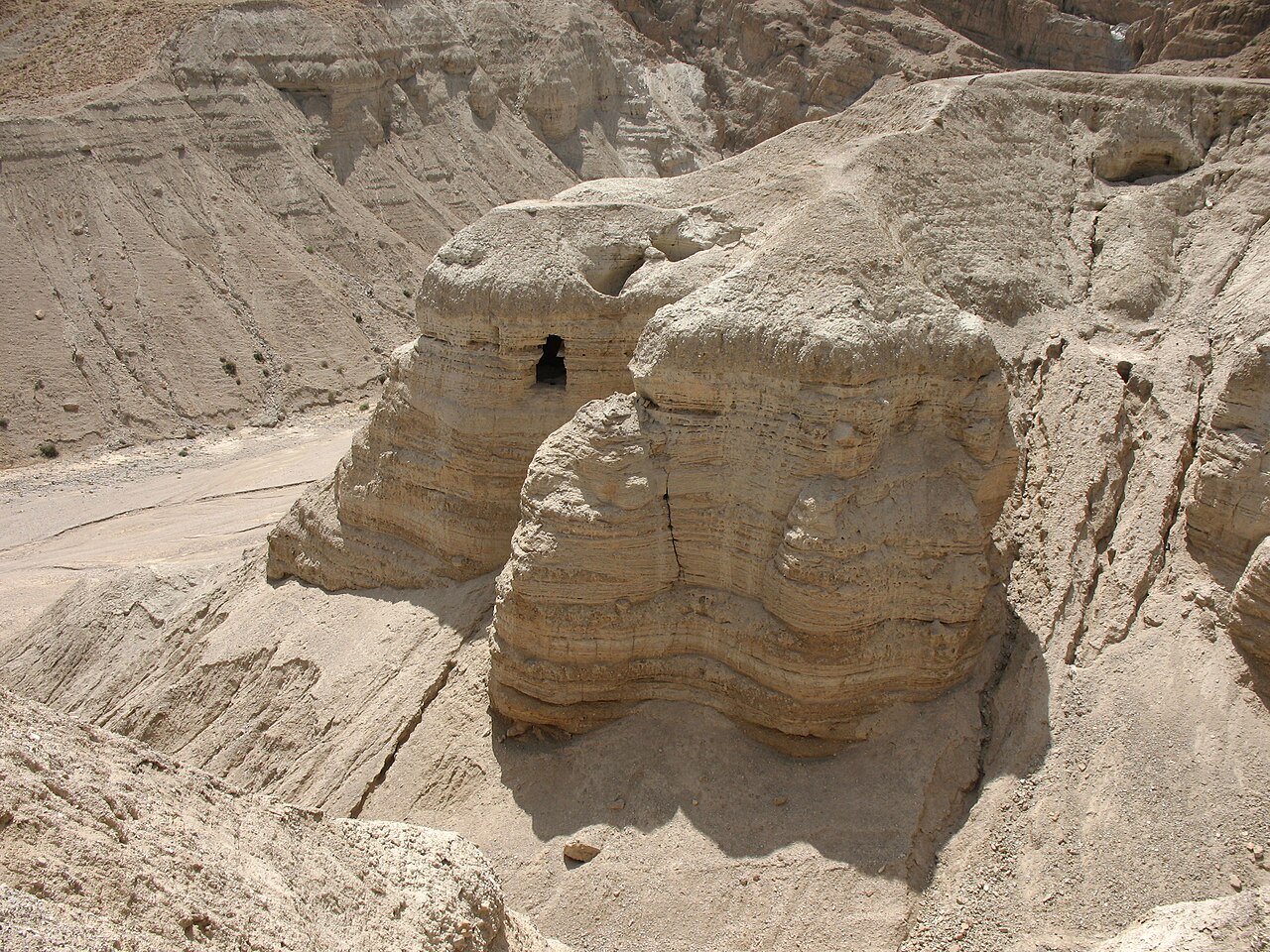
In 1956 Bedouin found a cave north of Qumran that held, among other things, a tightly rolled scroll. It was unrolled in 1961 and published by James A. Sanders in 1965 (Discoveries in the Judaean Desert IV). Its script dates it to the first half of the 1st century AD. It is about 5 metres long in its surviving part, the most extensive Psalms manuscript from antiquity.
What surprised scholars was not that it contained psalms but what order they were in. After Psalm 101 and 102, 103 and 109 come 118, 104, 147, 105, 146, 148, then 121–132 (the Songs of Ascents, nearly in order), 119, 135, 136 with a different ending, 145 with a refrain after every verse, 154, a "Plea for Deliverance," 139, 137, 138, Sirach 51, an "Apostrophe to Zion," 93, 141, 133, 144, 155, 142, 143, 149, 150, a "Hymn to the Creator," David's Last Words, David's Compositions, 140, 134, and finally 151A and 151B (sequence as reported in the edition and by P. W. Flint; C check).
Every one of those biblical psalms is close in wording to the Masoretic text. The differences are mostly in order, additions and endings. That makes the scroll a window onto a question no medieval manuscript can answer: was "the Psalter" a fixed book in the 1st century, or were several collections in use?
How many Psalms manuscripts?
Reported totals (P. W. Flint, Oxford Handbook of the Psalms): about 36 Psalms manuscripts from the Qumran caves (most from Cave 4, others from Caves 1, 2, 3, 5, 6, 8 and 11), two from Masada (MasPs-a, MasPs-b) and one from Nahal Hever (5/6HevPs), plus psalms quoted in other scrolls. Exact numbers depend on how fragments are grouped. Psalms appear more often than any other biblical book; Deuteronomy and Isaiah come next.
| Manuscript | Date (palaeography) | What it shows | Status on the site |
|---|---|---|---|
| 11QPs-a (11Q5) | c. AD 1–50 | Psalms 101–150 in a different order, with 10 compositions not in the Masoretic Psalter | Reported (Sanders, DJD IV); C check |
| 11QPs-b (11Q6) | 1st century AD | Fragments sharing some of 11QPs-a's distinctive sequences | Reported; C check |
| 4QPs-f (4Q88) | 1st century BC | Psalms 22, 107, 109 and three non-Masoretic poems (Apostrophe to Zion, an eschatological hymn, Apostrophe to Judah) | Reported; C check |
| MasPs-a, MasPs-b (Masada) | 1st century BC – 1st century AD; before AD 73 | Psalms 81–85 and 150 in Masoretic order, ending with 150 | Reported; C check |
| 5/6HevPs (Nahal Hever) | 1st century AD | Parts of Psalms 7–31 in Masoretic order; the reading at 22:16 | Reported; see passage 22:16 |
The ten additional compositions in 11QPs-a
Psalms 151A and 151B (David's anointing and his first battle; see the Psalm 151 passage page); Psalm 154 and Psalm 155 (both known before 1956 only in Syriac); the Plea for Deliverance; the Apostrophe to Zion (also in 4QPs-f); the Hymn to the Creator; Sirach 51:13–30 (an acrostic poem on wisdom known from the book of Ben Sira, here in a form closer to an acrostic than the medieval Hebrew); David's Last Words (2 Samuel 23:1–7); and the prose note David's Compositions. All reported from the published edition (C).
Psalm 145 with a refrain and a nun line
In 11QPs-a, Psalm 145 is reported to have a refrain after every verse ("Blessed be the LORD and blessed be his name for ever and ever") and to include a Hebrew line for the letter nun, missing in the Masoretic Text. See the passage page on 145:13 for the evidence and the open checks.
Manuscript date is not composition date
A scroll copied in AD 30 can contain a psalm composed centuries earlier, or a poem written a generation before. The script dates the copy. Psalm 151A or the Apostrophe to Zion may be late compositions or older ones; that has to be argued from language and content.
Two views of 11QPs-a
Sanders, and later Flint, argued that 11QPs-a is a true Psalter, a different edition of Books IV–V that was regarded as Scripture by its users: its arrangement is deliberate, it is attributed to David as prophecy, and 11Q6 (and possibly 4QPs-e) shares its order. Others (P. W. Skehan, S. Talmon, M. Goshen-Gottstein and later scholars) argued it is a liturgical or instructional collection drawn from an already-fixed Psalter, like a prayer book that rearranges and adds. Both sides agree on the facts: the text of the individual psalms is close to the Masoretic, and the order and contents differ. The disagreement is about what kind of book it was.
What the evidence supports
Books I–III in the Qumran manuscripts largely follow the Masoretic order, with some variation in Cave 4 copies; Books IV–V vary much more. The Masada scroll, copied before AD 73, already ends with Psalm 150 in the Masoretic order. The most cautious summary: in the 1st century AD the Masoretic arrangement existed and was used, and at least one other arrangement of the later psalms, with additional compositions, also circulated among some Jews. Whether the community at Qumran thought of 11QPs-a as "the" Psalter cannot be read from the scroll alone.
Photographs and rights
High-resolution photographs of 11Q5 are published by the Israel Antiquities Authority's Leon Levy Dead Sea Scrolls Digital Library and the Israel Museum. The site does not display them yet: a self-hosted image needs a confirmed licence and file record (image slot pending). The site has not read the scroll from the photographs; every reading on this page is reported from the edition or from scholarship.
Open checks
C checks: confirm the 11QPs-a sequence and the contents of each column in DJD IV; confirm 11Q6 and 4QPs-e overlaps; confirm Masada and Nahal Hever contents in their editions (DJD and Masada VI); confirm the readings cited on the passage pages (22:16, 145:13, 151).
What the evidence shows
- Psalms is the best-represented biblical book among the Dead Sea Scrolls.Source: P. W. Flint, "Contents of the Psalms Scrolls and Related Manuscripts," Oxford Handbook of the Psalms ↗
- 11QPs-a contains psalms from Books IV–V in an order different from the Masoretic Text. Reported; C check against DJD IV.Source: J. A. Sanders, The Psalms Scroll of Qumrân Cave 11 (11QPsa), DJD IV (1965); P. W. Flint, "Contents of the Psalms Scrolls and Related Manuscripts," Oxford Handbook of the Psalms ↗
- 11QPs-a includes Psalms 151A, 151B, 154 and 155. Reported (C).Source: P. W. Flint, "'Apocryphal' Psalms in the Psalms Scrolls," Oxford Handbook of the Psalms, Appendix I ↗
- The Masada Psalms scroll follows the Masoretic order and ends with Psalm 150. Reported (C).Source: P. W. Flint, "Contents of the Psalms Scrolls and Related Manuscripts," Oxford Handbook of the Psalms ↗
- 11QPs-a is a different edition of the Psalter regarded as Scripture. Sanders and Flint; others see a liturgical collection.
Continue the journey
Journey of a PassagePsalm 145:13: The missing nun linePsalm 145 is an alphabetic acrostic: in the Hebrew each verse begins with the next letter of the alphabet.More from this lesson
Why this matters to the rest of Scripture
- The missing nun line.
- One Greek psalm, two Hebrew poems.
- David's Last Words, also in 11QPs-a.