"It is a good thing to give thanks unto the LORD, and to sing praises unto thy name, O most High: to shew forth thy lovingkindness in the morning, and thy faithfulness every night, upon an instrument of ten strings, and upon the psaltery; upon the harp with a solemn sound. For thou, LORD, hast made me glad through thy work."
"O LORD, how great are thy works! and thy thoughts are very deep. A brutish man knoweth not; neither doth a fool understand this. When the wicked spring as the grass… it is that they shall be destroyed for ever: but thou, LORD, art most high for evermore."
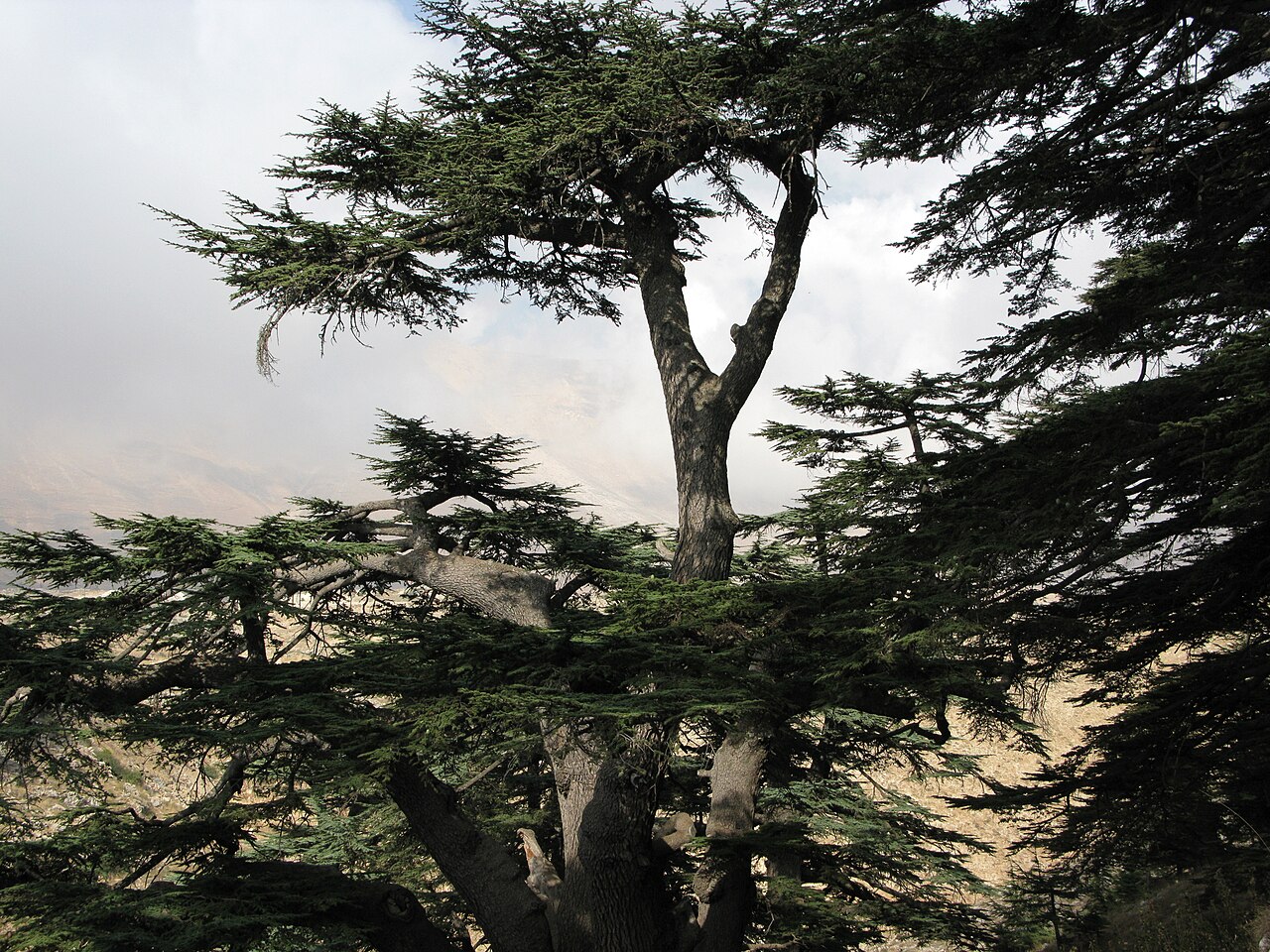
"The righteous shall flourish like the palm tree: he shall grow like a cedar in Lebanon. Those that be planted in the house of the LORD shall flourish in the courts of our God. They shall still bring forth fruit in old age; they shall be fat and flourishing; to shew that the LORD is upright: he is my rock, and there is no unrighteousness in him."
The centre of the poem
Verse 8, "But thou, LORD, art most high for evermore," stands at the exact centre: seven verses before it and seven after in English. The divine name YHWH occurs seven times in the library's Hebrew of this Sabbath psalm. Whether the patterning is deliberate is debated, but the centring of God's exaltation is clear.
Palm and cedar
The date palm, fruitful in hot lowlands, and the cedar, tall and long-lived in the mountains of Lebanon, are opposite trees: together they picture every kind of flourishing. Grass springs up quickly and dies; these trees grow slowly and last.
The heading and the Sabbath
"A Psalm or Song for the sabbath day" is the only Sabbath heading in the Psalter. The psalm does not mention the Sabbath, which shows that the heading records its liturgical use. The Mishnah (Tamid 7:4) lists the psalm the Levites sang each day in the temple: Sunday 24, Monday 48, Tuesday 82, Wednesday 94, Thursday 81, Friday 93, Sabbath 92. The Greek headings preserved in the library's Vulgate mark several of these days, showing the custom was known to the Greek translators. The library's Vulgate keeps "in die sabbati." In Jewish worship it is sung at the welcoming of the Sabbath (Kabbalat Shabbat) and on Sabbath morning.
What the evidence shows
- Psalm 92 is the only psalm headed "for the sabbath day."
- Mishnah Tamid 7:4 assigns Psalm 92 to the Sabbath.
- YHWH occurs seven times in the library's Hebrew of Psalm 92.Source: The site's library: Westminster Leningrad Codex, KJV, Clementine Vulgate (Gallican Psalter), Giguet's French of the Greek, Douay-Rheims
Continue the journey
Connected elsewhere in ScriptureIn the BeginningGenesis 2:2–3: The Sabbath day named in the heading.More from this lesson
Why this matters to the rest of Scripture
- The Sabbath day named in the heading.
- "Like a tree planted by the rivers of water."
- The tree planted by the waters.