"The earth is the LORD's, and the fulness thereof; the world, and they that dwell therein. For he hath founded it upon the seas, and established it upon the floods."
"Who shall ascend into the hill of the LORD? or who shall stand in his holy place? He that hath clean hands, and a pure heart; who hath not lifted up his soul unto vanity, nor sworn deceitfully… This is the generation of them that seek him, that seek thy face, O Jacob. Selah."
"Lift up your heads, O ye gates; and be ye lift up, ye everlasting doors; and the King of glory shall come in. Who is this King of glory? The LORD strong and mighty, the LORD mighty in battle. Lift up your heads, O ye gates… Who is this King of glory? The LORD of hosts, he is the King of glory. Selah."
A procession
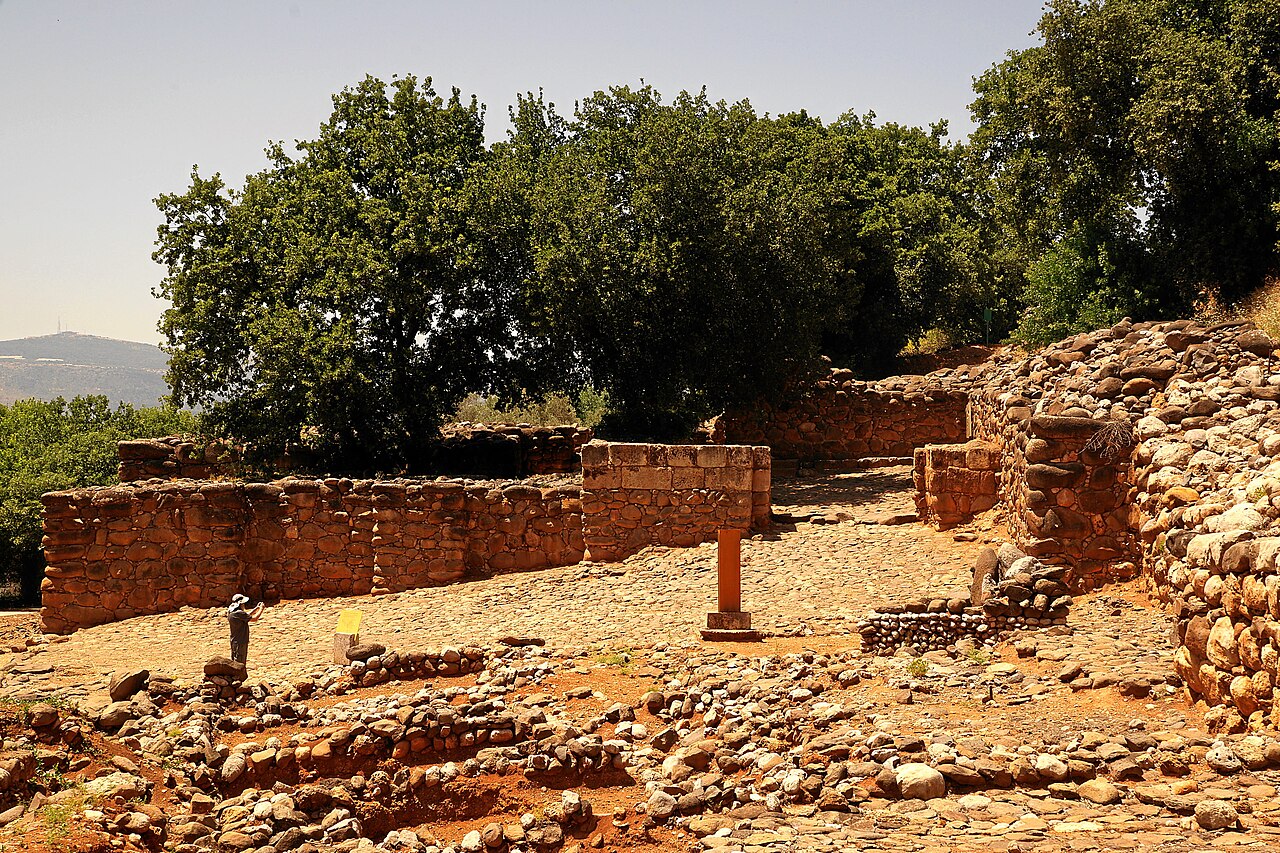
The psalm sounds like a procession reaching the temple gates, perhaps bringing the ark ("the LORD of hosts" is the ark's title, 1 Samuel 4:4; compare 2 Samuel 6). A choir outside calls to the gates; the gatekeepers answer "Who is this King of glory?" The gates are told to "lift their heads," as if too low for so great a king.
Founded on the seas
God "founded it upon the seas": the ancient picture of the earth established over the waters (compare Genesis 1:9). The cosmic King who subdued the waters now enters his city.
Question and answer
Three parts: a creation hymn (vv. 1–2), a question about who may ascend (vv. 3–6), and the gate liturgy (vv. 7–10). The gate liturgy is sung twice. The first answer names the LORD "mighty in battle"; the second gives the fuller title, "the LORD of hosts." Repetition with a change at the climax is a favourite device of Hebrew poetry, also known from Ugaritic verse.
A Greek title and the daily psalms
The library's Vulgate title reads "Prima sabbati. Psalmus David": "for the first day of the week." The Hebrew has only "of David, a psalm." The Mishnah (Tamid 7:4) lists the psalm the Levites sang in the temple each day: Sunday 24, Monday 48, Tuesday 82, Wednesday 94, Thursday 81, Friday 93, Sabbath 92. The Greek titles of several of these psalms record the same days, evidence that the Greek translators knew this temple custom.
"Princes, lift your gates"
24:7 Hebrew "Lift up, O gates, your heads." The library's Greek reads "Princes, lift up your gates" (Vulgate "Attollite portas, principes, vestras"), understanding rasheikhem ("your heads") as "your rulers" (rashim). Christian tradition later read the gates of heaven opening at Christ's ascension.
What the evidence shows
- The Greek/Latin title of Psalm 24 assigns it to the first day of the week.Source: The site's library: Westminster Leningrad Codex, KJV, Clementine Vulgate (Gallican Psalter), Giguet's French of the Greek, Douay-Rheims
- The Mishnah (Tamid 7:4) lists Psalm 24 as the Levites' Sunday psalm.
- Psalm 24 accompanied a procession of the ark.
Continue the journey
Journey of a PassagePsalm 24:7: "Lift up your heads, O ye gates"The Hebrew commands the gates: "Lift up, O gates, your heads." The Greek reads "Lift up your gates, O princes" (Giguet "Princes, levez vos portes"; Vulgate "Attollite portas, principes, vestras").More from this lesson
Why this matters to the rest of Scripture
- Who may dwell on the holy hill?
- The ark brought to Jerusalem.
- "The earth is the Lord's."