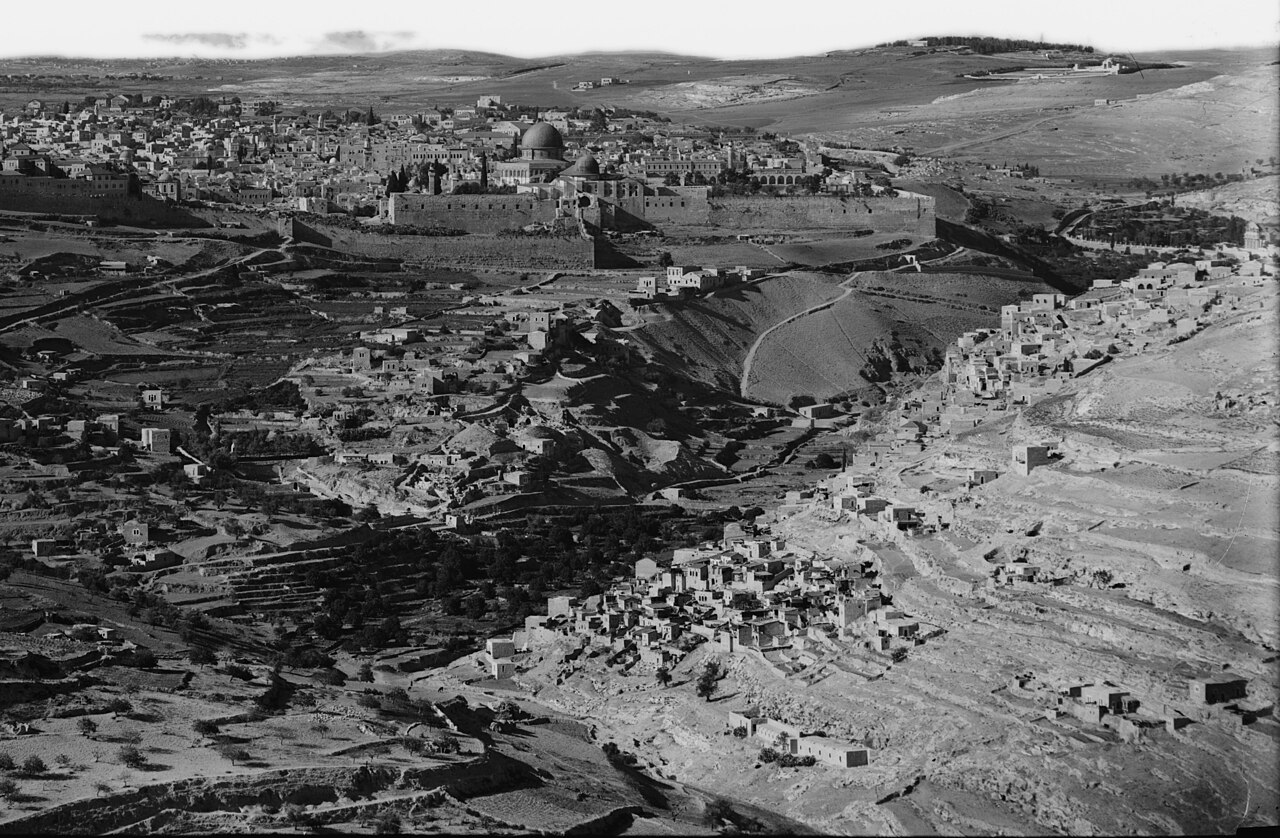
"His foundation is in the holy mountains. The LORD loveth the gates of Zion more than all the dwellings of Jacob. Glorious things are spoken of thee, O city of God. Selah."
"I will make mention of Rahab and Babylon to them that know me: behold Philistia, and Tyre, with Ethiopia; this man was born there. And of Zion it shall be said, This and that man was born in her: and the highest himself shall establish her. The LORD shall count, when he writeth up the people, that this man was born there. Selah. As well the singers as the players on instruments shall be there: all my springs are in thee."
A city register
The image is a census: God enrols peoples in Zion's citizen list. Egypt ("Rahab") and Babylon, the two great empires, and Philistia, Tyre and Cush, neighbours and far peoples, are counted as born in Zion. The poem is brief and abrupt, perhaps damaged, but its vision of former enemies as citizens of God's city is unusual and striking.
Rahab
Rahab here is a poetic name for Egypt (Isaiah 30:7), drawn from the sea monster Rahab (Psalm 89:10; Job 26:12). It is a different word from the name of Rahab of Jericho (Joshua 2), which is spelled differently in Hebrew (rahav with a het, against rahav with a he).
Heading and reception
"A Psalm or Song for the sons of Korah." John Newton's hymn "Glorious things of thee are spoken, Zion, city of our God" (1779) is based on 87:3. Christian tradition read the psalm of the Church gathered from all nations; Jewish tradition of the nations' recognition of Zion in the messianic age. Galatians 4:26 ("Jerusalem which is above… is the mother of us all") echoes the idea.
"Mother Zion" in the Greek
In 87:5 the Hebrew reads "And of Zion it shall be said, This and that man was born in her." Giguet's Greek has "A man shall say, My mother is Zion" ("Un homme dira: Ma mère est Sion"), apparently connecting the Hebrew with the word for mother (em). The library's Vulgate instead turns the line into a question: "Numquid Sion dicet: Homo et homo natus est in ea?" The "Mother Zion" reading became important in Christian thought (compare Galatians 4:26). These are readings of the library's digital editions (D check); the critical Greek text is a C check.
What the evidence shows
- Rahab in 87:4 is a name for Egypt, distinct from Rahab of Jericho.
- Newton's "Glorious things of thee are spoken" is based on 87:3.
Continue the journey
Connected elsewhere in ScriptureIsaiah 30: In Returning and RestIsaiah 30:7: Egypt called Rahab.More from this lesson
Why this matters to the rest of Scripture
- Egypt called Rahab.
- "Blessed be Egypt my people, and Assyria."
- "Jerusalem which is above… the mother of us all."