Psalm 71: Do Not Cast Me Off in Old Age
A life of trust, from the womb to grey hair
"In thee, O LORD, do I put my trust: let me never be put to confusion. Deliver me in thy righteousness… Be thou my strong habitation, whereunto I may continually resort… for thou art my rock and my fortress… For thou art my hope, O Lord GOD: thou art my trust from my youth. By thee have I been holden up from the womb."
"I am as a wonder unto many; but thou art my strong refuge… Cast me not off in the time of old age; forsake me not when my strength faileth. For mine enemies speak against me… saying, God hath forsaken him: persecute and take him; for there is none to deliver him."
"O God, thou hast taught me from my youth: and hitherto have I declared thy wondrous works. Now also when I am old and grayheaded, O God, forsake me not; until I have shewed thy strength unto this generation, and thy power to every one that is to come… Thou, which hast shewed me great and sore troubles, shalt quicken me again, and shalt bring me up again from the depths of the earth… I will also praise thee with the psaltery… My lips shall greatly rejoice when I sing unto thee."
Old age in the ancient world
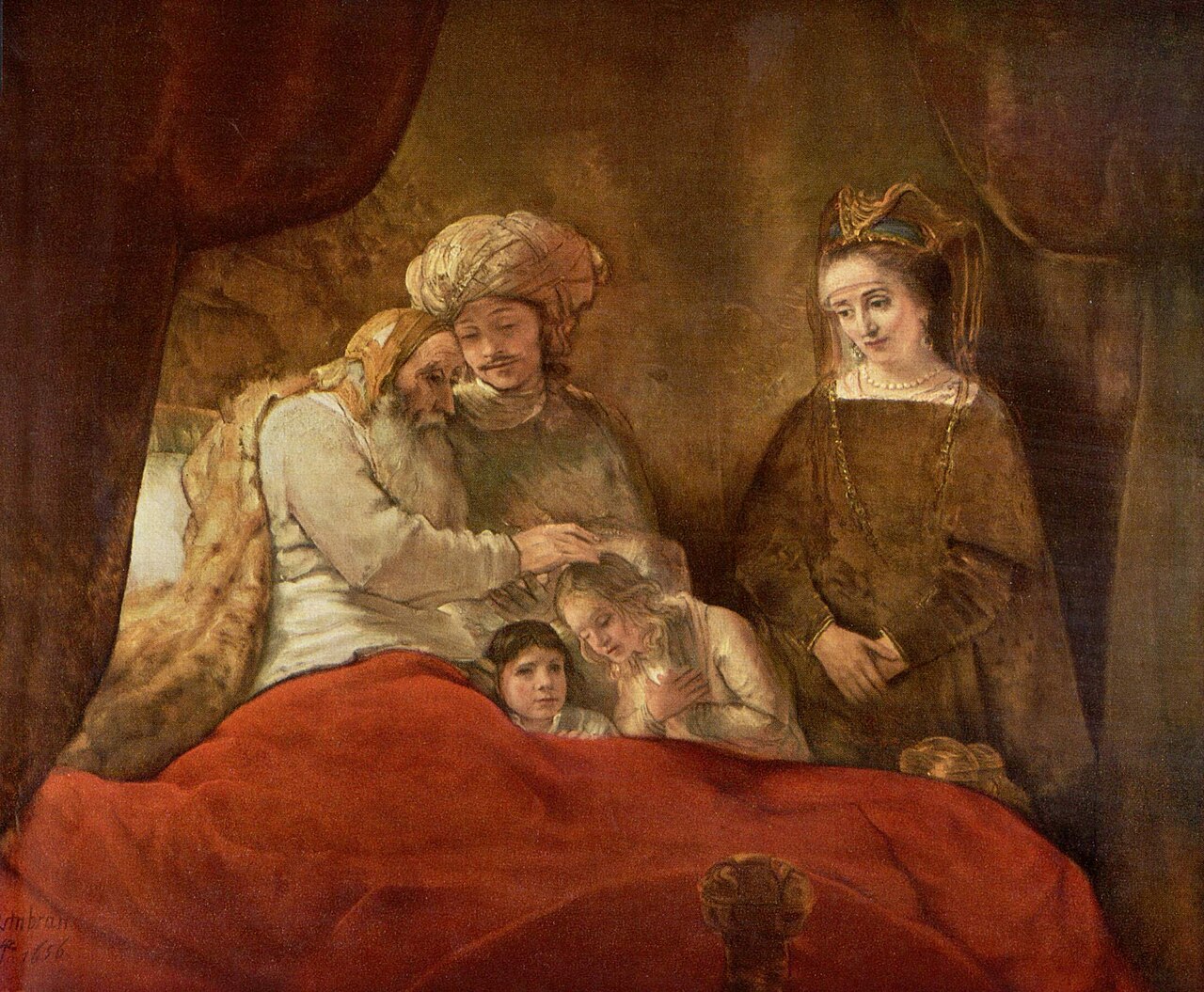
An old man whose strength fails is vulnerable: enemies conclude that God has abandoned him and that no one will defend him. The psalm's answer is memory, a life of trust "from the womb" (v. 6), and a task: to tell the next generation (v. 18). Elderly Jacob blessing his grandsons (pictured) is the Bible's picture of that handing on.
A mosaic of other psalms
71:1–3 is almost the same as 31:1–3; v. 6 echoes 22:9–10; v. 12 echoes 22:11, 19 and 40:13; v. 13 echoes 35:4, 26. The poet prays in the words of earlier psalms, as an old person might pray with phrases learned over a lifetime.
No author, and a Greek heading
Psalm 71 has no Hebrew heading (with Psalm 43, the only untitled psalm in Book II). Some scholars think it continues Psalm 70. The library's Vulgate gives it "Psalmus David, filiorum Jonadab, et priorum captivorum": "of David, of the sons of Jonadab and of the first captives," linking it with the Rechabites (descendants of Jonadab, Jeremiah 35) and the first exiles. The site does not assign it an author.
The last line of the Te Deum
The ancient hymn Te Deum ends "In te, Domine, speravi: non confundar in aeternum" ("O Lord, in thee have I trusted: let me never be confounded"), the opening of Psalm 71 (and of 31). The library's Vulgate 70:1 reads the same words.
What the evidence shows
- 71:1–3 nearly repeats 31:1–3.Source: The site's library: Westminster Leningrad Codex, KJV, Clementine Vulgate (Gallican Psalter), Giguet's French of the Greek, Douay-Rheims
- The Vulgate heading names the sons of Jonadab and the first captives.Source: The site's library: Westminster Leningrad Codex, KJV, Clementine Vulgate (Gallican Psalter), Giguet's French of the Greek, Douay-Rheims
Continue the journey
Connected in this bookPsalm 31: Into Your Hand I Commit My SpiritPsalm 31:1–3: "In thee, O LORD, do I put my trust."More from this lesson
Why this matters to the rest of Scripture
- "In thee, O LORD, do I put my trust."
- The sons of Jonadab.
- "Even to hoar hairs will I carry you."