"I will sing of mercy and judgment: unto thee, O LORD, will I sing. I will behave myself wisely in a perfect way. O when wilt thou come unto me? I will walk within my house with a perfect heart. I will set no wicked thing before mine eyes: I hate the work of them that turn aside; it shall not cleave to me. A froward heart shall depart from me: I will not know a wicked person."
"Whoso privily slandereth his neighbour, him will I cut off: him that hath an high look and a proud heart will not I suffer. Mine eyes shall be upon the faithful of the land, that they may dwell with me: he that walketh in a perfect way, he shall serve me. He that worketh deceit shall not dwell within my house… I will early destroy all the wicked of the land; that I may cut off all wicked doers from the city of the LORD."
A royal programme
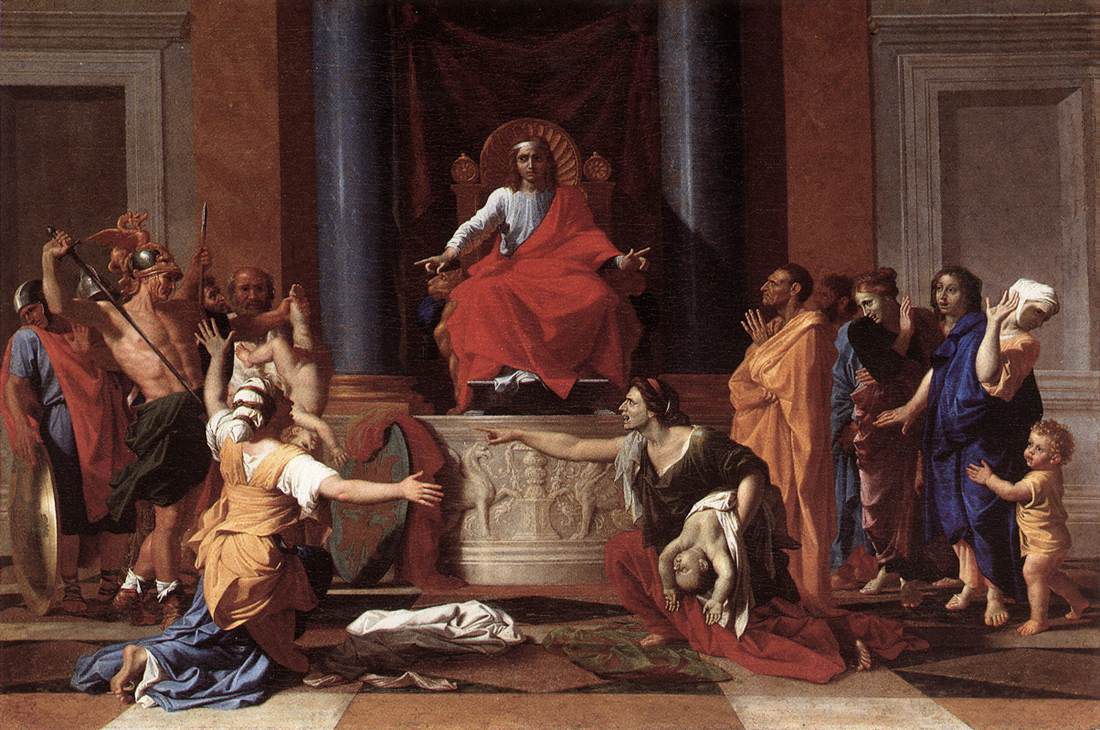
The speaker is a ruler with a house, servants and a city: he vows personal integrity and an honest court. "Early" (labboqer, "every morning") recalls the king's morning court for justice (2 Samuel 15:2; Jeremiah 21:12). The ideal is a palace free of slander, pride and deceit.
Ideal and reality
"A Psalm of David" (Vulgate "Psalmus ipsi David"). The psalm is a pledge, not a record: there is no evidence that any king enacted its programme, and the Bible's own accounts of David's court include slander and deceit. "O when wilt thou come unto me?" (v. 2) may express longing for God's presence or be a difficult line. Martin Luther wrote a long commentary on Psalm 101 (1534–35) as advice for princes, in the tradition of "mirrors for princes."
The heading
The heading is "A Psalm of David" (le-David mizmor, in the reverse of the usual order); the library's Vulgate reads "Psalmus ipsi David." It associates the vow with the ideal king; it does not show that David wrote it or kept it.
What the evidence shows
- Psalm 101 is a royal pledge of integrity.
- A historical king enacted this programme.
Continue the journey
Connected elsewhere in ScriptureProverbs 20: Wine Is a MockerProverbs 20:8: "A king that sitteth in the throne of judgment scattereth away all evil with his eyes."More from this lesson
Why this matters to the rest of Scripture
- "A king that sitteth in the throne of judgment scattereth away all evil with his eyes."
- Judgment at the gate in the morning.