Psalm 150: Let Everything That Has Breath
The final doxology of the Psalter
"Praise ye the LORD. Praise God in his sanctuary: praise him in the firmament of his power. Praise him for his mighty acts: praise him according to his excellent greatness."
"Praise him with the sound of the trumpet: praise him with the psaltery and harp. Praise him with the timbrel and dance: praise him with stringed instruments and organs. Praise him upon the loud cymbals: praise him upon the high sounding cymbals. Let every thing that hath breath praise the LORD. Praise ye the LORD."
The instruments
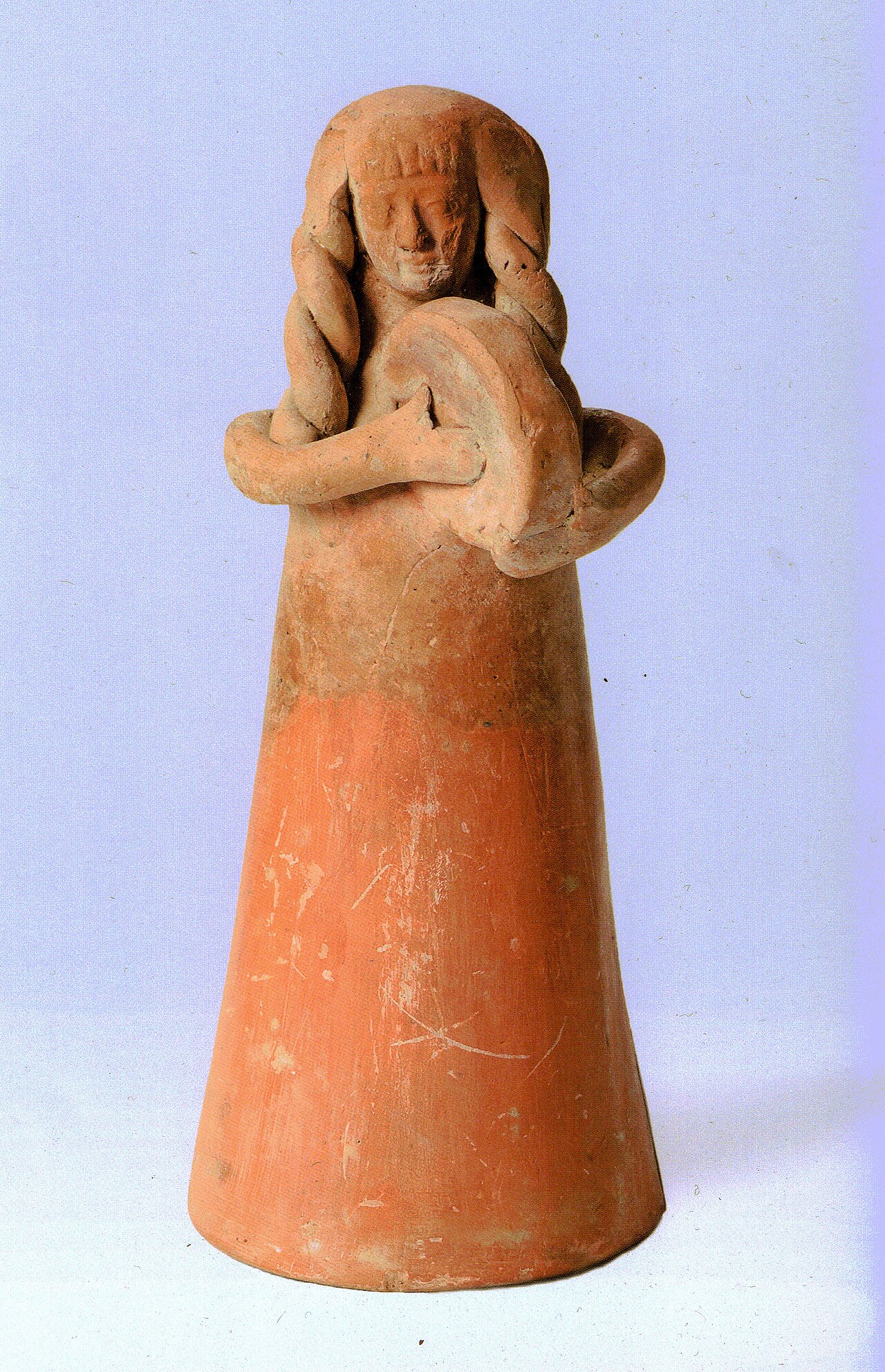
Shofar (ram's horn, "trumpet"), nevel and kinnor (two kinds of lyre or harp, "psaltery and harp"), tof (frame drum, "timbrel"; a clay figurine of a woman holding one is pictured), minnim (strings) and 'ugav (probably a pipe or flute, "organs" in the KJV), and two kinds of tseltselim (cymbals). Archaeology has found lyres depicted in art, frame-drum figurines, bronze cymbals and bone pipes in the Levant. Modern replicas are reconstructions; no one knows exactly how temple music sounded.
Where, why, how, who
The psalm answers four questions: where (in his sanctuary, in the heavens), why (his mighty acts, his greatness), how (every instrument and dance), and who (everything that has breath). "Praise him" (hallelu-hu) is said ten times, framed by "Praise ye the LORD" (hallelu-yah) at beginning and end.
The end of the five books
Books I–IV each end with a doxology (41:13; 72:18–19; 89:52; 106:48). Book V has no separate doxology: Psalm 150, and the whole final Hallel (146–150), is the doxology of Book V and of the Psalter. The Greek Psalter then adds Psalm 151, described as "outside the number"; see "How Psalms Came to Us." Psalms 146–150 have no heading other than "Praise ye the LORD" (hallelu-yah), with which each begins and ends; the Greek and Latin put "Alleluia" at their head. They are the closing doxology of the whole Psalter and are recited every morning in Jewish worship (Pesukei de-Zimra).
What the evidence shows
- "Praise him" occurs ten times in Psalm 150, framed by Hallelujah.Source: The site's library: Westminster Leningrad Codex, KJV, Clementine Vulgate (Gallican Psalter), Giguet's French of the Greek, Douay-Rheims
- Psalm 150 serves as the doxology of Book V and the Psalter.Source: G. H. Wilson, The Editing of the Hebrew Psalter (SBLDS 76, 1985)
Continue the journey
Connected in this bookPsalm 1: The Two WaysPsalm 1:1–2: Where the Psalter began.More from this lesson
Why this matters to the rest of Scripture
- Where the Psalter began.
- David and Israel playing before the LORD.
- Every creature praising.