Psalm 37: Fret Not Yourself
A wisdom alphabet; the meek shall inherit the land
"Fret not thyself because of evildoers, neither be thou envious against the workers of iniquity. For they shall soon be cut down like the grass, and wither as the green herb. Trust in the LORD, and do good; so shalt thou dwell in the land, and verily thou shalt be fed."
"Delight thyself also in the LORD; and he shall give thee the desires of thine heart. Commit thy way unto the LORD; trust also in him; and he shall bring it to pass… Rest in the LORD, and wait patiently for him: fret not thyself because of him who prospereth in his way… For evildoers shall be cut off: but those that wait upon the LORD, they shall inherit the earth… But the meek shall inherit the earth; and shall delight themselves in the abundance of peace."
"A little that a righteous man hath is better than the riches of many wicked… The steps of a good man are ordered by the LORD… Though he fall, he shall not be utterly cast down… I have been young, and now am old; yet have I not seen the righteous forsaken, nor his seed begging bread."
"I have seen the wicked in great power, and spreading himself like a green bay tree. Yet he passed away, and, lo, he was not… Mark the perfect man, and behold the upright: for the end of that man is peace… But the salvation of the righteous is of the LORD: he is their strength in the time of trouble."
Wisdom in alphabet
Psalm 37 is addressed to the reader, not to God: a wisdom poem like Proverbs. Each letter normally governs two verses. In the library's Hebrew the ayin line is hard to find: in v. 28 the word le'olam ("for ever") has ayin only after its prefix. The library's Vulgate adds a line there, "Injusti punientur" ("the unjust shall be punished"), which in Hebrew would be 'awwalim nishmadu, beginning with ayin; many scholars think the Greek translators preserve a line lost from the Hebrew. The tav line begins after the conjunction in v. 39 ("but the salvation"). Small irregularities like these are common in biblical acrostics.
"Inherit the land"
The phrase "inherit the land" (yirshu arets) recurs five times (vv. 9, 11, 22, 29, 34). In the psalm it means living securely in the land of Israel; Matthew 5:5 widens it to "the earth."
The heading
Hebrew: le-David alone, with the first letter of the acrostic following at once; the library's Vulgate has "Psalmus ipsi David." The psalm's old man ("I have been young, and now am old") is a wisdom voice; the heading links it to David's name without telling us when it was written.
A Qumran commentary
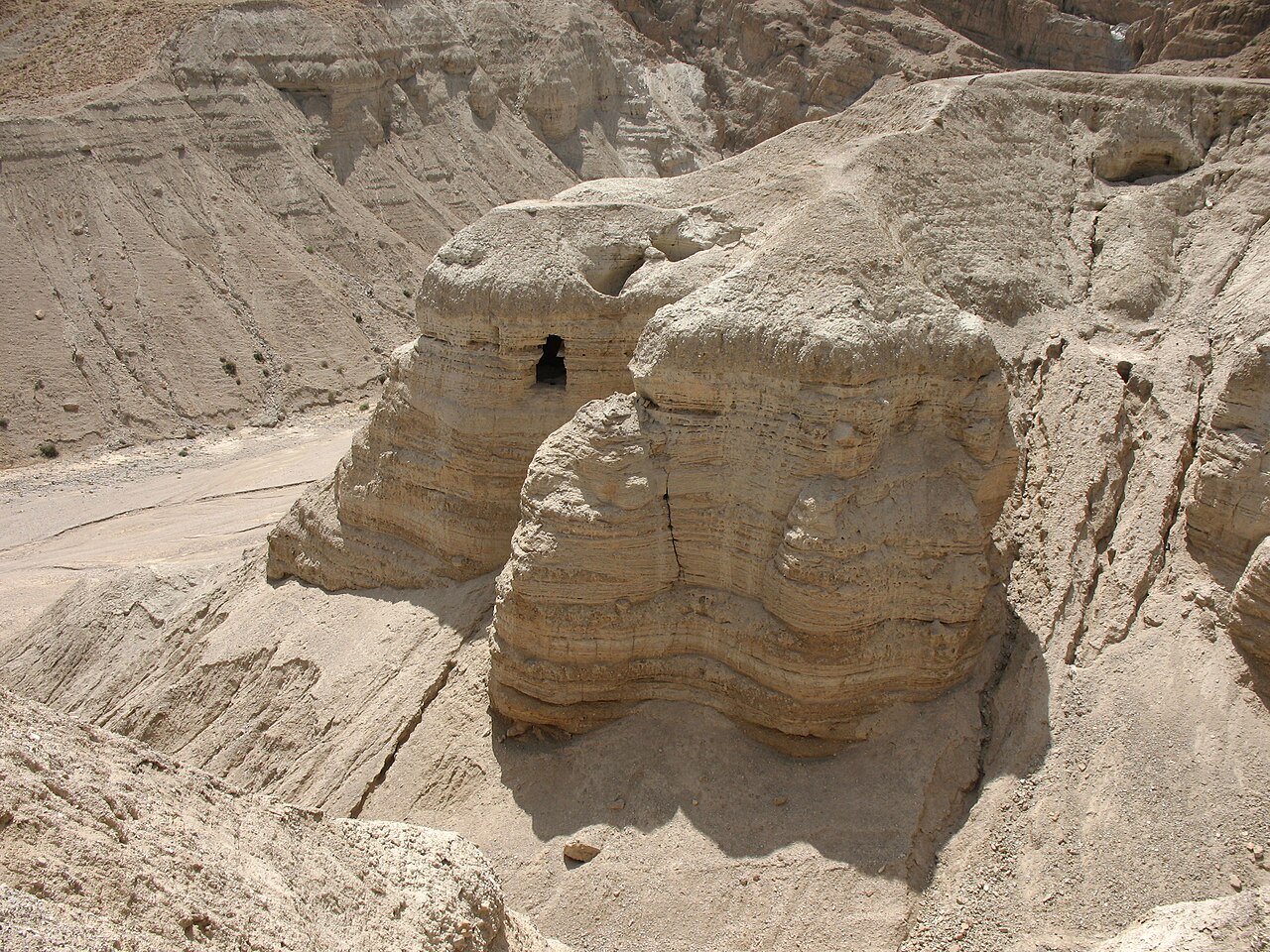
Among the Dead Sea Scrolls is a pesher (interpretive commentary) on Psalm 37 (4Q171, 4QpPs-a), which applies its verses to the community, its "Teacher of Righteousness" and his enemy the "Wicked Priest," and reads "the meek" as "the congregation of the poor." It shows an ancient community reading the psalm as about its own history.
"I have not seen the righteous forsaken"
37:25 states the general wisdom of retribution, which Job and Psalm 73 question. The psalm's speaker presents it as long experience, not a guarantee in every case.
What the evidence shows
- Psalm 37 is an acrostic of two-verse units with small irregularities.Source: The site's library: Westminster Leningrad Codex, KJV, Clementine Vulgate (Gallican Psalter), Giguet's French of the Greek, Douay-Rheims; Tyndale House, "The ABCs of Hebrew Acrostic Poems" (2023) ↗
- A Qumran pesher on Psalm 37 (4Q171) survives.
- Matthew 5:5 echoes 37:11.
Continue the journey
Journey of a PassagePsalm 37:11: "The meek shall inherit the earth""But the meek shall inherit the land." All the versions agree.More from this lesson
Why this matters to the rest of Scripture
- "Blessed are the meek."
- The prosperity of the wicked questioned.