Investigation: Pilgrimage and the Songs of Ascents
Roads, steps and the sound of fifteen short songs
"I will lift up mine eyes unto the hills" (121:1). "I was glad when they said unto me, Let us go into the house of the LORD. Our feet shall stand within thy gates, O Jerusalem" (122:1–2). "As the mountains are round about Jerusalem, so the LORD is round about his people" (125:2). "Behold, how good and how pleasant it is for brethren to dwell together in unity!" (133:1). "Behold, bless ye the LORD, all ye servants of the LORD, which by night stand in the house of the LORD" (134:1).
Read in order, they move from distance ("Woe is me, that I sojourn in Mesech, that I dwell in the tents of Kedar!" 120:5) to arrival at Zion (122), to the Temple at night (134). Many readers hear a pilgrimage.
Torah required Israelite men to appear before the LORD three times a year, at Passover, Weeks and Booths (Deuteronomy 16:16). Jerusalem is high: from Jericho the road climbs about 1,000 metres; from the coastal plain, about 700. Everyone "went up" to Jerusalem, in Hebrew as in English (Psalm 122:4: "Whither the tribes go up").
| Explanation of "Ascents" | Evidence | Difficulty |
|---|---|---|
| Pilgrims' songs going up to Jerusalem | "go up" (alah) is the standard verb for pilgrimage; the songs' Zion focus; 122 describes arrival | Not every song is about travel |
| The fifteen Temple steps | Mishnah Middot 2:5 and Sukkah 5:4: Levites sang on fifteen steps "corresponding to the fifteen Songs of Ascents" | A later description of Herod's temple; may explain the title rather than its origin |
| Return from Babylon | Ezra 7:9 calls the return "the going up" (ha-ma'alah); 126 celebrates restored fortunes | Several songs presuppose an existing temple and city life |
| Step-like poetry | Repeated words carried from line to line (121: "keep… keeper… keep"; 124: "if it had not been the LORD") | A style, not obviously a title |
| Hezekiah's fifteen years | A medieval Jewish tradition links them to the fifteen years added to Hezekiah's life and the shadow on the "steps" (ma'alot) of Ahaz (2 Kings 20:6–11) | Late; a symbolic association |
The places
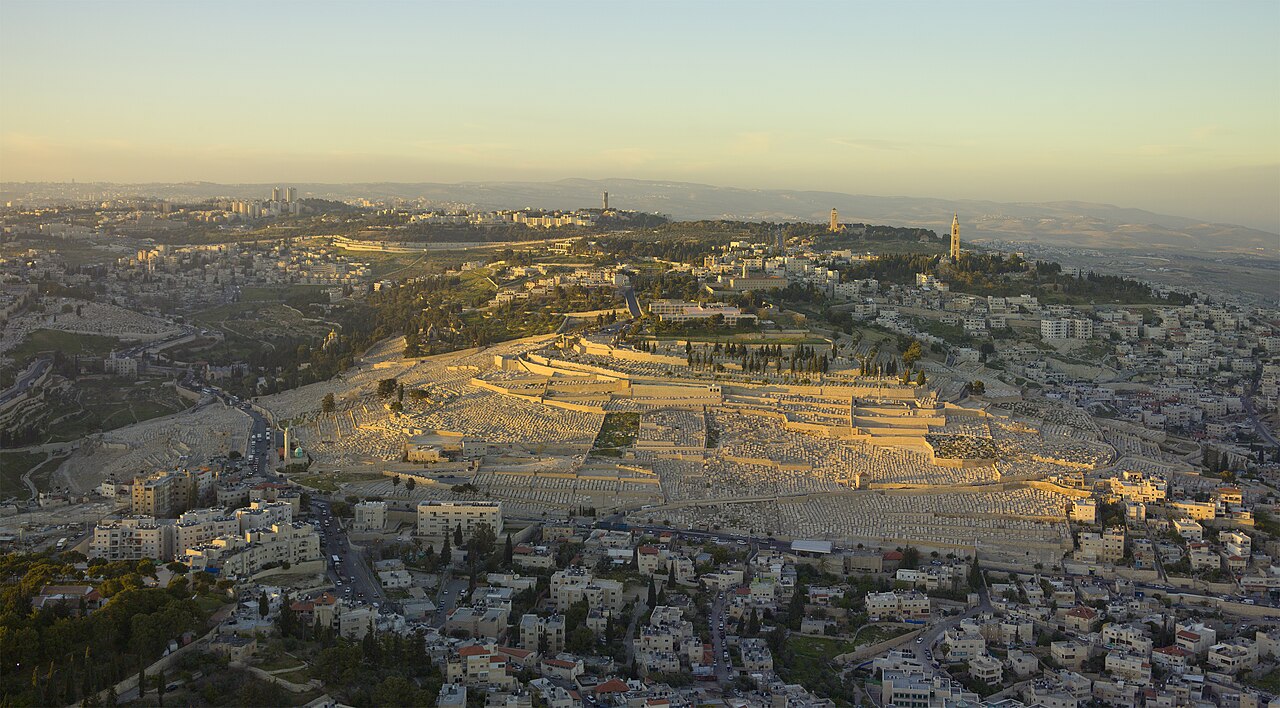
Jerusalem and Zion (on the atlas); the mountains around Jerusalem (125:2), including the Mount of Olives to the east; Mount Hermon in the far north, whose dew is the image of unity (133:3); the Negev, whose dry stream-beds flood after rain (126:4); Meshech and Kedar (120:5), distant peoples to the north and in the Arabian desert, used as images of living among strangers, not as a travel itinerary. The atlas marks only identifiable places; Meshech and Kedar are regions.
A collection
The fifteen share a heading, brevity, step-parallelism and the Zion focus; four are headed "of David" (122, 124, 131, 133) and one "of Solomon" (127). Most scholars think they were gathered as a pilgrim songbook, perhaps in the Persian period, with older songs among them. In 11QPs-a Psalms 121–132 occur together in nearly the same order (reported), so the group was already known as a unit.
Sound
Their repetitions make them easy to sing in a group and to remember: "The LORD is thy keeper… The LORD shall preserve thee… shall preserve thy going out and thy coming in" (121:5–8). Psalm 136, after them, has a refrain on every line. Nothing records the melodies.
Later use
In Jewish practice the Songs of Ascents are read on Sabbath afternoons in winter (after the afternoon prayer, in many communities) and Psalm 126 is sung before grace after meals on Sabbaths and festivals. In Christian monasteries they were often sung at the little hours; Psalm 130 (De profundis) became a prayer for the dead, Psalm 122 a pilgrims' song. Modern pilgrims to Jerusalem still sing them on the way up.
What the evidence shows
- Psalms 120–134 all carry the heading shir ha-ma'alot (121: shir la-ma'alot).Source: The site's library: Westminster Leningrad Codex, KJV, Clementine Vulgate (Gallican Psalter), Giguet's French of the Greek, Douay-Rheims
- The Mishnah links the fifteen songs to fifteen Temple steps.
- The Songs of Ascents were pilgrims' songs. The most common explanation; not certain.
- 11QPs-a has Psalms 121–132 in almost the same order. Reported (C).Source: P. W. Flint, "Contents of the Psalms Scrolls and Related Manuscripts," Oxford Handbook of the Psalms ↗
Continue the journey
Journey of a PassagePsalm 84:6: The valley of Baca: balsam trees or tearsHebrew emek ha-bakha: "the valley of the baka." Baka may be a shrub or tree of dry places (2 Samuel 5:23–24) or a play on bakhah, "weeping." The Greek and Latin chose weeping: "in the valley of tears" (Vulgate "in valle lacrimarum"), the source of the phrase "vale of tears."More from this lesson
Why this matters to the rest of Scripture
- Three pilgrimages a year.
- "Come ye, and let us go up to the mountain of the LORD."
- Jesus' family goes up to Jerusalem at Passover.