"O God, thou hast cast us off, thou hast scattered us, thou hast been displeased; O turn thyself to us again. Thou hast made the earth to tremble; thou hast broken it: heal the breaches thereof; for it shaketh. Thou hast shewed thy people hard things: thou hast made us to drink the wine of astonishment."
"God hath spoken in his holiness; I will rejoice, I will divide Shechem, and mete out the valley of Succoth. Gilead is mine, and Manasseh is mine; Ephraim also is the strength of mine head; Judah is my lawgiver; Moab is my washpot; over Edom will I cast out my shoe: Philistia, triumph thou because of me."
"Who will bring me into the strong city? who will lead me into Edom? Wilt not thou, O God, which hadst cast us off?… Give us help from trouble: for vain is the help of man. Through God we shall do valiantly: for he it is that shall tread down our enemies."
God divides the land
The oracle maps God's claim: Shechem and Succoth (west and east of the Jordan), Gilead and Manasseh, Ephraim as helmet and Judah as sceptre (mehoqeqi, the word in Jacob's blessing, Genesis 49:10). The neighbours become household items: Moab a washbasin, Edom the place where God tosses his sandal, an act claiming ownership (compare Ruth 4:7).
The strong city
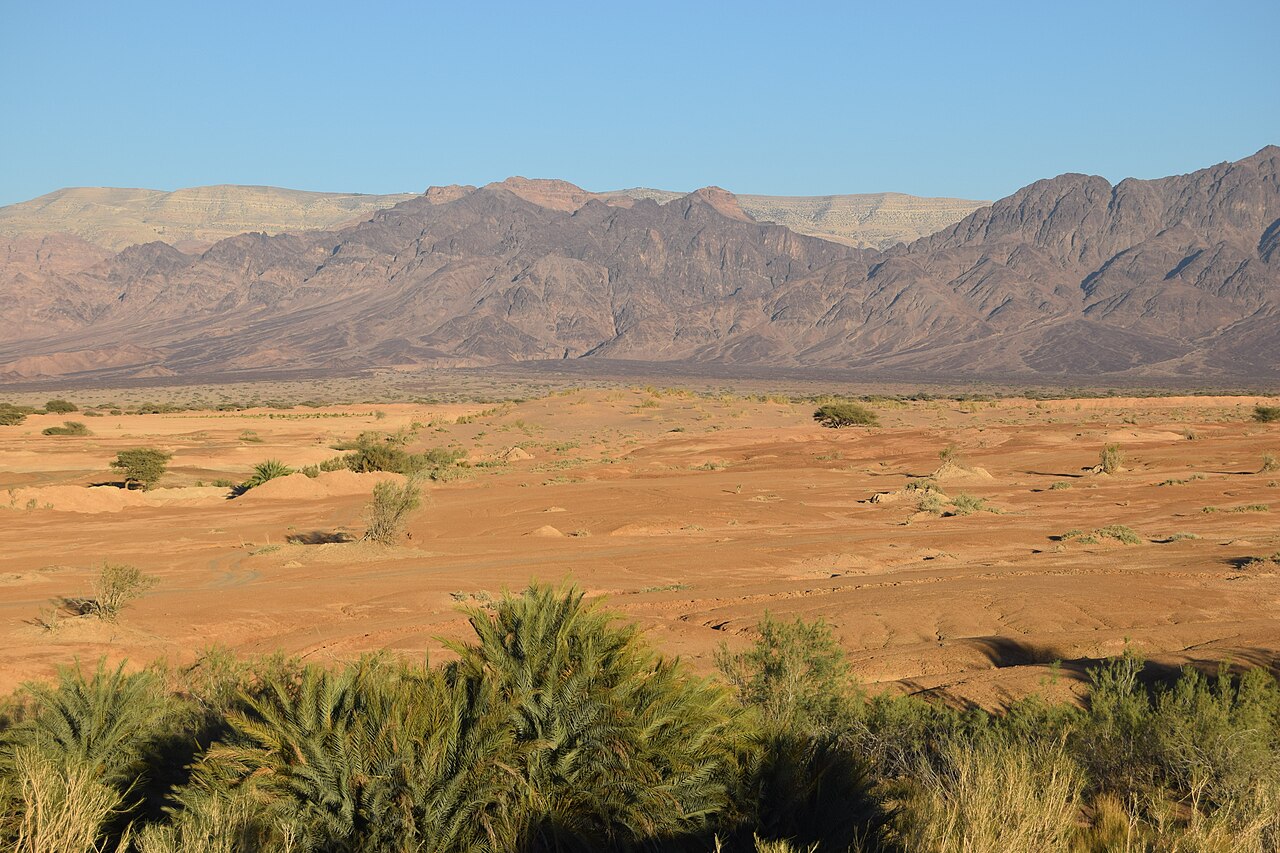
"Who will lead me into Edom?" Edom's mountain strongholds (pictured, the Edomite highlands) were notoriously hard to take. The speaker admits defeat and asks for God to lead the campaign.
The rest of the story
Psalm 60 is not quoted in the New Testament. Its afterlife lies inside the Psalter itself: the oracle of vv. 6–8 was lifted into Psalm 108, where it follows the confident praise of Psalm 57:7–11 instead of a lament, turning a prayer in defeat into a hymn of confidence.
Heading and history
"To the chief Musician upon Shushan-eduth, Michtam of David, to teach; when he strove with Aram-naharaim…" 2 Samuel 8:13 credits David with killing 18,000 "Syrians" (or Edomites) in the Valley of Salt, and 1 Chronicles 18:12 credits Abishai with 18,000 Edomites; the heading gives Joab 12,000. The poem itself laments a defeat, while the heading recalls a victory. The heading is a historical association with differing numbers, not a dated record of composition. "To teach" (lelammed) may refer to use in instruction (compare 2 Samuel 1:18).
Psalm 60 and Psalm 108
60:5–12 reappears as Psalm 108:6–13, after 57:7–11. In 60:8 the library's Vulgate reads "Moab olla spei meae," "Moab the pot of my hope": the Greek connected rahats ("wash") with a word meaning "hope" or "trust."
What the evidence shows
- The heading's 12,000 differs from 18,000 in 2 Samuel 8:13 and 1 Chronicles 18:12.
- 60:5–12 reappears as 108:6–13.Source: The site's library: Westminster Leningrad Codex, KJV, Clementine Vulgate (Gallican Psalter), Giguet's French of the Greek, Douay-Rheims
Continue the journey
Connected elsewhere in ScriptureDavid's Wars and Officials2 Samuel 8:13–14: The Valley of Salt.More from this lesson
Why this matters to the rest of Scripture
- The Valley of Salt.
- The oracle reused.
- "Nor a lawgiver from between his feet."